
Table of contents
As industries move toward cleaner and more sustainable energy solutions, biomass pellets have become one of the most reliable renewable fuel options. Many manufacturing plants, processing industries, and power generation facilities are adopting industrial biomass pellets as an alternative to traditional fossil fuels.
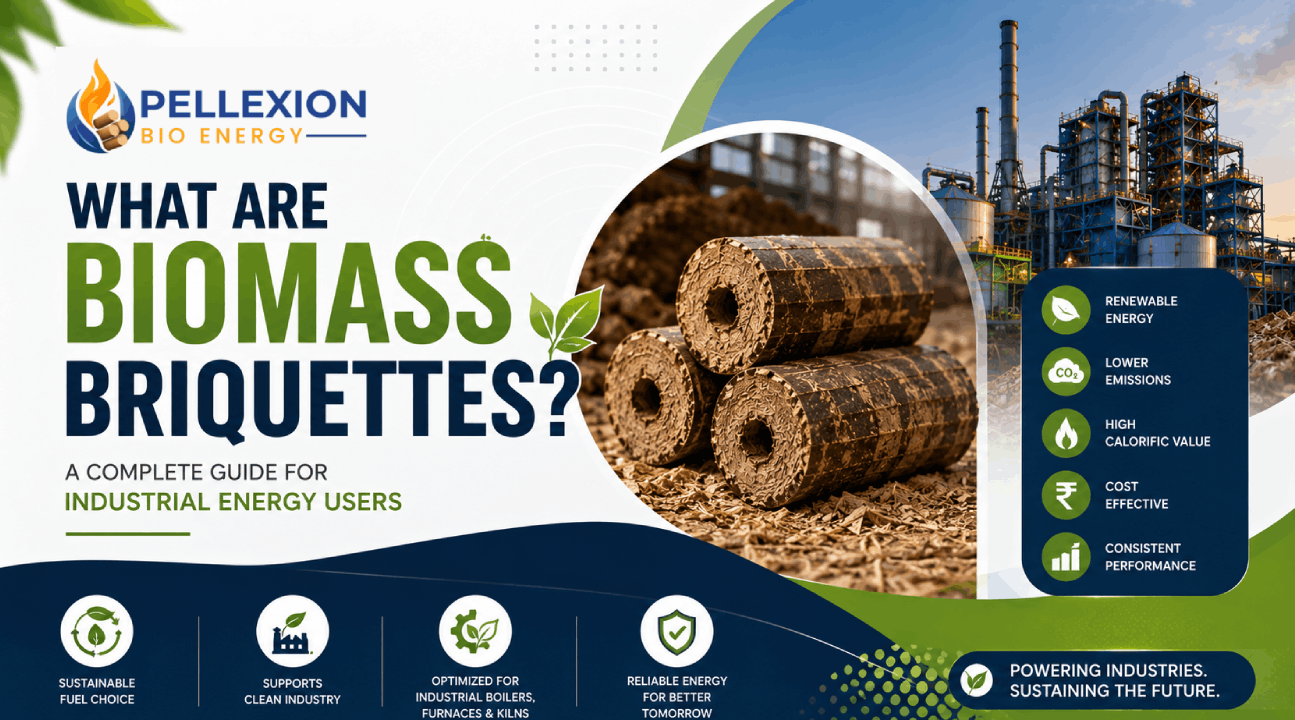
Biomass pellets are produced from compressed organic materials such as agricultural residues and wood waste. These materials are processed into dense and uniform fuel units that burn efficiently in industrial boilers and heating systems.
Because of their high energy density, easy handling, and consistent combustion performance, biomass pellet fuel is widely used in modern industrial energy systems.
What Are Biomass Pellets?
Biomass pellets are small cylindrical fuel units made by compressing finely ground organic materials under high pressure. The compression process increases fuel density and creates a compact energy source suitable for industrial heating.
Industrial biomass pellets usually measure 6mm to 10mm in diameter and have a uniform shape that allows smooth feeding in automated boiler systems.
Key characteristics of biomass pellets include:
These qualities make biomass pellet fuel a preferred choice for industries looking for reliable renewable energy.
Raw Materials Used for Biomass Pellets
Biomass pellets are produced from various agricultural and organic biomass materials that are available in large quantities. These materials are considered renewable because they come from plant-based sources.
Common raw materials used in industrial biomass pellets include:
Using these materials helps convert agricultural waste into valuable biomass pellet fuel, supporting both energy generation and waste management.
Biomass Pellet Production Process
The manufacturing of biomass pellets involves several stages to ensure consistent fuel quality and efficient combustion.
1. Raw Material Collection
Agricultural residues and wood waste are collected from farms, sawmills, and agro-processing industries.
2. Crushing and Grinding
The raw materials are crushed into smaller particles to achieve uniform size for pellet production.
3. Drying Process
Moisture levels are reduced to improve pellet density and combustion efficiency.
4. Pellet Compression
The processed biomass material is compressed using high-pressure pellet machines to form industrial biomass pellets.
5. Cooling and Packaging
The finished pellets are cooled and packed for storage, transportation, and industrial use.
This process transforms raw biomass materials into high-density biomass pellet fuel suitable for industrial energy applications.
Industrial Applications of Biomass Pellets
Biomass pellets are widely used in industries that require continuous heat generation and reliable energy supply. Their uniform size allows easy feeding in automated heating systems.
Industries that commonly use industrial biomass pellets include:
These industries rely on biomass pellet fuel to support thermal energy generation, steam production, and industrial heating operations.
Advantages of Using Biomass Pellet Fuel
Industries are increasingly choosing biomass pellets because they provide an efficient and renewable energy solution.
Key advantages include:
With growing demand for renewable energy, biomass pellet fuel is becoming an important component of modern industrial energy strategies.
Conclusion
Biomass pellets are an efficient and sustainable fuel option for industries seeking reliable renewable energy solutions. Produced from compressed organic materials, industrial biomass pellets offer consistent combustion performance and convenient handling for industrial heating systems.
By converting agricultural and wood waste into biomass pellet fuel, industries can support renewable energy practices while maintaining stable energy supply for their operations.
As the global focus on sustainable energy continues to grow, biomass pellets will remain a key part of the future industrial energy landscape.





 Total views : 6800
Would love to read a blog about the cost per unit energy comparison between biomass pellets and LPG for food processing industries. That data would be very helpful for us.
What is the calorific value of Pellexion biomass pellets compared to coal? We need technical specifications before presenting the biomass fuel switch proposal to our management team this month.
Can groundnut shell biomass pellets be used in older boiler models that are not fully automated? Please share more details. We are upgrading our factory energy system in Ahmedabad.
Do you also supply biomass pellets outside Gujarat? Our chemical plant in Pune is looking for reliable renewable fuel suppliers. Your product quality looks impressive based on this article.
Biomass pellets are the future of clean industrial energy in India. Using crop residues and agricultural waste instead of coal supports both sustainability goals and cost savings for manufacturers across Gujarat.
Reducing agricultural burning by converting crop waste into biomass pellet fuel is brilliant. Pellexion Bio Energy. is doing great work in Gujarat to promote clean, renewable industrial energy for all manufacturers.
Being in Junagadh, groundnut shells are easily available locally. Knowing that Pellexion uses this raw material for their biomass pellets makes us confident in the supply chain consistency and fuel quality.
Industries in Rajkot need local biomass pellet suppliers for affordable and consistent fuel supply. Pellexion Bio Energy. from Gujarat provides the perfect solution for factories wanting to switch from coal.
We manage a rice processing plant in Punjab and have been looking for agro-waste biomass pellet suppliers. This article from Pellexion gave us exactly the technical information we needed.
India needs more biomass fuel manufacturers like Pellexion to support its renewable energy mission. Replacing coal with biomass pellets in industrial boilers is a practical step toward reducing industrial pollution.
Please share a guide on government subsidies available for industries shifting to biomass energy in India. That information would help many small and medium factories make the sustainable fuel switch faster.
Our company’s green energy initiative required us to replace coal with sustainable fuel. Biomass pellets from Pellexion Bio Energy. fit perfectly into our environmental compliance and energy cost reduction goals.
With rising coal prices and environmental regulations tightening in India, biomass pellets from companies like Pellexion Bio Energy are becoming the most sensible fuel choice for responsible industrial manufacturers today.
Are coriander husk pellets available in the same sizes as groundnut shell pellets? Our brick kiln in Morbi needs a consistent and affordable biomass fuel supply for daily production.
A blog on how to calculate biomass pellet consumption per hour for different boiler sizes would be very useful. Many factories in Gujarat need this technical data before switching fuels.
Can you publish a guide specifically about coriander husk biomass pellets? We grow coriander in Rajasthan and want to understand if Pellexion can source raw materials from our region.
Please write a detailed comparison blog between biomass pellets and coal for industrial boilers. That would help many factory owners in India make the right fuel switching decision confidently.
We are a textile unit in Ahmedabad looking for bulk biomass pellet suppliers in Gujarat. Pellexion Bio Energy. seems to be the best local option for reliable industrial fuel supply.
Industrial boilers in our dairy plant run 24 hours daily. Since switching to biomass pellets, maintenance has reduced and heat output remains very consistent. Highly recommend Pellexion for bulk fuel supply.
Our chemical manufacturing unit in Vapi has been using biomass pellet fuel from Gujarat suppliers for two years now. Energy savings are real and environmental compliance is also easier to meet.
We switched our textile boilers from coal to Pellexion biomass pellets last month. Heat output is consistent and fuel cost reduced significantly. Highly recommend for Gujarat factories.
After reading this guide and testing Pellexion biomass pellets in our textile boiler, we reduced our fuel cost by nearly 30%. We now recommend biomass pellets to other manufacturers in Surat.
Pellexion groundnut shell biomass Pellexion work perfectly for our ceramic kilns. Burns longer than coal and the supply from Gujarat is always on time. Very satisfied with the quality.
We use groundnut shell pellets from Pellexion for our steam generation system. The uniform 6mm size feeds perfectly into our automated boiler and reduces manual labor significantly in our plant.
We switched our factory boiler from coal to biomass pellets last year. The cost savings have been significant and combustion efficiency is much better. Pellets is your preferred fuel supplier.
Running a ceramic industry in Gujarat, we have tested multiple biomass fuel suppliers. Pellexion Bio Energy. delivers the most consistent pellet quality and reliable supply for our kiln operations.
Our food processing plant has been using agricultural waste biomass pellets for two years. Consistent heat output and easy storage make them ideal for our daily industrial production requirements.
This complete guide helped our team understand biomass pellets before ordering. We now use biomass pellets for steam generation. Clean combustion and low ash content suits our food processing standards.
We were looking for reliable biomass pellet suppliers in Gujarat for our boilers. Pellexion Bio Energy. delivered exactly what the guide promised — consistent quality and on-time bulk supply.
We manage a chemical plant near Bharuch and need a trusted biomass pellets supplier in Gujarat. Pellexion Bio Energy. proximity and product range makes them the ideal partner for us.
Our dairy plant runs boilers 24 hours daily. Pellexion biomass pellets maintain steady heat without interruption. This guide explained everything we needed to know before making our bulk purchase decision.
After reading this article we replaced coal with Pellexion biomass pellets in our brick kiln. The 90mm briquettes give us the long burn time we need. Cost saving is also excellent.
As a brick kiln owner in Morbi, I have been searching for affordable biomass pellet fuel in Gujarat. This blog helped me understand why Pellexion is the right supplier choice.
We appreciate Pellexion sharing such detailed knowledge about biomass pellet production. Understanding the drying and compression process helped us evaluate quality when comparing different biomass fuel suppliers in Gujarat.
Clear, simple, and very educational. The guide on industrial biomass pellets from Pellexion covers everything industries need to know before switching from fossil fuels to renewable energy solutions in India.
One of the best articles explaining renewable fuel options for industries in India. The section on raw materials used in biomass pellets was especially helpful for our energy audit team.
Very informative article. Understanding the difference between 6mm and 10mm pellet sizes was something I needed. This guide answered all my questions about biomass pellet combustion for industrial boilers.
Pellexion Bio Energy. produces high-quality biomass pellets from agro-waste. This blog explains the entire process beautifully. We are planning to switch from coal to biomass fuel for our boilers soon.
Our paper manufacturing unit in Vadodara requires continuous biomass fuel supply for our industrial boilers. Pellexion Bio Energy. in Gujarat looks like the most reliable local biomass pellet manufacturer available.
Excellent explanation of how biomass pellets are made and used. The production process steps are very clear. This guide helped us understand why Pellexion is a trusted biomass supplier.
This is the most detailed guide on biomass pellets I have read. Pellexion Bio Energy. clearly understands industrial fuel needs. Very useful for our manufacturing unit in Gujarat.
Converting agricultural waste into biomass pellet fuel is an excellent sustainability practice. Pellexion Bio Energy. is helping industries in India reduce carbon footprint while maintaining reliable and efficient industrial energy supply.
It would be very helpful to see a blog about storage best practices for bulk biomass pellets. Our factory has limited space and we want to ensure proper fuel quality maintenance.
We have been searching for a complete guide on industrial biomass pellet fuel. This article covers everything from raw materials to applications. Pellexion Bio Energy. has done a great job.