
Our Biomass Manufacturing Process – From Agricultural Waste to Clean Energy Fuel
Premium Biomass Pellet and Biomass Briquette Manufacturing Process Designed for High Efficiency, Low Emissions, and Sustainable Industrial Energy.
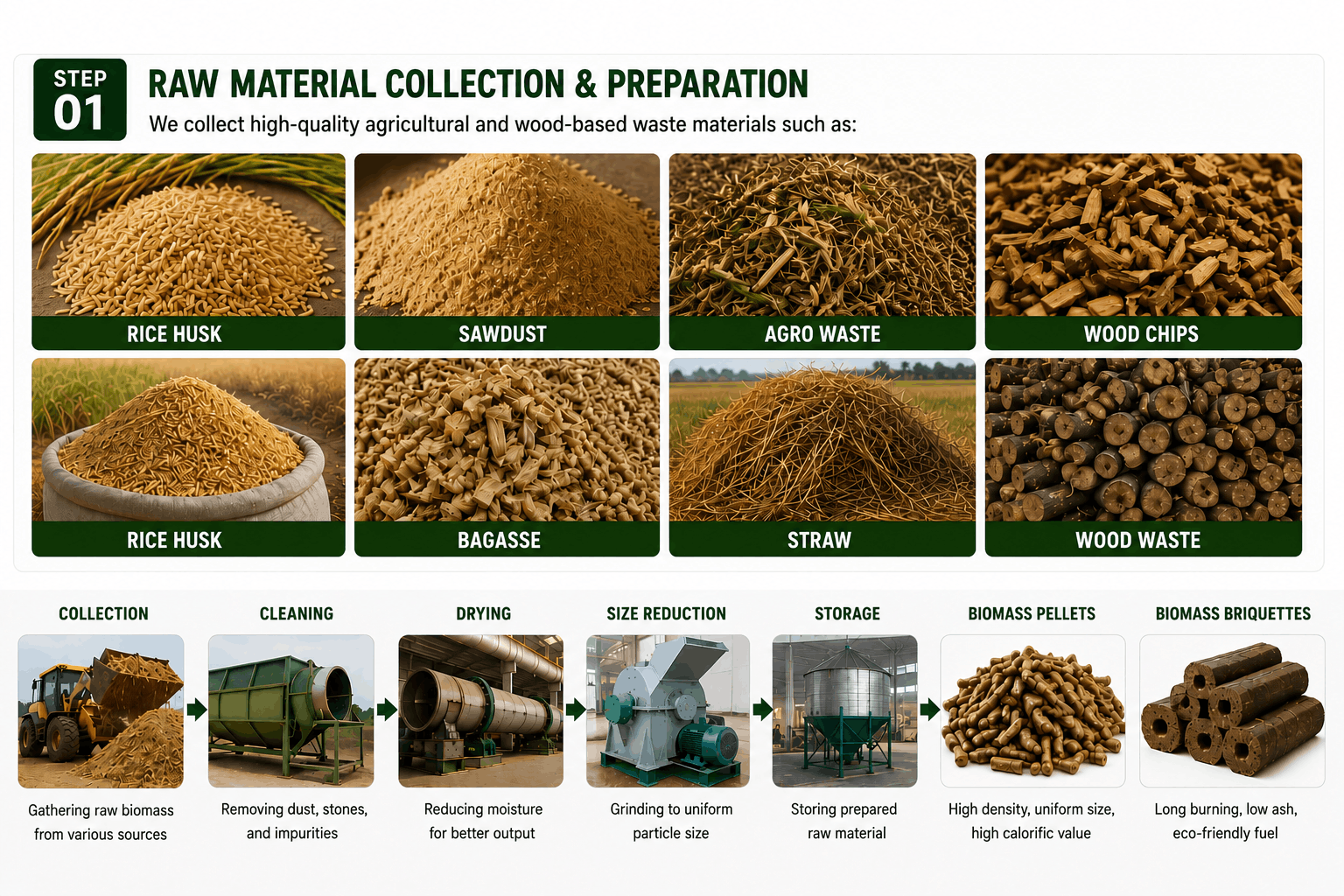
Raw Material Collection & Preparation
We collect high-quality agricultural and wood-based waste materials such as:
Why Raw Material Quality is Important?
Good raw material directly impacts:
- High GCV (Gross Calorific Value)
- Less machine wear & tear
- Better pellet density and durability
- Stable combustion performance
Proper selection ensures long-lasting pellet quality and efficient energy output.
02
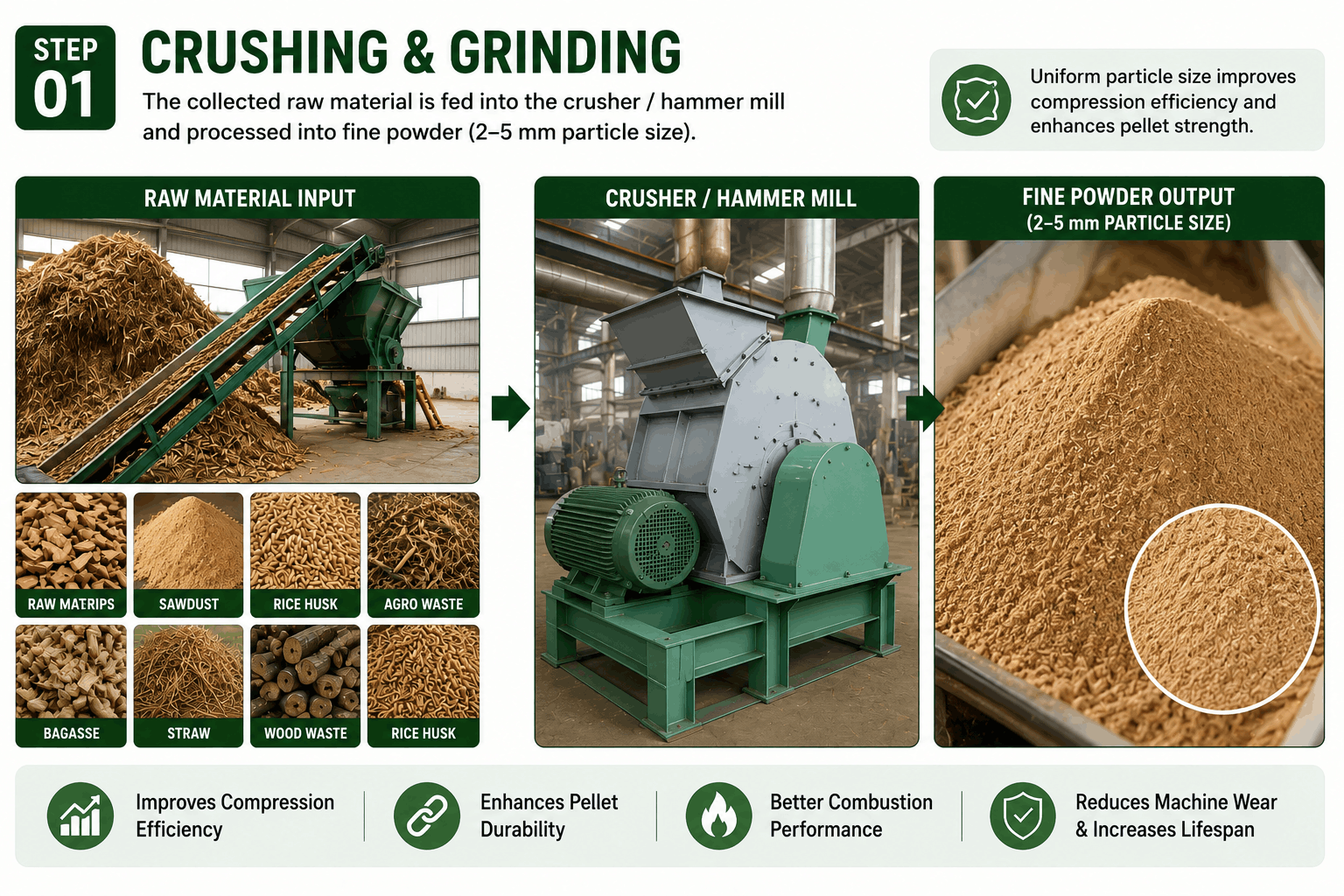
Crushing & Grinding
The collected raw material is fed into:
The material is processed into:
- Fine powder (2–5 mm particle size)
Uniform particle size improves compression efficiency and enhances pellet strength.
03
Drying & Moisture Control
The fine powder is sent to:
Moisture content is reduced to:
8–12% (Ideal Range for Pellet Production)
Moisture content is reduced to:
- Higher calorific value
- Reduced smoke emissions
- Better combustion stability
- Improved pellet durability
04
Pellet Making (High-Pressure Compression)
The dried powder enters:
Under high pressure and temperature:
Natural lignin in biomass acts as a binding agent (No chemicals required)
Final Output:
- Cylindrical Biomass Pellets (6mm / 8mm / 10mm)
This stage determines pellet density, hardness, and energy efficiency.
05
Cooling & Hardening
What Happens?
Freshly produced hot pellets move into:
Pellet Cooler
During this stage:
- Temperature is reduced
- Pellets harden and stabilize
- Mechanical strength increases
Cooling improves durability and prevents breakage during transportation.
06
Screening, Packing & Storage
Screening removes fine dust and broken particles
Pellets are packed in:
- 25 kg bags
- 50 kg bags
- Jumbo bags (Bulk Supply)
Stored in a clean, dry warehouse to prevent moisture absorption and maintain fuel quality.
Proper storage ensures consistent performance until final delivery
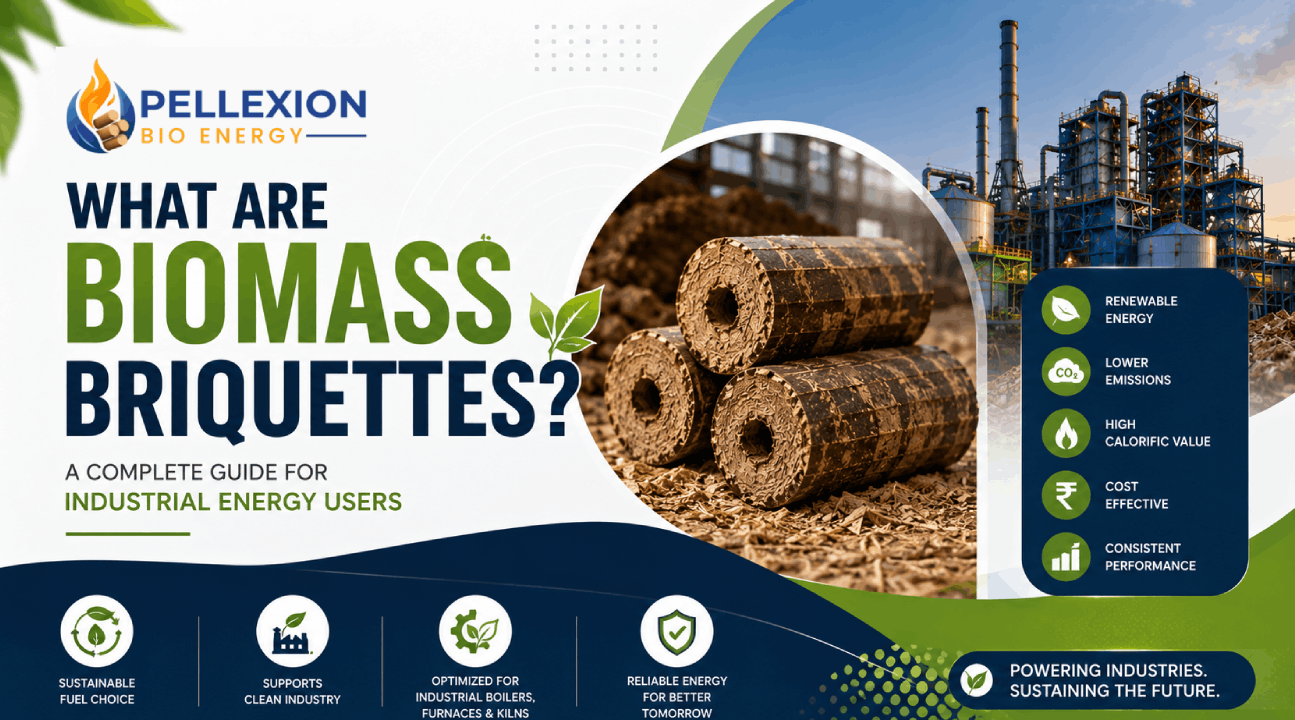
What Are Biomass Pellets? A Complete Guide for Industrial Energy Users
Pellexion Bio Energy — #1 Manufacturer in Gujarat for Biomass Pellets & Briquettes. As industries move toward cleaner and more sustainable energy solutions, biomass pellets [...]
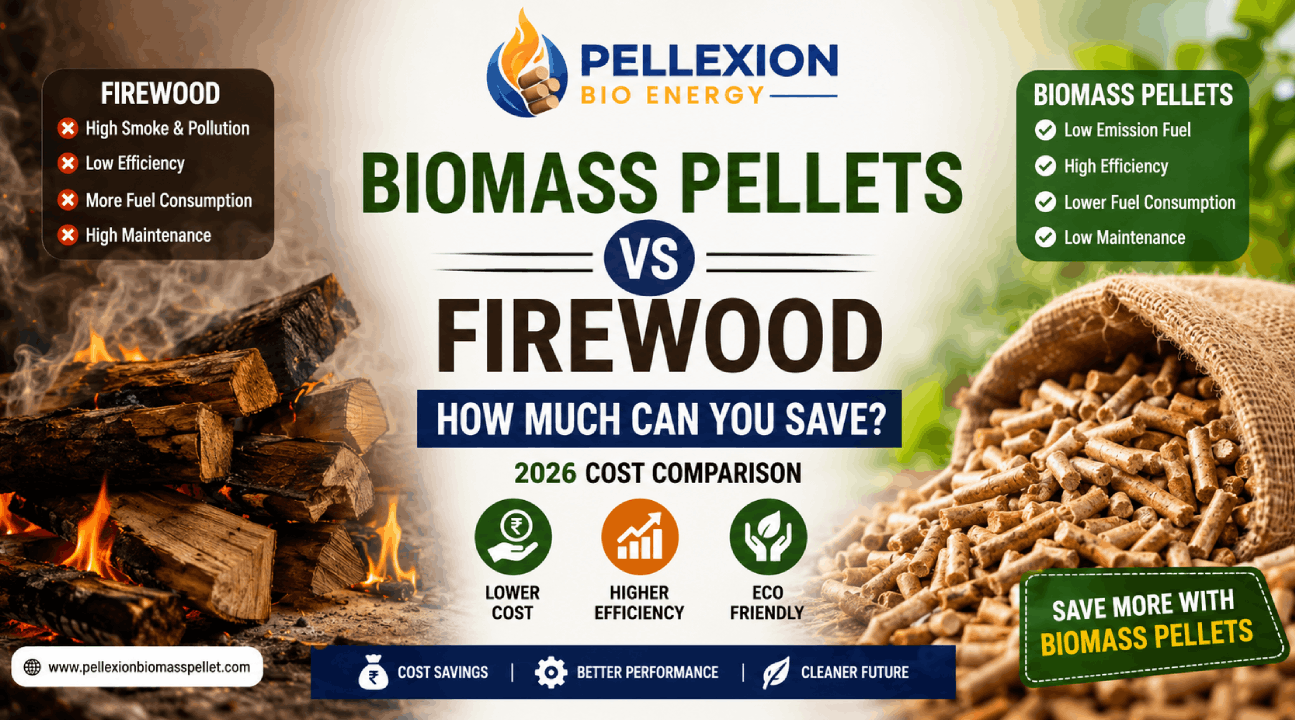
How Much Can You Save Using Biomass Pellets vs Firewood?
A real-number breakdown of biomass pellets vs firewood cost for Indian boilers — price per kg, calorific value, combustion efficiency, and what it actually costs to [...]
Understanding GCV (Gross Calorific Value) in Biomass Pellets and Why It Matters
A step-by-step guide to the one number that decides whether your biomass fuel is actually cheap — or just cheap-looking. What GCV means, how it's tested, [...]
The Growth of the Biomass Pellet Industry in Gujarat: A 2026 Perspective
Gujarat has always been India's industrial powerhouse — home to textile mills in Surat, ceramic clusters in Morbi, chemical belts in Ankleshwar and Vapi, and one [...]

What is Biomass Fuel? A Complete Guide for Industrial Energy Users
Pellexion Bio Energy — #1 Manufacturer in Gujarat for Biomass Pellets & Briquettes. As industries worldwide move toward cleaner and more sustainable energy solutions, biomass [...]
What Are Biomass Briquettes? A Complete Guide for Industrial Energy Users
Pellexion Bio Energy — #1 Manufacturer in Gujarat for Biomass Pellets & Briquettes. As industries increasingly adopt renewable energy solutions, biomass briquettes have become a [...]
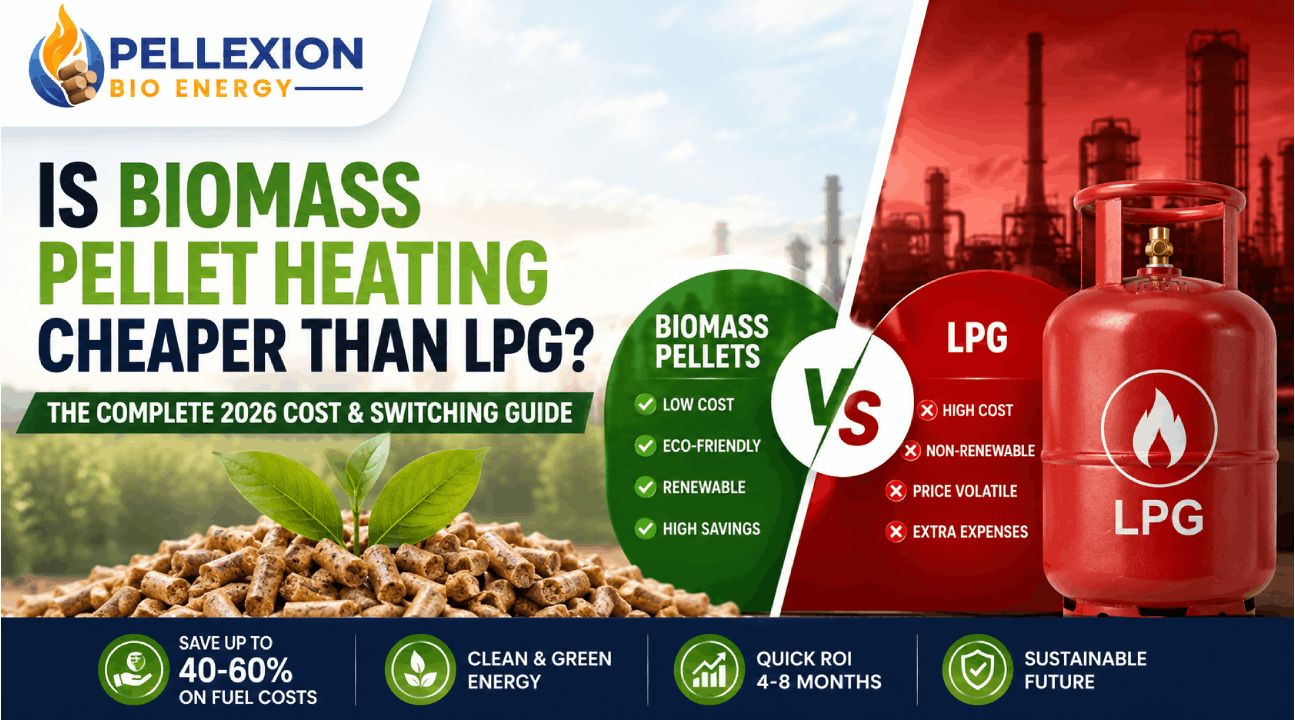
Is Biomass Pellet Heating Cheaper Than LPG? The Complete 2026 Cost & Switching Guide
A full cost-per-kcal breakdown, a step-by-step guide to switching, a real savings example, and every trade-off you need to weigh before choosing between biomass pellets and [...]
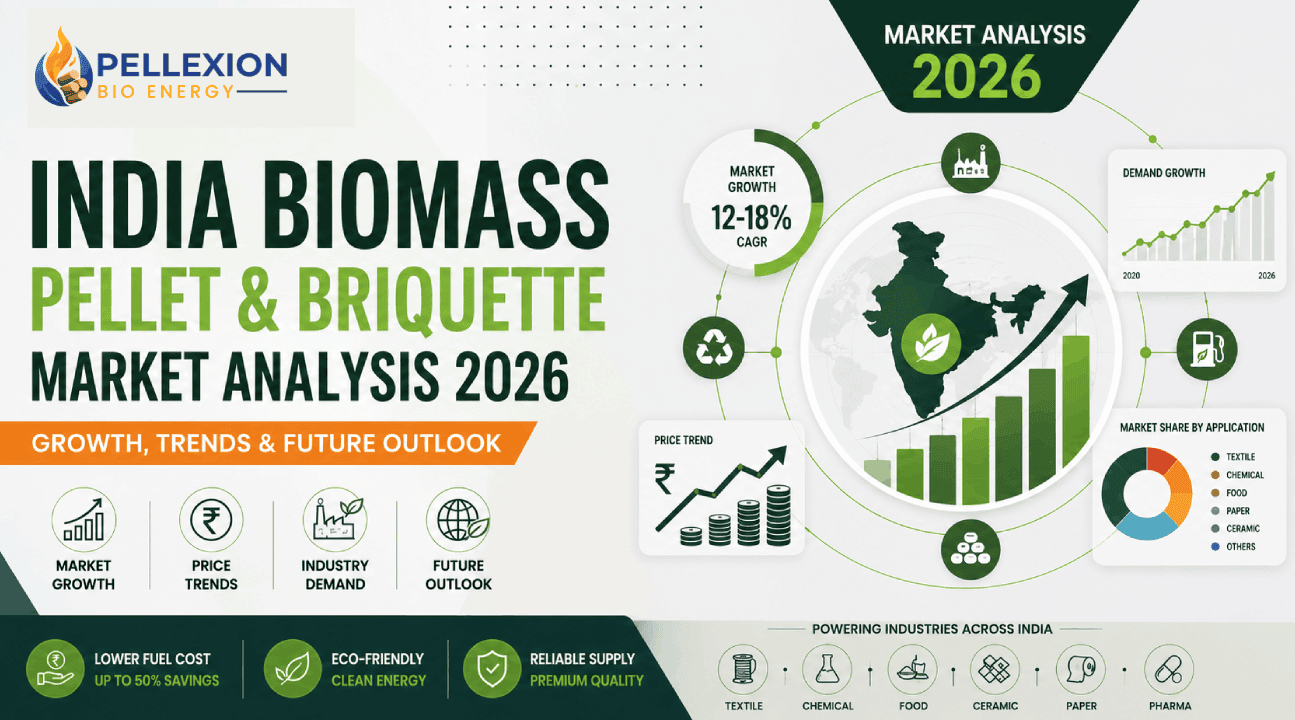
India Biomass Pellet & Briquette Market 2026: Size, Growth, Price Trends & Future Outlook
Ten years ago, a truckload of paddy straw or groundnut shell leaving a Punjab or Gujarat farm had exactly one destination: a matchstick. Today, that same [...]
Why Choosing the Right Biomass Fuel Supplier is Important for Industrial Energy
As industries shift toward renewable energy solutions, biomass fuel has become an important alternative to traditional fossil fuels. However, the efficiency and reliability of biomass energy [...]
How to Reduce Industrial Fuel Costs by 30% with Biomass Pellets in 2026
Pellexion Bio Energy — #1 Manufacturer in Gujarat for Biomass Pellets & Briquettes. Fuel is often the single biggest controllable expense on a factory's books. [...]

How to Reduce Boiler Fuel Costs by 40–60% Using Biomass Energy
Fuel is usually the single biggest line item on a factory's energy bill. If you run a coal-fired or diesel-fired boiler, you already know the pattern: [...]
How to Calculate Your Boiler Efficiency Before Switching to Biomass Pellets
A plant manager's worked-example walkthrough of the Direct Method and Indirect Method — and what the numbers actually look like once coal is replaced with high-GCV [...]
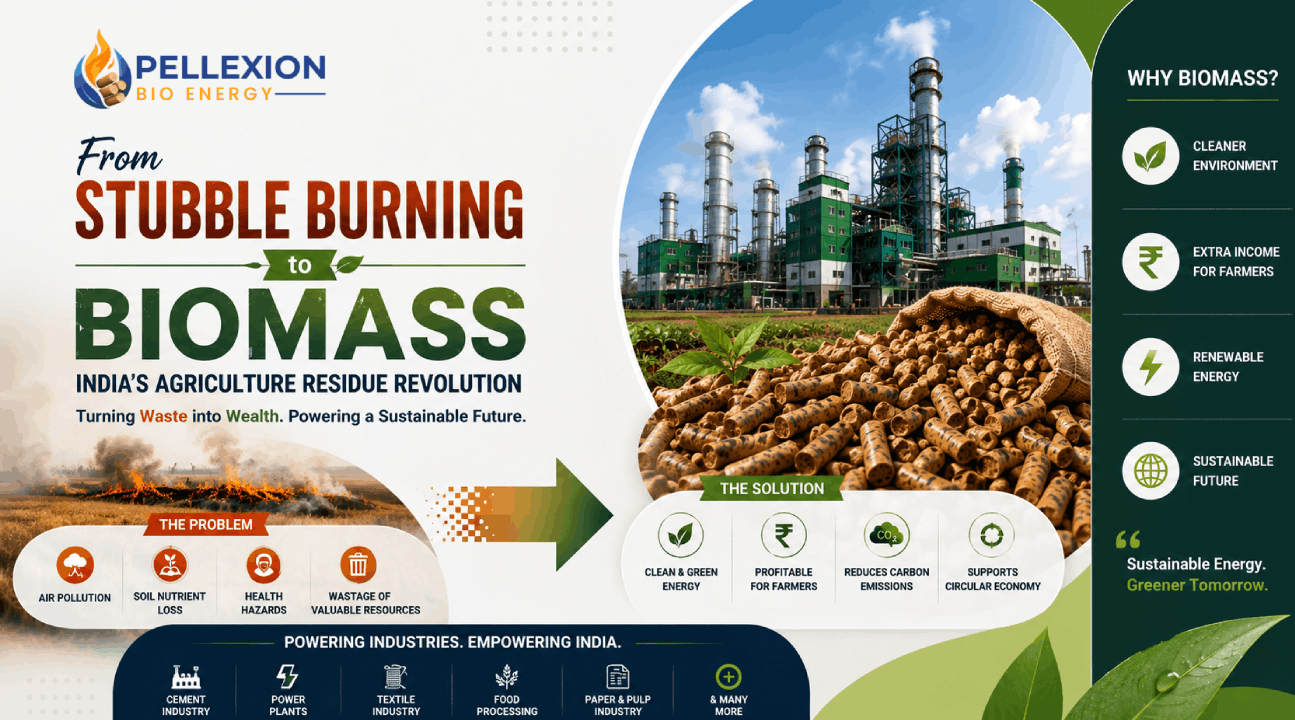
From Stubble Burning to Biomass: India’s Agriculture Residue Revolution
Pellexion Bio Energy — #1 Manufacturer in Gujarat for Biomass Pellets & Briquettes. Every post-harvest season across India, millions of acres of farmland turn orange [...]
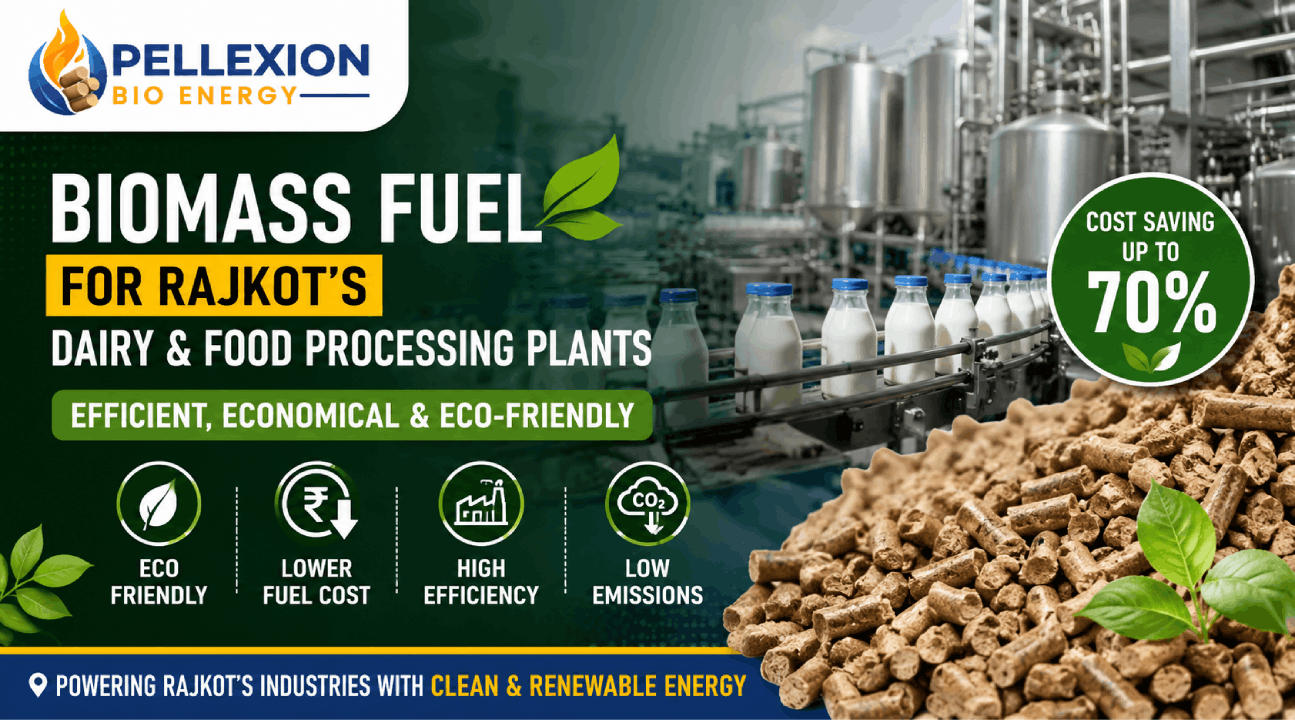
Biomass Fuel for Rajkot’s Dairy & Food Processing Plants: Efficient and Eco-Friendly
Why manufacturers across Rajkot and the Saurashtra belt are replacing coal, diesel, and LPG with biomass pellets and briquettes — and what it means for your [...]
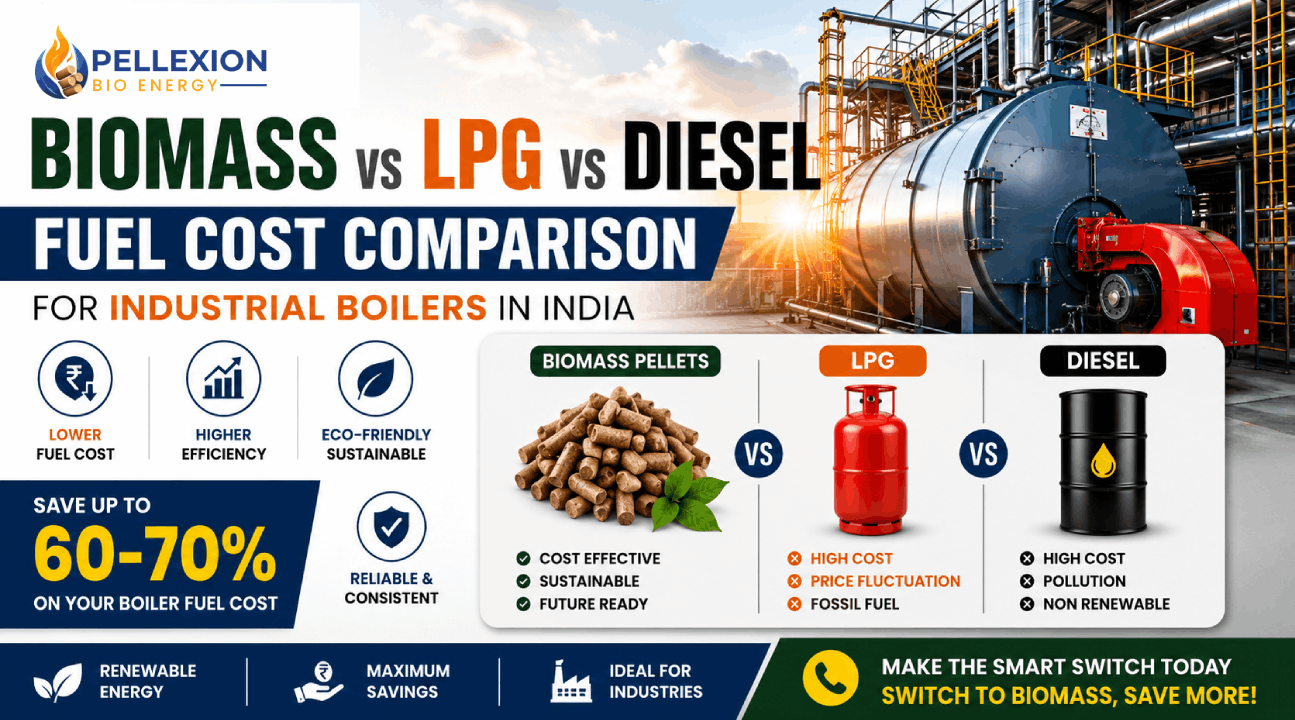
Biomass vs LPG vs Diesel: Fuel Cost Comparison for Industrial Boilers in India (2026)
If you run a steam boiler, thermic fluid heater, or hot air generator in an Indian factory, fuel is very likely the single largest recurring cost on [...]
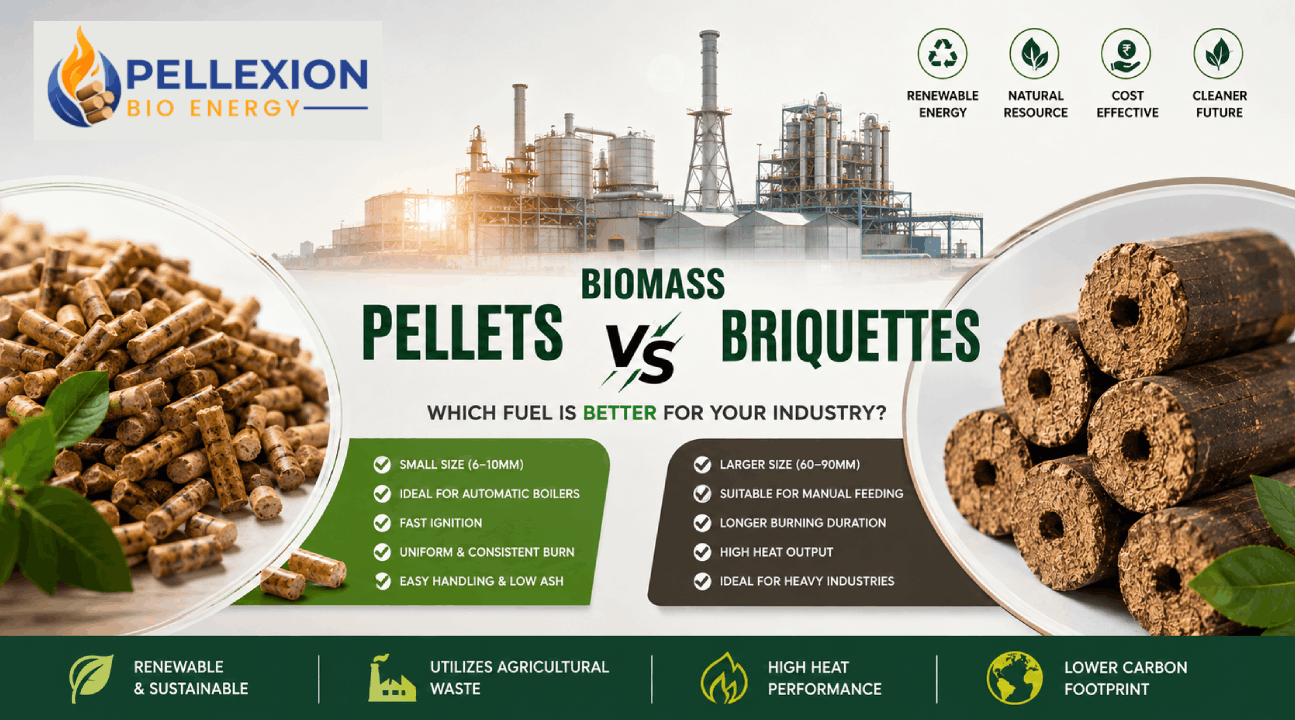
Biomass Pellets vs Biomass Briquettes: Which is Better for Industrial Boilers?
Pellexion Bio Energy — #1 Manufacturer in Gujarat for Biomass Pellets & Briquettes. Industries are increasingly shifting toward biomass fuel as a sustainable alternative to [...]
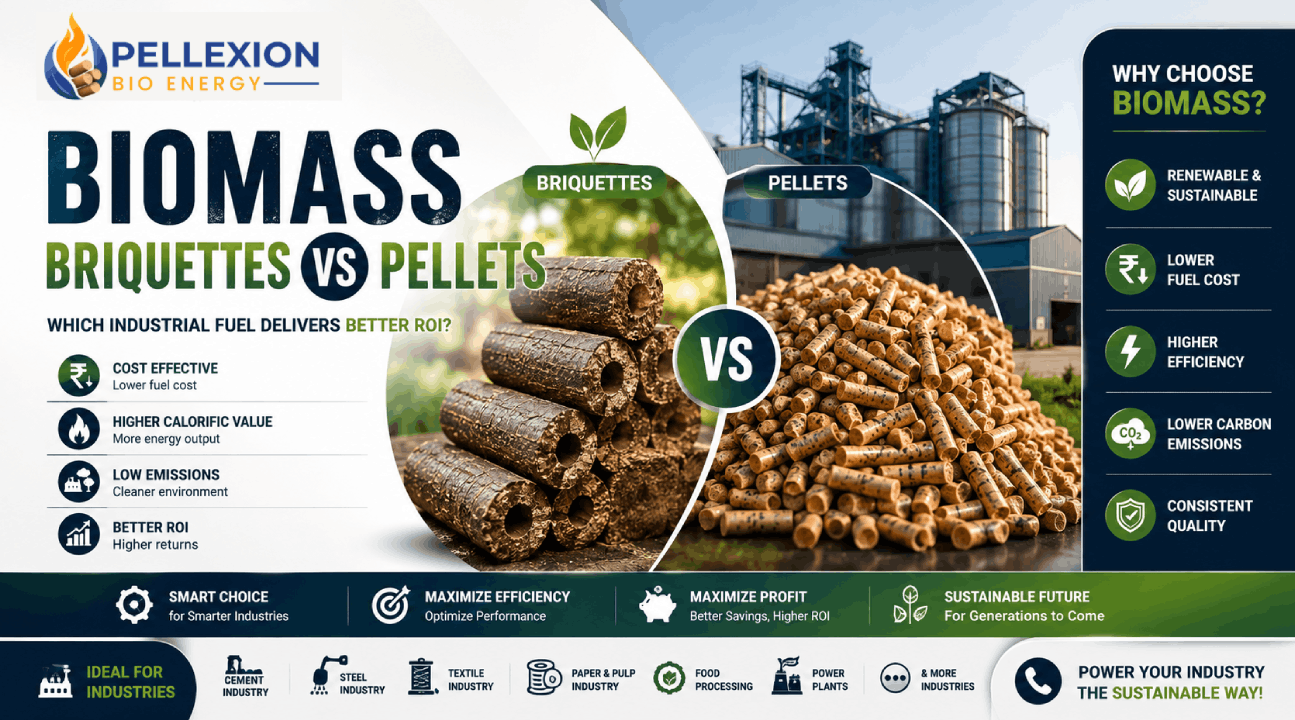
Biomass Briquettes vs Pellets: Which Industrial Fuel Delivers Better ROI?
Pellexion Bio Energy — #1 Manufacturer in Gujarat for Biomass Pellets & Briquettes. With rising fuel costs and strict environmental regulations in India, industries are [...]
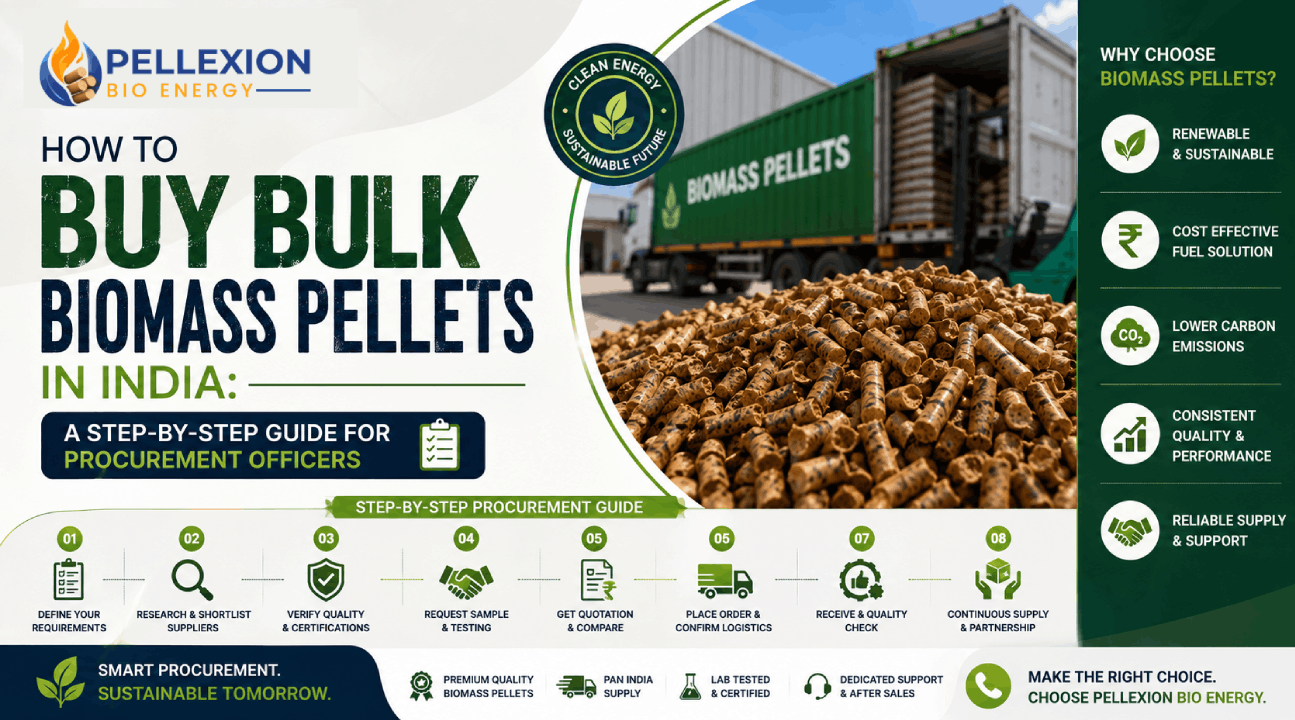
How to Buy Bulk Biomass Pellets in India: A Step-by-Step Guide for Procurement Officers
Pellexion Bio Energy — #1 Manufacturer in Gujarat for Biomass Pellets & Briquettes. For any plant consuming 50 MT to 500+ MT of biomass pellets [...]
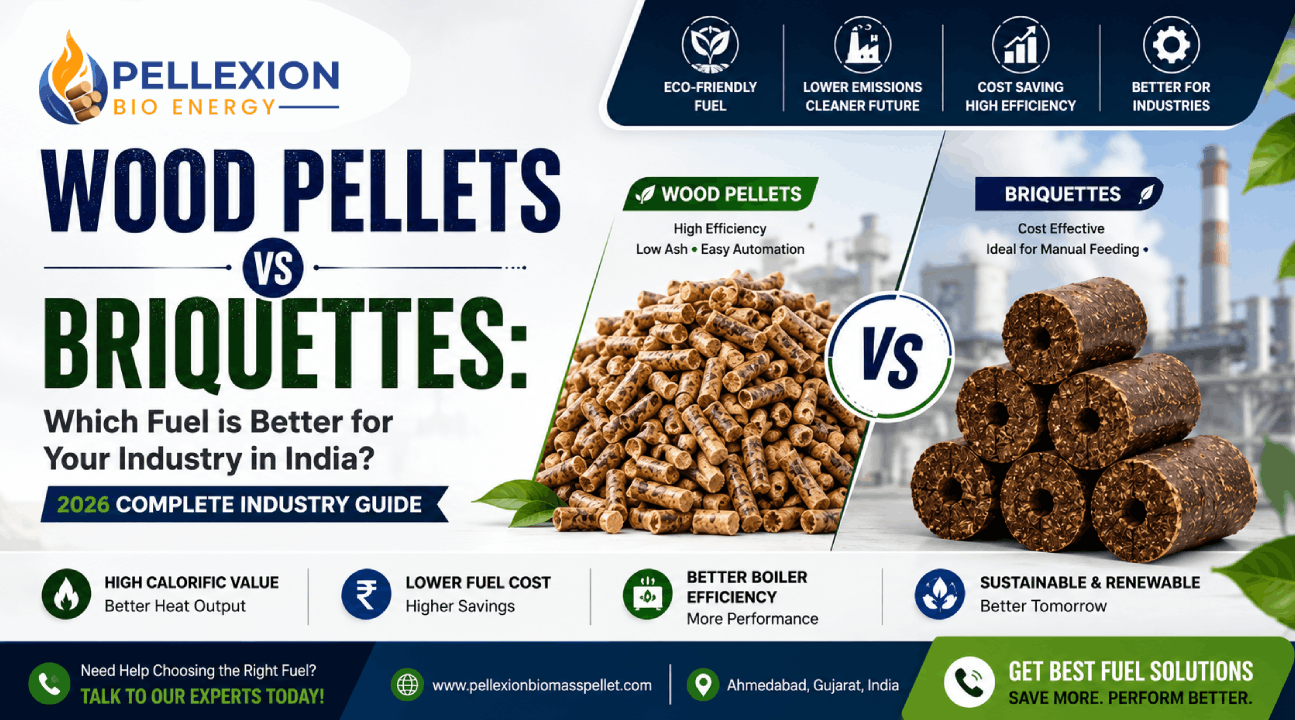
Wood Pellets vs Briquettes: Which Fuel is Better for Your Industry in India?
If you run a boiler, dryer, or thermic fluid heater in India, you've probably already moved past the "should I switch from coal" question. The real question [...]
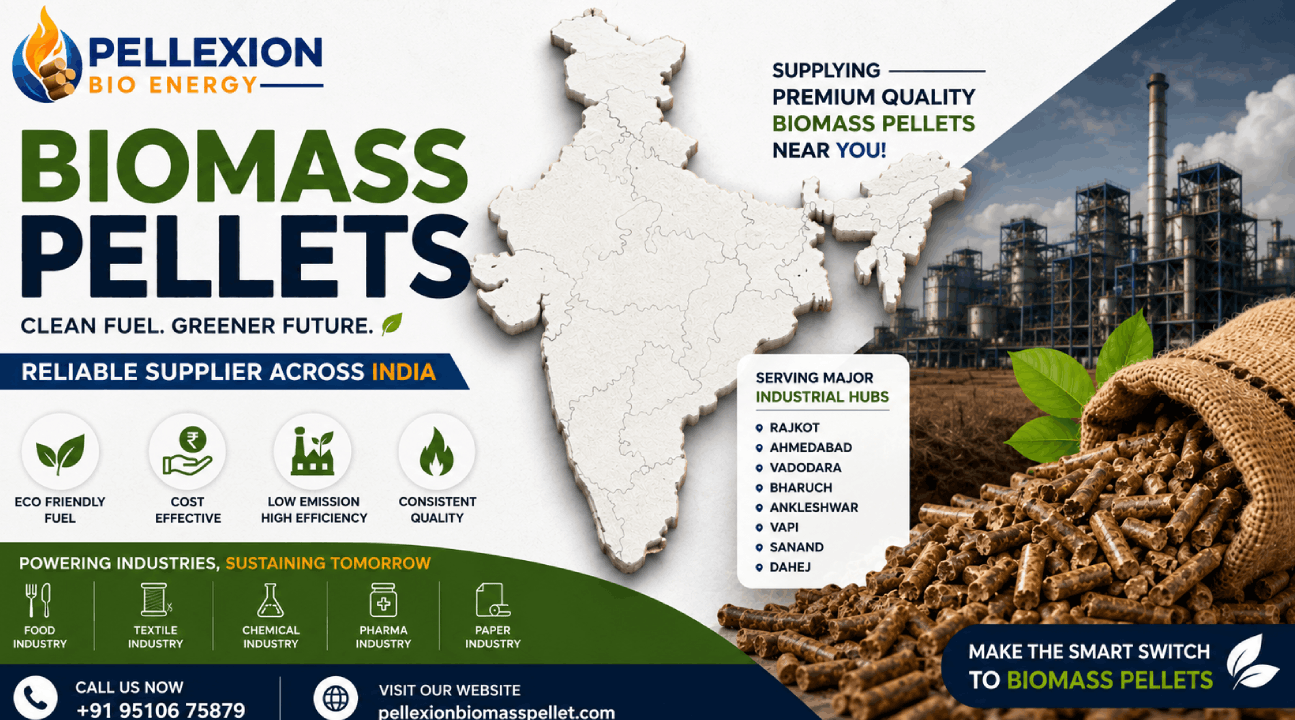
Biomass Pellets in India: Price, Nearby Suppliers & The Complete Buying Guide
Everything a plant manager, procurement officer or boiler operator needs before switching to biomass fuel — pricing, quality checks, industry use cases, and where to buy [...]
Biomass Pellets for Brick Kilns in Rajkot: A Low-Ash, High-Heat Fuel Solution
How Saurashtra's brick kiln operators are cutting ash, fuel cost, and emissions by switching from coal to agro-residue biomass pellets — with the performance data, compliance [...]
How Biomass Pellets Improve Boiler Efficiency in Industries
Industrial operations today require energy solutions that are efficient, cost-effective, and environmentally responsible. As industries continue shifting toward cleaner fuel alternatives, biomass pellets have emerged as [...]
Why Industries Should Switch to Biomass Fuel for Sustainable Energy
Industries worldwide are increasingly under pressure to reduce carbon emissions and adopt cleaner energy alternatives. Rising fuel costs, stricter environmental regulations, and global [...]
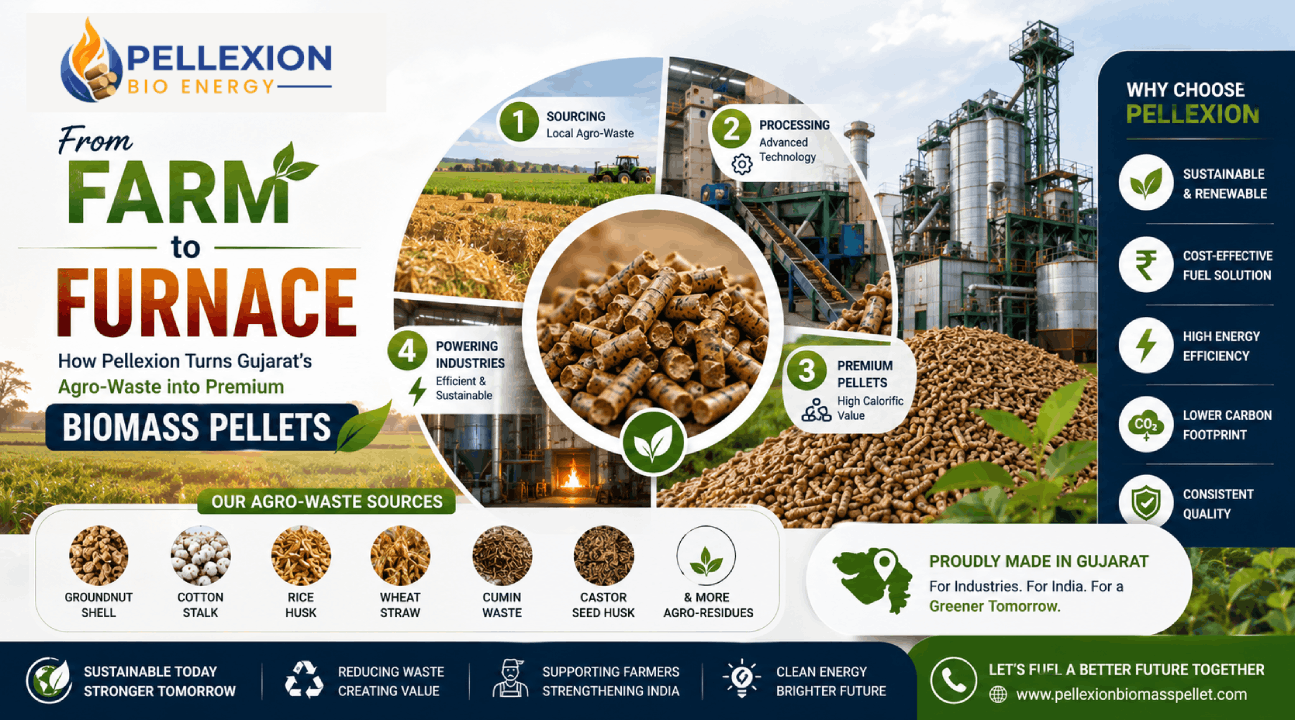
From Farm to Furnace: How Pellexion Turns Gujarat’s Agro-Waste into Premium Biomass Pellets
Pellexion Bio Energy — #1 Manufacturer in Gujarat for Biomass Pellets & Briquettes. A complete behind-the-scenes look at Pellexion Bio Energy's 5-step process of converting [...]
Why Ahmedabad’s Chemical Industries Are Switching to Biomass Briquettes
Coal is getting more expensive and harder to justify on paper. Here's the real cost, compliance, and combustion case behind the shift happening across Vatva, Naroda, [...]
Top 10 Questions Plant Managers Ask Before Switching from Coal to Biomass Pellets
Boiler compatibility, real cost savings, batch-to-batch quality, monsoon supply, and how the first order actually works — the honest answers plant managers want before they commit [...]
Diesel to Biomass: A Fuel Transition Guide for Surat’s Textile Industry
A practical, step-by-step roadmap for dyeing, printing, and processing units in Surat to move off costly, volatile diesel and onto stable, lower-emission biomass pellets — without [...]
Biomass Pellets for Spinning Mills in Surat: Cutting Steam Costs for Yarn Manufacturers
Coal and diesel prices keep climbing while spinning mill margins stay flat. Here's the fuel-cost math, boiler compatibility notes, and switch plan Surat's yarn manufacturers are [...]

Why Biomass Fuel is the Future of Industrial Energy
As industries worldwide search for cleaner and more sustainable energy solutions, biomass fuel is emerging as a strong alternative to traditional fossil fuels. Increasing environmental regulations, [...]
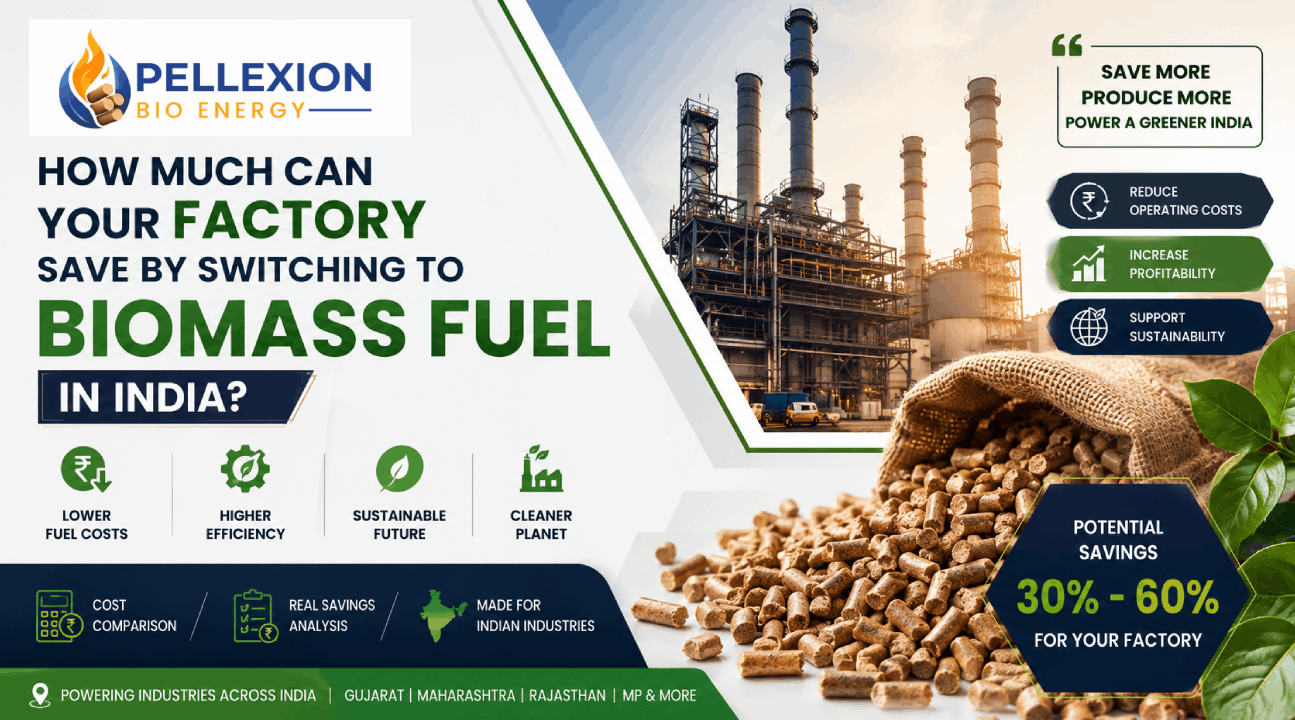
How Much Can Your Factory Save by Switching to Biomass Fuel in India?
If you run a boiler, furnace, dryer, or thermic fluid heater in India, fuel is almost certainly the largest controllable cost on your factory's books. Coal prices [...]
India’s National Biofuel Policy 2018: What It Means for Industrial Buyers in 2026
India’s energy sector is undergoing a massive transformation. With rising fuel costs, stricter environmental regulations, and global sustainability goals, industries are actively shifting toward alternative fuels. [...]
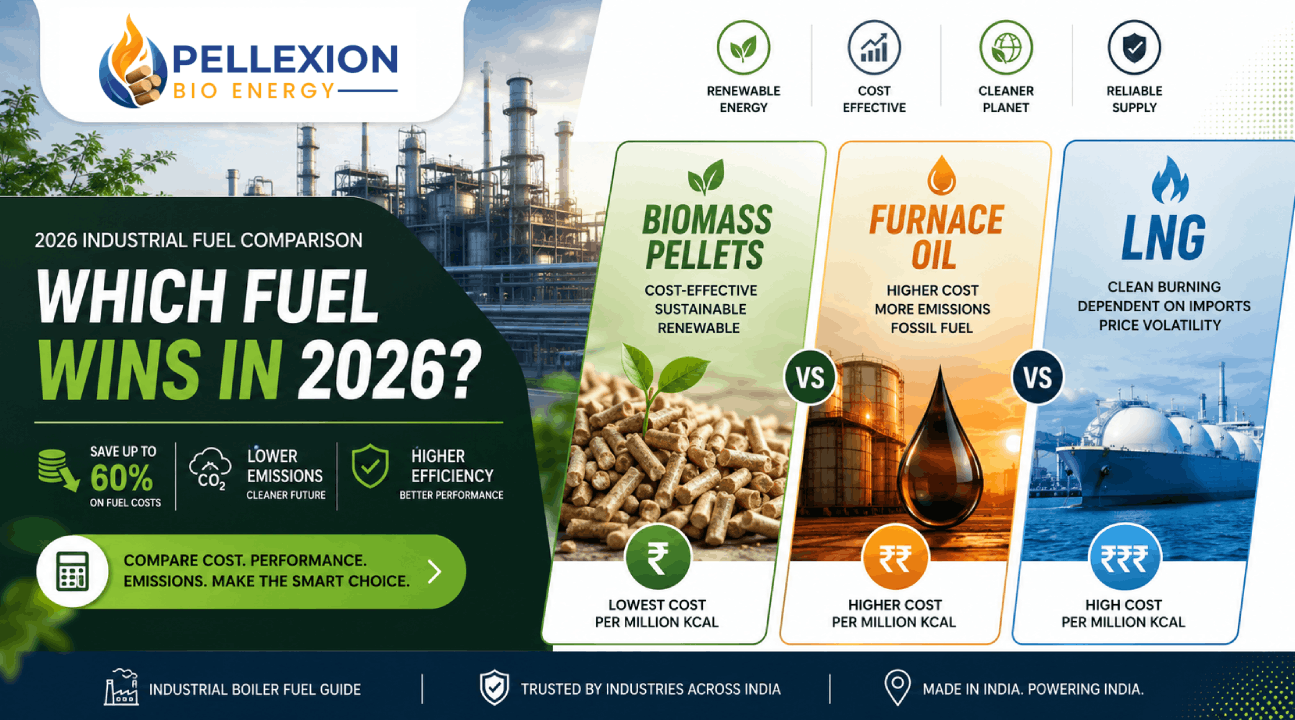
Biomass Pellets vs Furnace Oil vs LNG: Which Industrial Fuel Wins in 2026?
Choosing the wrong industrial fuel in 2026 can quietly drain lakhs of rupees from your bottom line every single month. With volatile crude prices, tightening emission norms, and [...]
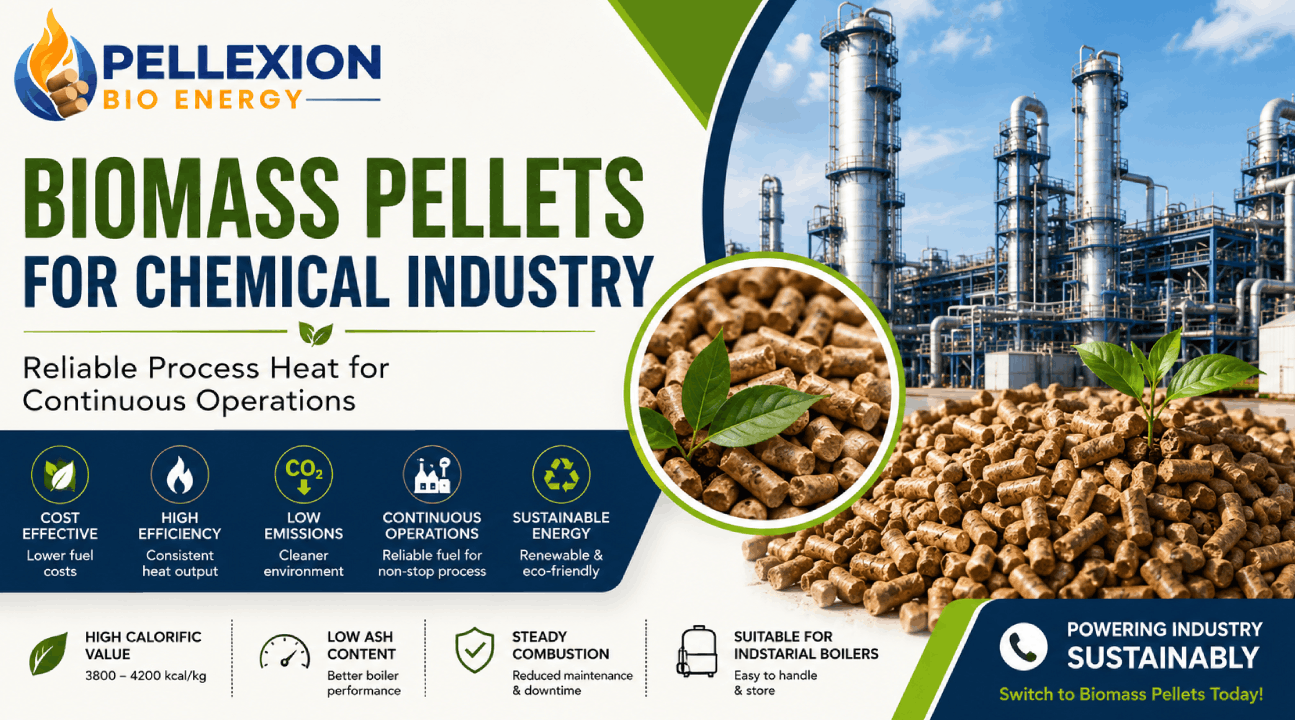
Biomass Pellets for Chemical Industry: Reliable Process Heat for Continuous Operations
The chemical industry runs on heat — and it runs on it constantly. Reactors, distillation columns, dryers, and thermic fluid heaters depend on a steady, predictable [...]
Eco-Friendly Biomass Waste Management Solutions: The Complete Guide for Indian Industries (2026)
Every day, Indian farms and factories generate mountains of organic waste — groundnut shells, cotton stalks, coriander residue, sawdust, and crop stubble. Most of it is [...]
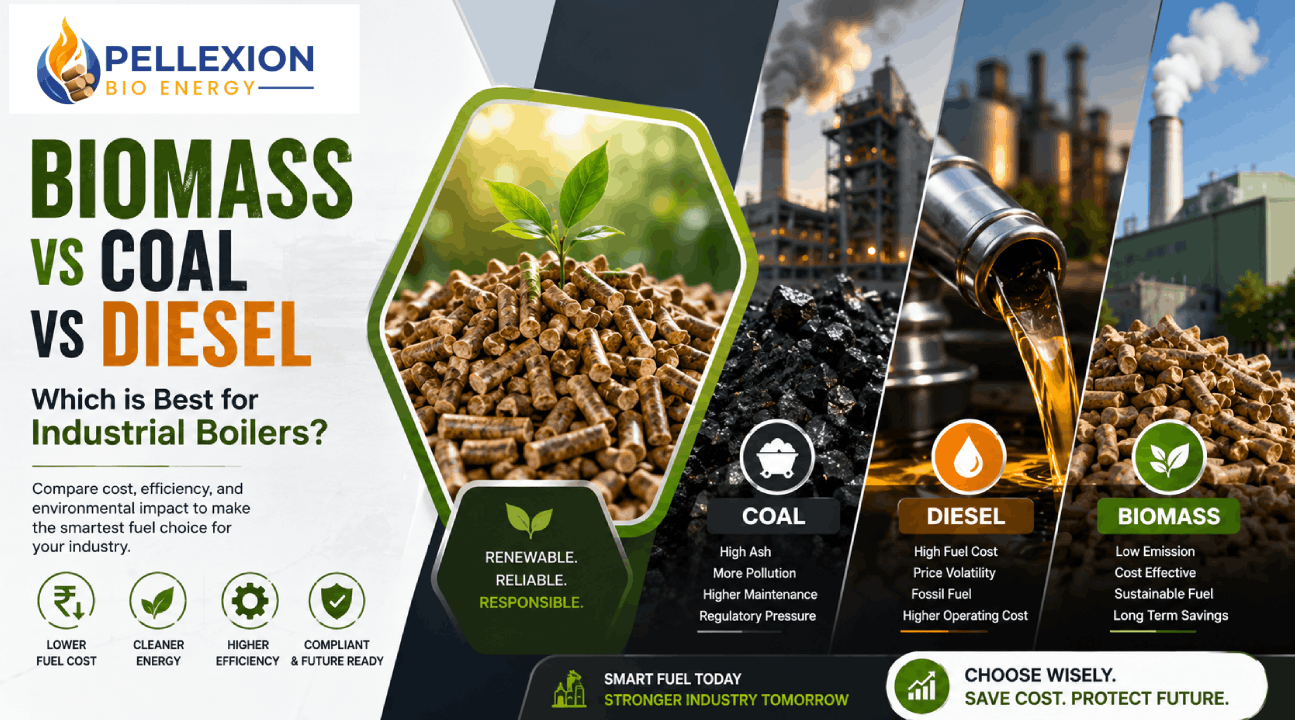
Biomass vs Coal vs Diesel: Which Is Best for Industrial Boilers? (2026 Cost & Efficiency Guide)
Every plant manager staring at a rising fuel bill eventually asks the same question: coal, diesel, or biomass — which one actually makes sense for my boiler? [...]

What Are the Real Benefits of Biomass Pellets for Cat Litter?
The same compressed-sawdust technology that heats industrial boilers is quietly changing the litter box. Here's what biomass wood pellets actually do better than clay — and [...]

Biomass Pellet & Briquette Supplier in Ahmedabad – Best Price & Reliable Delivery (2026)
If your factory, boiler, or processing unit in Ahmedabad is still burning firewood, coal, or diesel to generate heat, you are almost certainly paying more than [...]
Biomass Heating vs Gas Heating: Which One Should You Choose in India?
Every plant manager who runs a boiler, thermic fluid heater, or furnace eventually asks the same question: is it cheaper — and smarter — to heat with [...]
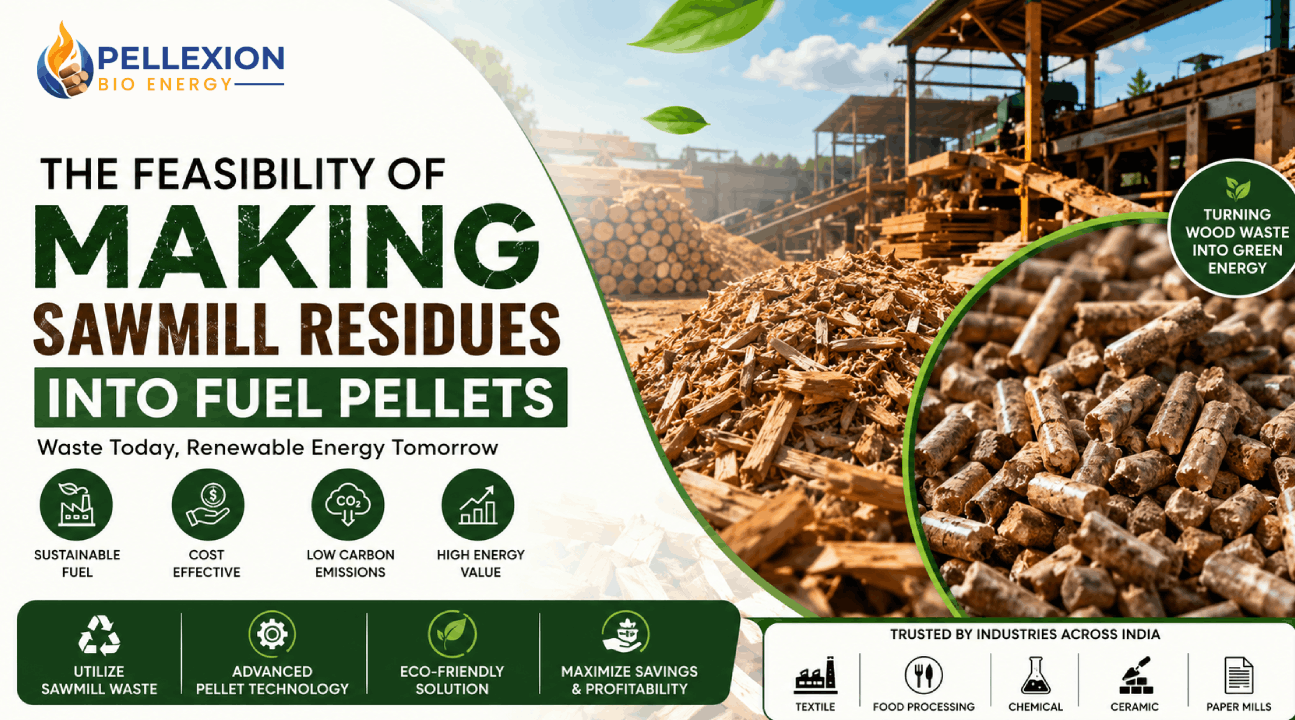
The Feasibility of Making Sawmill Residues into Fuel Pellets
Every sawmill, whether it is cutting teak in Gujarat or pine in the hills of Himachal, ends up with more than just finished timber. For every [...]
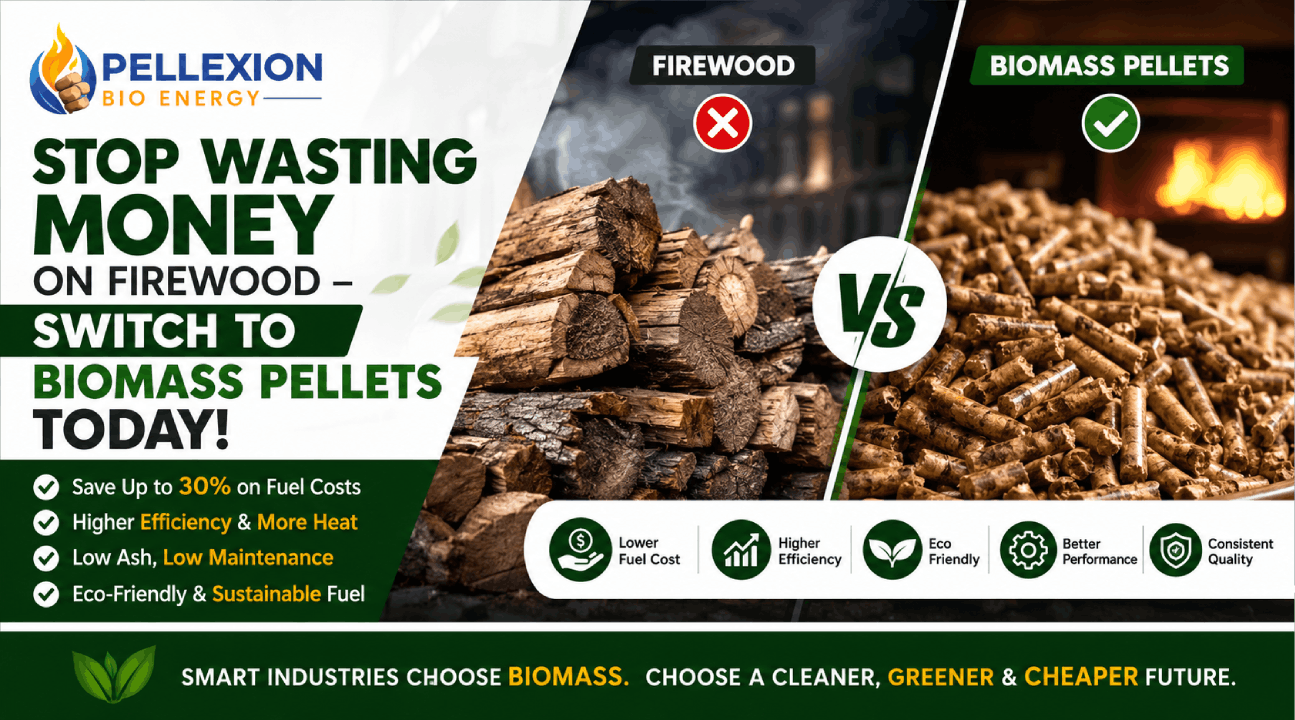
Stop Wasting Money on Firewood – Switch to Biomass Pellets Today
Same heat. Less waste. Lower monthly fuel bill. Wet, uneven firewood burns off a chunk of its energy just drying itself out. Biomass pellets arrive [...]
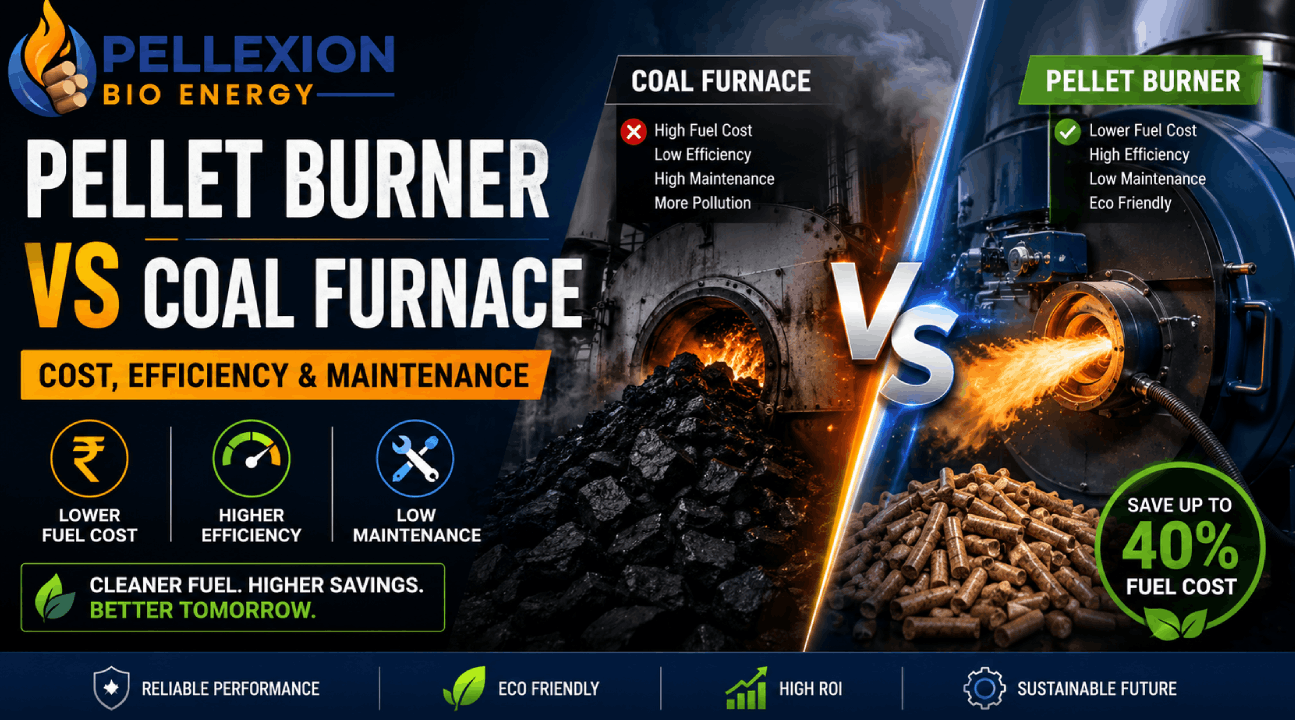
Pellet Burner vs Coal Furnace: Cost, Efficiency & Maintenance
If you run a boiler, thermic fluid heater, or furnace on coal, you've probably done this math more than once: fuel is your biggest controllable cost, [...]
Biomass Pellets for Morbi’s Ceramic & Tile Kilns: The Fuel Security Guide for 2026
Morbi runs on fire. Behind every tile that leaves this small Saurashtra town for Hyderabad, Mumbai, Delhi, or a container ship headed overseas, there's a tunnel [...]
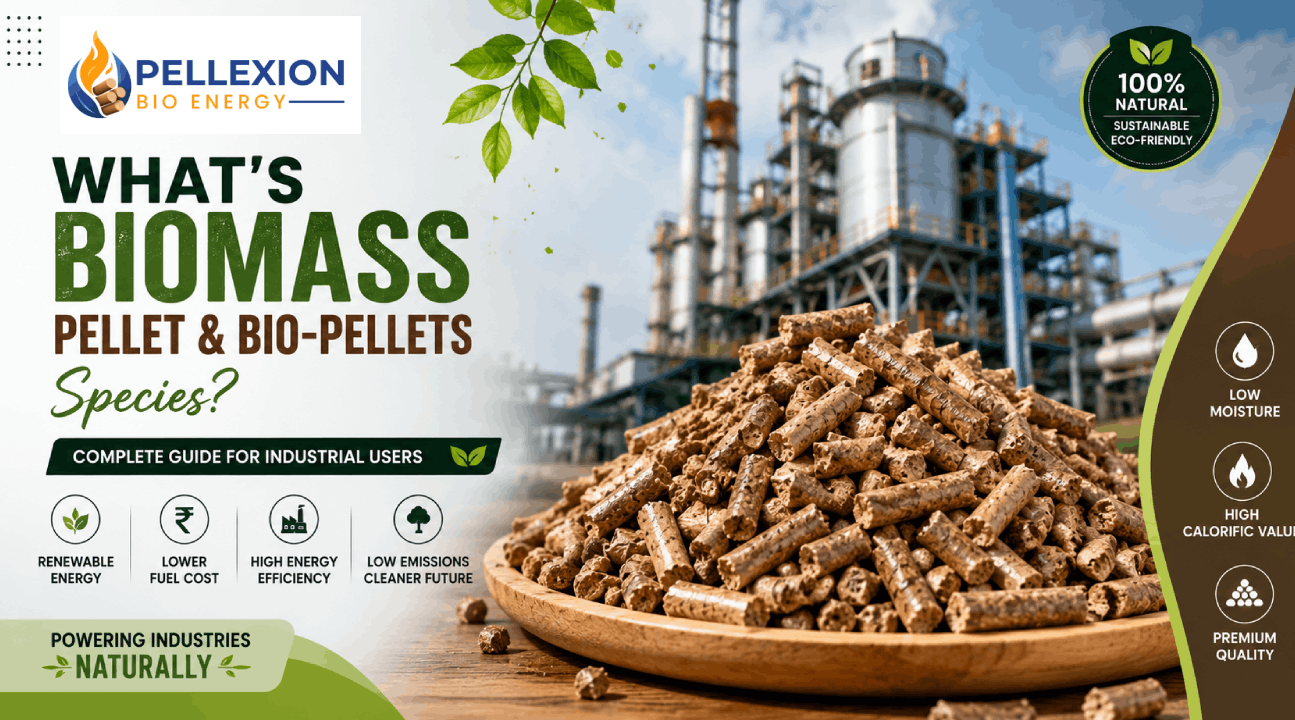
What is a Biomass Pellet? A Complete Guide to Bio-Pellet Species and Raw Materials
If you manage a boiler, a furnace, or any industrial heating system, you've probably heard the term "biomass pellet" thrown around a lot in the last [...]
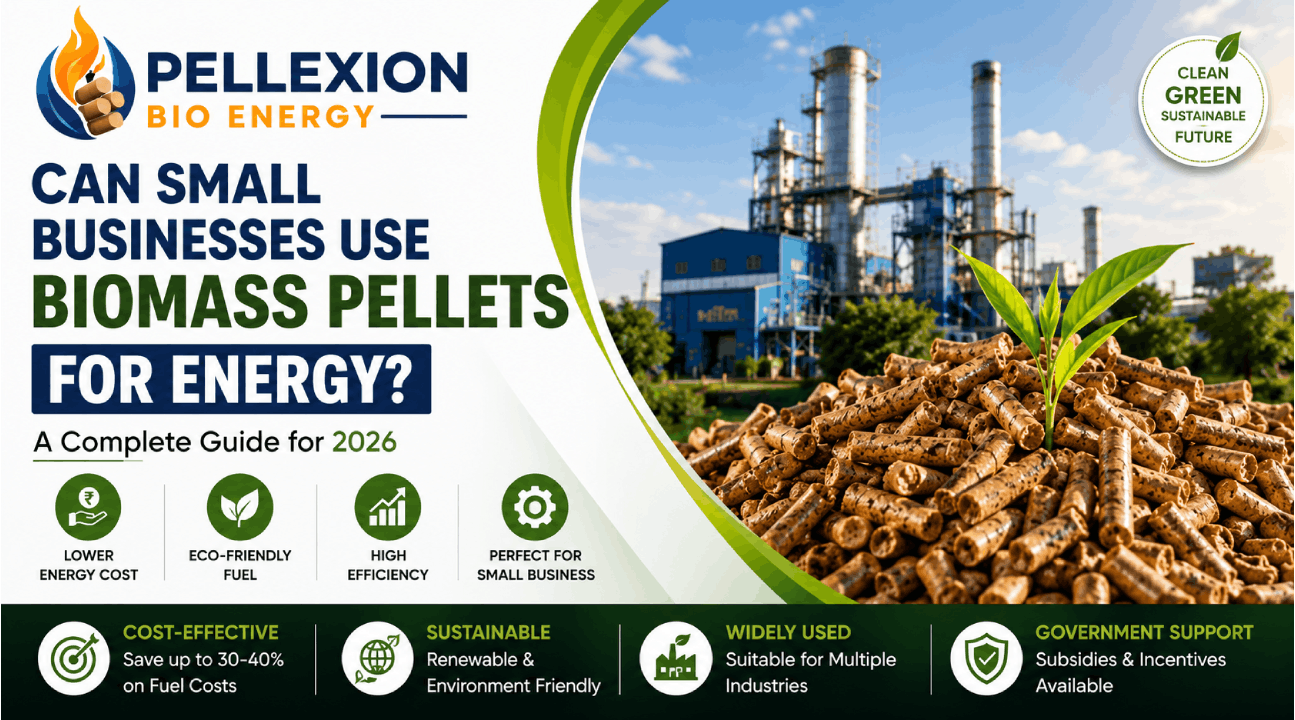
Can Small Businesses Use Biomass Pellets for Energy?
yes — and a growing number already do. Here's the full, research-backed breakdown of costs, equipment, incentives and a step-by-step plan for switching your small business over [...]
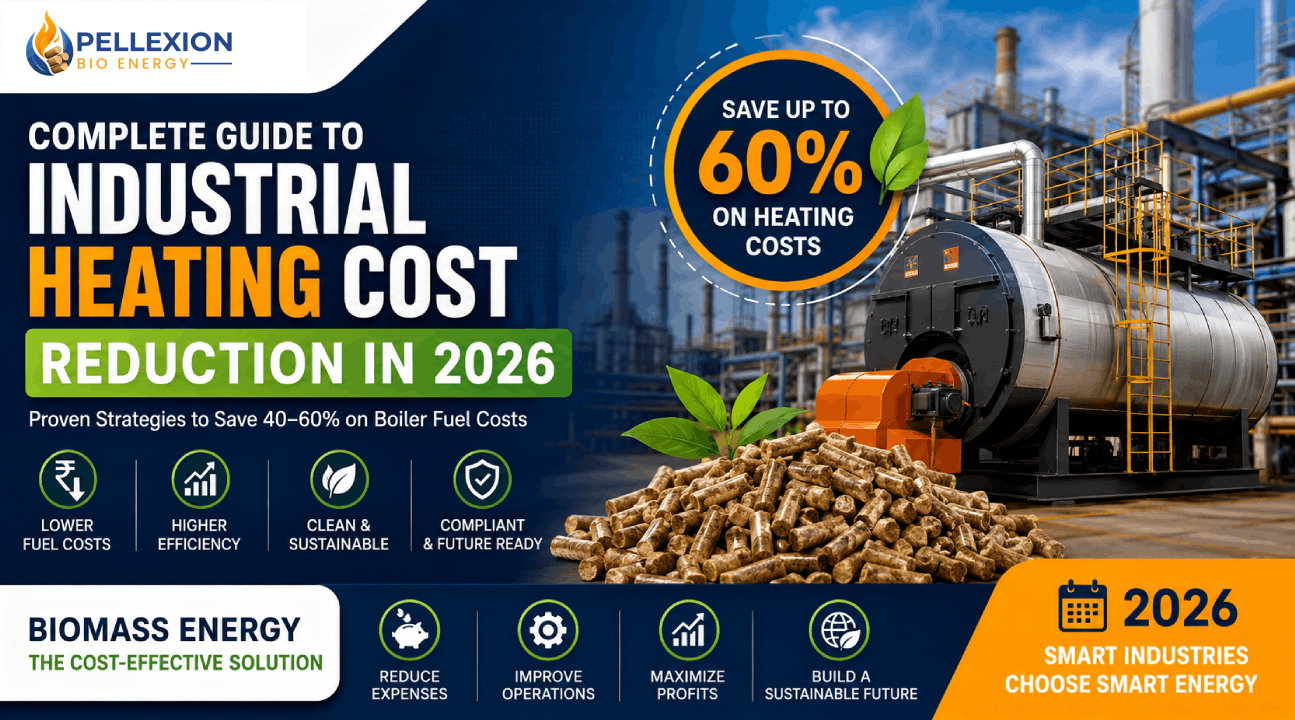
Complete Guide to Industrial Heating Cost Reduction in 2026
Industrial heating is usually the single largest controllable line item on a factory's energy bill — bigger than lighting, bigger than compressed air, often bigger than the [...]
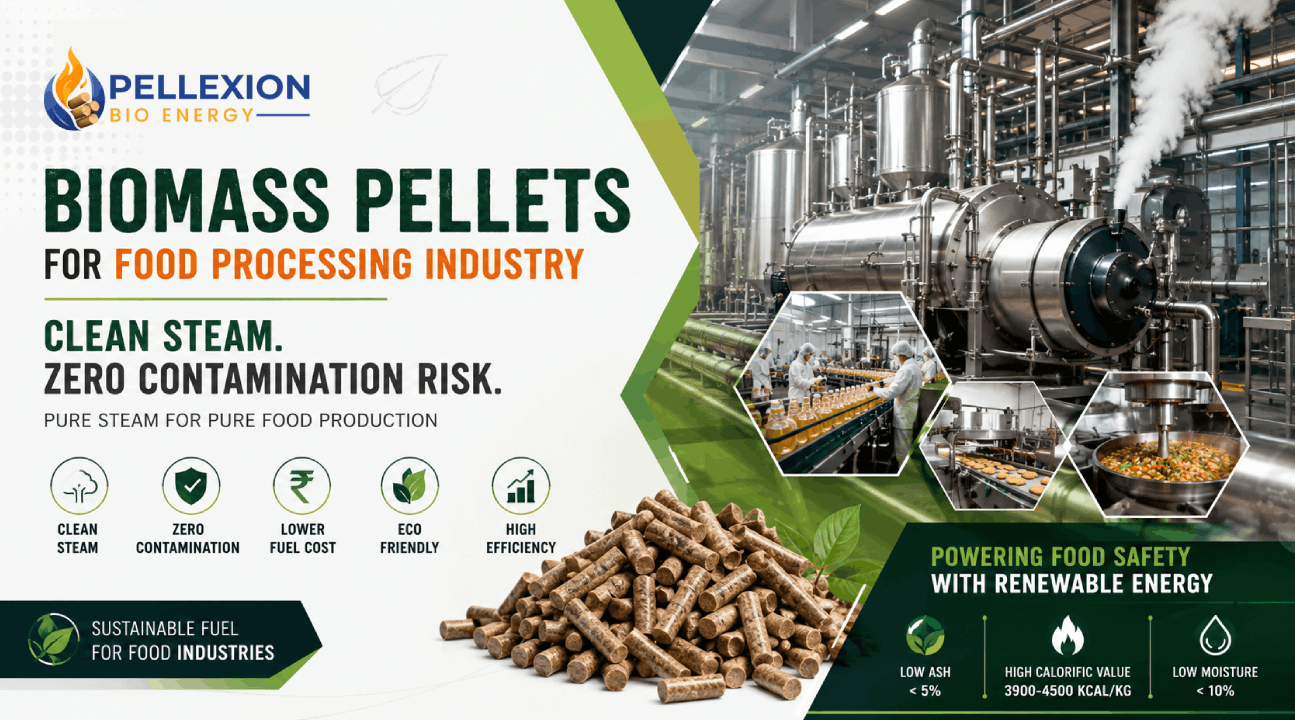
Biomass Pellets for Food Processing Industry: Clean Steam with Zero Contamination Risk
Why India's rice mills, spice units, dairies and edible oil plants are replacing coal and furnace oil with sulfur-free biomass pellets — and what it means [...]
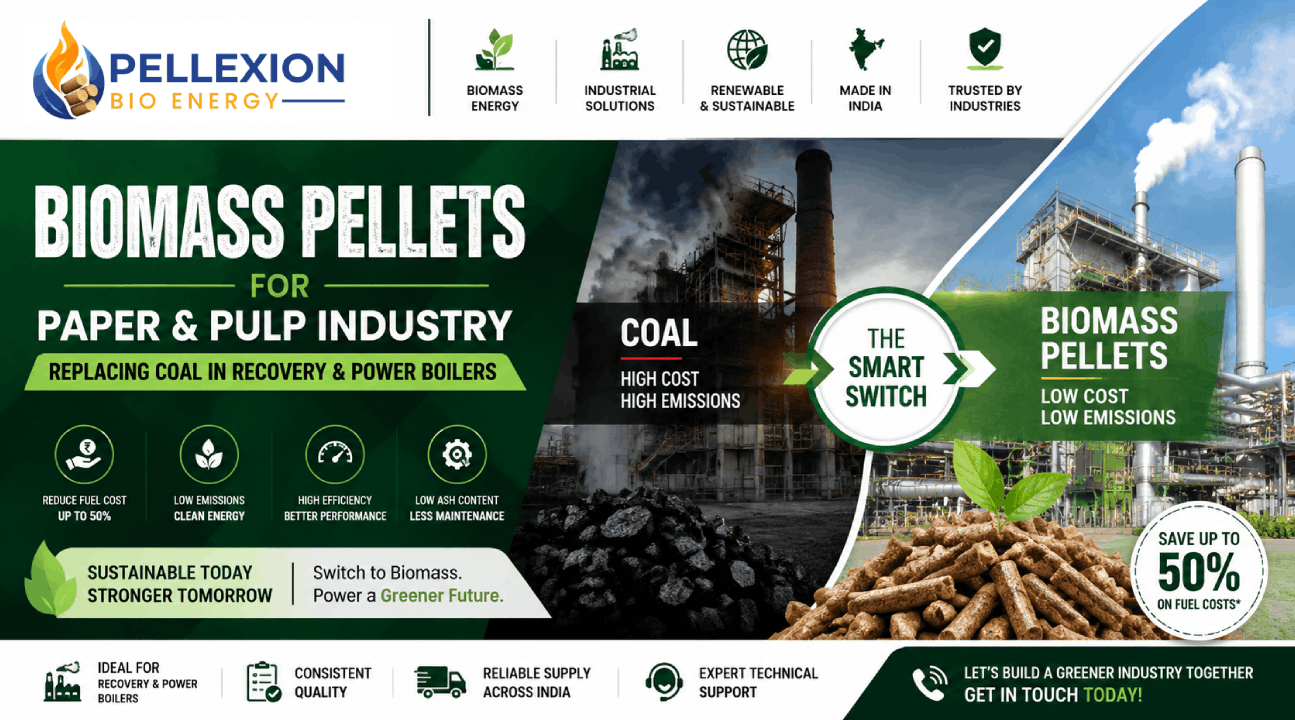
Biomass Pellets for the Paper & Pulp Industry: A Complete Coal Replacement Guide
Why the Paper & Pulp Industry Must Move Beyond Coal The paper and pulp industry runs on heat and steam. From the digester that cooks [...]