
Table of contents
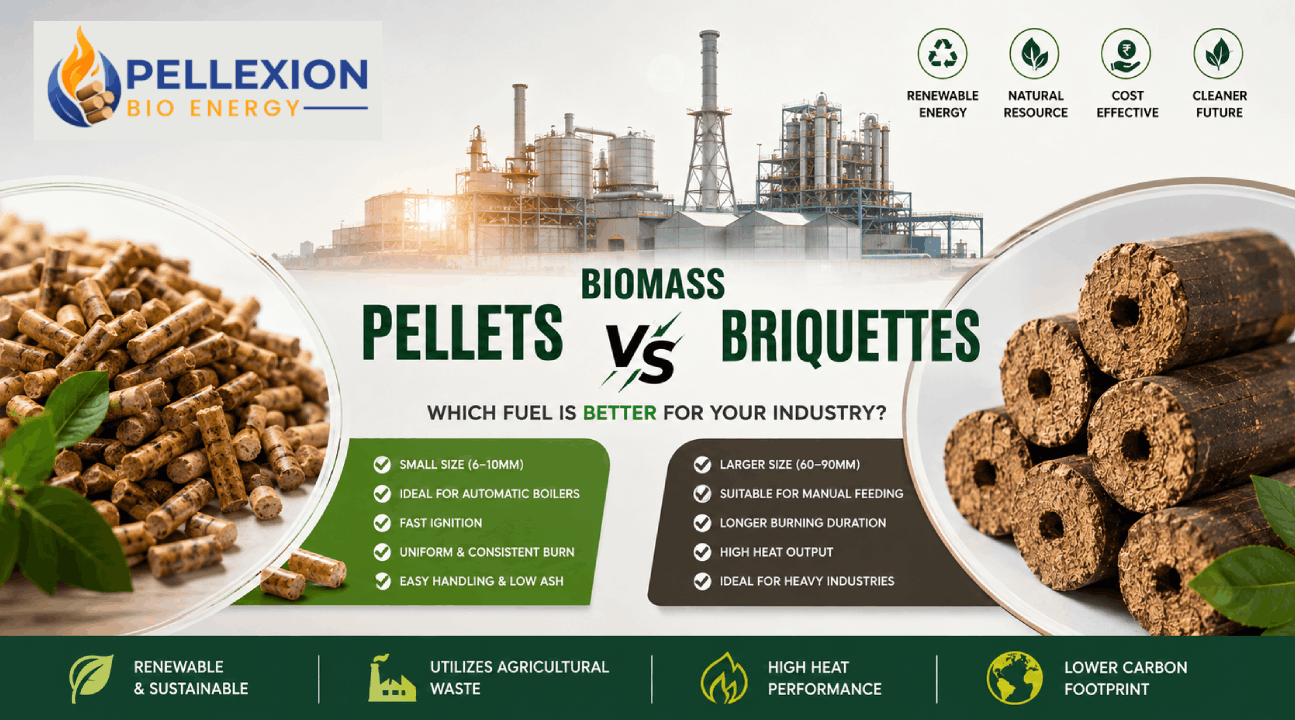
Industries are increasingly shifting toward biomass fuel as a sustainable alternative to fossil fuels. Two of the most commonly used biomass fuels in industrial heating systems are biomass pellets and biomass briquettes. Both are produced from agricultural residues and organic biomass materials, but they differ in size, combustion performance, and industrial applications.
Understanding the difference between biomass pellets vs biomass briquettes helps industries choose the most suitable fuel for their industrial boilers, furnaces, and thermal systems.
What Are Biomass Pellets?
Biomass pellets are small cylindrical fuel units produced by compressing finely ground biomass materials under high pressure. These pellets usually measure 6mm to 10mm in diameter and are known for their uniform size and high density.
Common raw materials used for pellets include:
Biomass pellets are widely used in automated industrial boilers because their uniform size allows smooth feeding and controlled combustion.
What Are Biomass Briquettes?
Biomass briquettes are larger compressed blocks of biomass materials, commonly manufactured in cylindrical shapes such as 90mm briquettes. They are designed for industries that require longer burning cycles and stable heat output.
Typical raw materials used in briquettes include:
Biomass briquettes are commonly used in industrial furnaces, brick kilns, and manual feeding boiler systems.
Key Differences Between Biomass Pellets and Biomass Briquettes
| Feature | Biomass Pellets | Biomass Briquettes |
|---|---|---|
| Size | Small (6–10mm) | Large (60–90mm) |
| Feeding System | Automatic boilers | Manual or semi-automatic boilers |
| Combustion | Faster ignition | Longer burning duration |
| Handling | Easy automated handling | Suitable for bulk fuel use |
| Application | Small to medium boilers | Large industrial heating systems |
Both fuels provide renewable energy, but the right choice depends on boiler design and industrial fuel requirements.
Which Biomass Fuel is Better for Industrial Boilers?
The best biomass fuel depends mainly on the type of industrial heating system used.
Biomass pellets are better when:
Biomass briquettes are better when:
Many industries use both fuels depending on operational needs and equipment compatibility.
Why Industries Prefer Biomass Fuels
Industries choose biomass pellets and briquettes because they offer reliable and renewable energy alternatives.
Key benefits include:
With increasing environmental awareness, biomass fuel is becoming an important part of industrial energy transition strategies.
Conclusion
Both biomass pellets and biomass briquettes are effective renewable fuel options for industrial boilers. While pellets are ideal for automated systems requiring consistent fuel flow, briquettes are better suited for industries that need long-burning and bulk heating fuel.
Selecting the right biomass fuel helps industries improve energy efficiency, sustainability, and long-term operational reliability.





 Total views : 6879
We have been using biomass briquettes for over two years. They are cost-effective and readily available in our region.
Interesting comparison. Biomass pellets seem to offer lower moisture content and higher energy density for boiler applications.
Great comparison between biomass pellets and biomass briquettes. We recently switched to pellets for our industrial boiler and noticed better combustion efficiency.
This article clearly explains the difference between biomass pellets and biomass briquettes. Very useful for industries looking to reduce fuel costs.
Thanks for sharing this detailed guide. Biomass fuel is becoming an excellent alternative to coal for industrial boilers.