
Table of contents
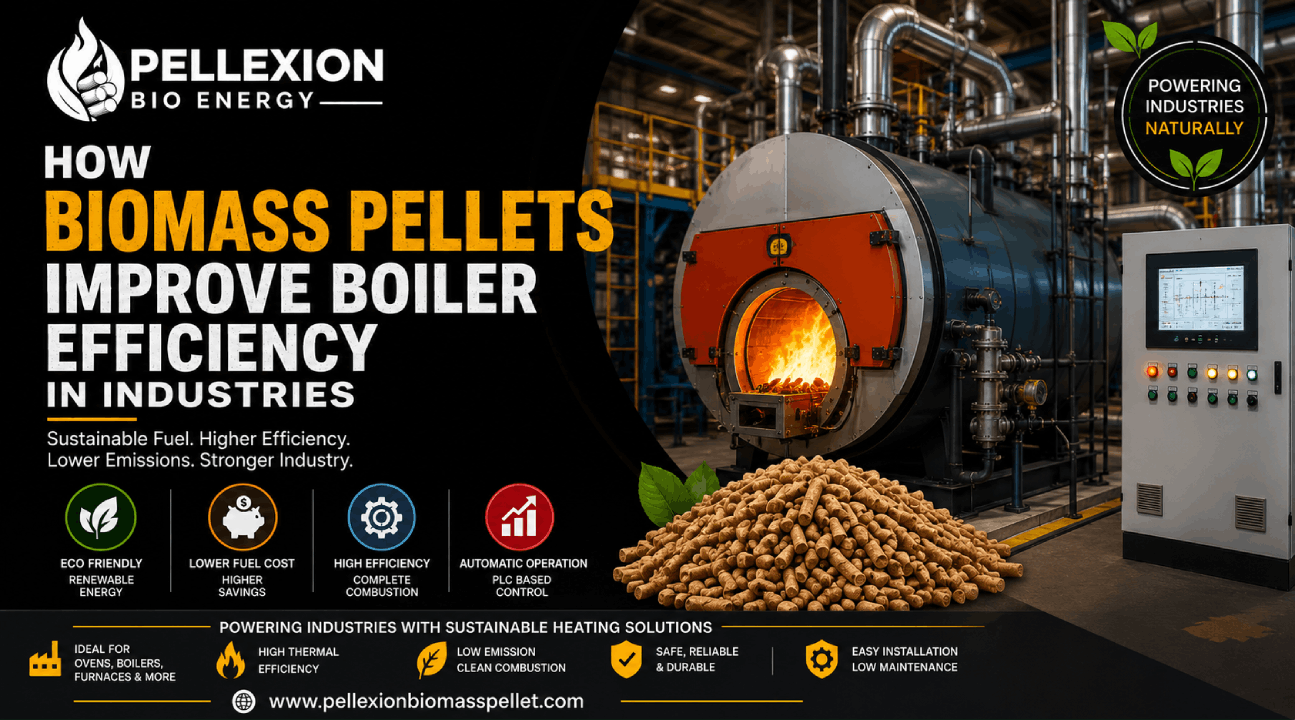
Industrial operations today require energy solutions that are efficient, cost-effective, and environmentally responsible. As industries continue shifting toward cleaner fuel alternatives, biomass pellets have emerged as one of the most reliable renewable energy sources for industrial boilers.
Pellexion biomass pellets are manufactured using high-quality agricultural and wood-based biomass materials to deliver efficient combustion, reduced emissions, and reliable industrial boiler performance. Our renewable biomass fuel solutions help industries transition toward cleaner and more sustainable energy alternatives.
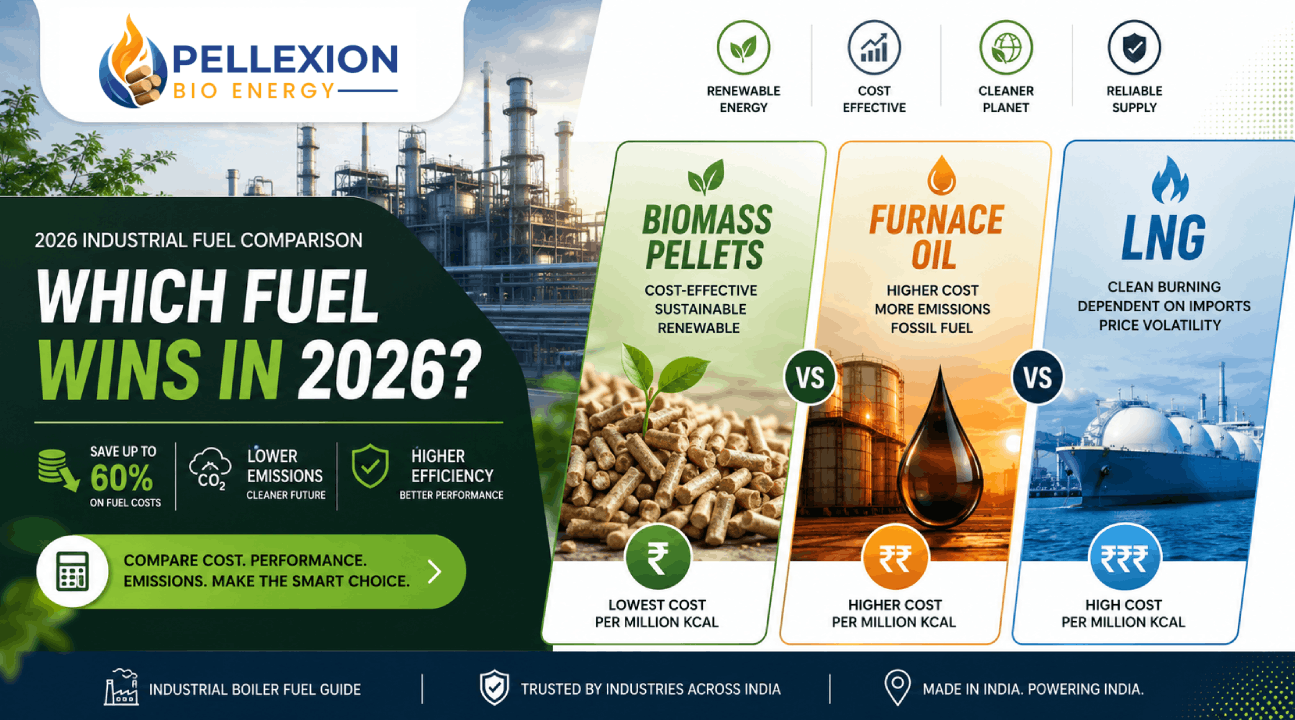
From textile industries to manufacturing plants and food processing units, biomass pellets are increasingly replacing conventional fuels such as coal and furnace oil due to their stable combustion, lower emissions, and higher operational efficiency.
In this article, we explore how biomass pellets improve boiler efficiency in industrial applications and why they are becoming the preferred fuel choice for sustainable industrial energy systems.
What Are Biomass Pellets?
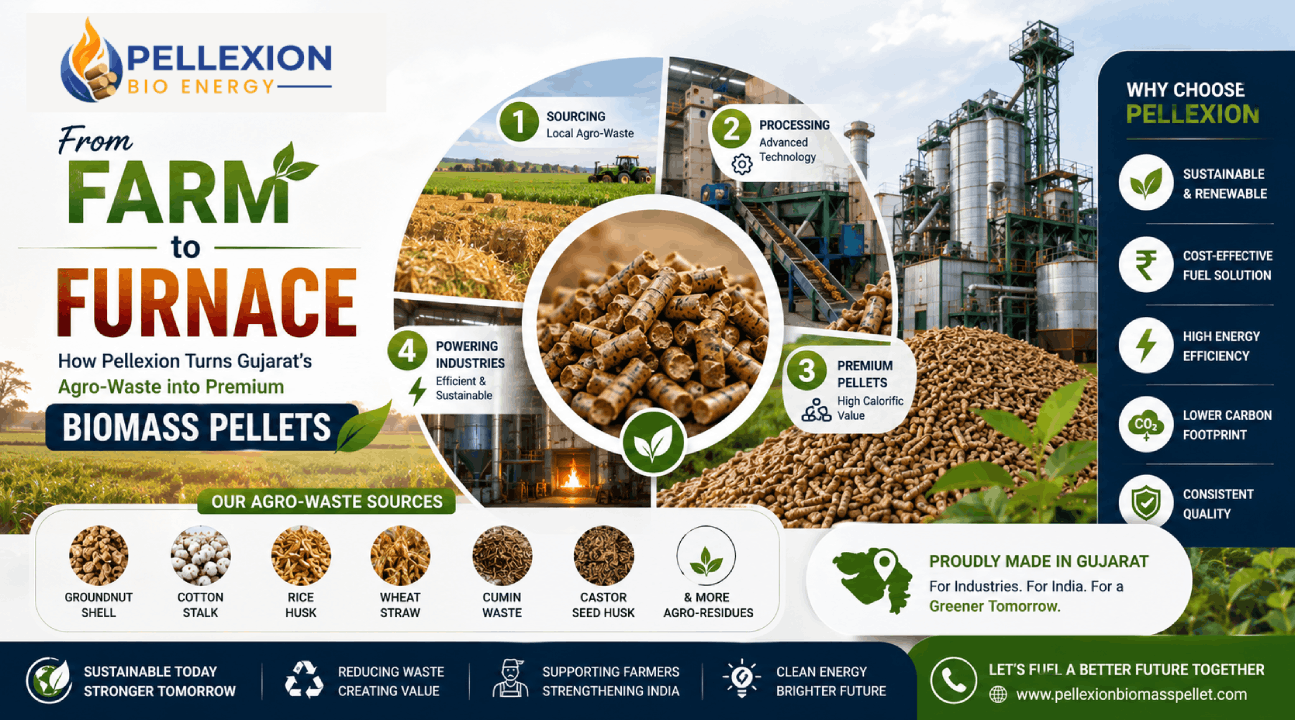
Biomass pellets are compressed renewable fuel made from agricultural waste, sawdust, wood residues, rice husk, bagasse, and other biomass materials. These materials are processed into compact cylindrical pellets with controlled moisture content and high energy density.
Due to their uniform shape and low moisture levels, biomass pellets provide cleaner and more efficient combustion compared to many traditional fuels.
Pellexion biomass pellets are produced through advanced processing technology to ensure high calorific value, low moisture content, and stable industrial fuel performance.
Why Boiler Efficiency Matters in Industries
Industrial boilers play a critical role in generating steam and heat for production processes. Boiler efficiency directly impacts:
Poor fuel quality can reduce combustion efficiency, increase ash buildup, and lead to higher operational costs. This is where high-quality biomass pellets offer significant advantages.
How Biomass Pellets Improve Boiler Efficiency
1. High Calorific Value for Better Energy Output
One of the biggest advantages of biomass pellets is their high calorific value. Since the pellets are densely compressed and manufactured under controlled conditions, they produce consistent heat output during combustion.
This allows industrial boilers to generate stable thermal energy while consuming fuel more efficiently.
Benefits:
At Pellexion Bio Energy, Pellexion biomass pellets are manufactured under strict quality standards to provide stable heat generation and optimized boiler efficiency for industrial applications.
2. Low Moisture Content Enhances Combustion
Moisture content plays a major role in boiler performance. Excess moisture reduces combustion temperature and wastes energy during evaporation.
High-quality biomass pellets typically maintain moisture levels between 8–12%, which helps achieve:
Lower moisture levels also reduce smoke formation and improve overall boiler productivity.
Pellexion biomass pellets are processed with controlled moisture management systems to support cleaner combustion and improved thermal efficiency.
3. Uniform Pellet Size Supports Stable Burning
Biomass pellets are manufactured in standardized sizes such as 6mm, 8mm, or 10mm. Their uniform shape allows controlled fuel feeding and stable combustion inside industrial boilers.
Consistent fuel size improves:
This results in smoother boiler operation and reduced fuel fluctuation.
Pellexion biomass pellets are engineered with consistent density and uniform sizing to ensure smooth industrial boiler operation and reliable combustion performance.
4. Reduced Ash Formation Lowers Maintenance
Compared to conventional fuels like coal, biomass pellets generate significantly lower ash content.
Lower ash production helps:
As a result, industries experience reduced maintenance downtime and improved operational efficiency.
At Pellexion Bio Energy, Pellexion biomass pellets are designed with low ash characteristics that help industries reduce maintenance costs and improve long-term productivity.
Environmental Benefits of Biomass Pellets
In addition to improving boiler efficiency, biomass pellets contribute to sustainable industrial operations.
Key Environmental Advantages:
Industries using biomass fuel can improve both operational performance and environmental responsibility.
At Pellexion Bio Energy, our mission is to support industries with sustainable biomass fuel solutions that promote cleaner energy and reduced environmental impact.
Industries Benefiting from Biomass Pellets
Biomass pellets are widely used across multiple sectors, including:
Their versatility and efficiency make them suitable for both small-scale and large-scale industrial heating applications.
Choosing High-Quality Biomass Pellets Matters
The performance of industrial boilers depends heavily on fuel quality. Low-grade pellets with excessive moisture or impurities can reduce combustion efficiency and increase maintenance issues.
Industries should choose biomass pellets that offer:
Reliable fuel quality ensures better boiler efficiency and long-term operational stability.
At Pellexion Bio Energy, our Pellexion biomass pellets are manufactured using advanced production technology and strict quality control processes to maintain consistent industrial fuel quality.
Why Industries Choose Pellexion Bio Energy
Industries trust Pellexion Bio Energy for reliable biomass fuel solutions that combine quality, sustainability, and consistent performance.
Our Pellexion biomass pellets are known for:
We are committed to helping industries adopt cleaner and more cost-effective renewable energy solutions.
Conclusion
Biomass pellets are transforming industrial energy systems by providing a cleaner, more efficient, and sustainable fuel alternative for boilers.
Their high calorific value, low moisture content, stable combustion, and reduced ash formation significantly improve boiler performance while lowering operational costs and emissions.
As industries continue to adopt renewable energy solutions, biomass pellets are becoming an essential part of modern industrial fuel strategies focused on efficiency, sustainability, and long-term growth.
Pellexion biomass pellets are developed to deliver reliable industrial energy performance while supporting cleaner and greener operations for the future.





 Total views : 6794