

Table of contents
If your factory in Jamnagar is still burning coal, lignite, or diesel to fire a boiler, thermic fluid heater, or furnace, you are sitting on one of the fastest and cheapest efficiency wins available to Gujarat industry today: switching to biomass briquettes. But the switch only pays off if you pick the right biomass briquette manufacturer in Jamnagar — because briquettes are not a commodity where every supplier delivers the same product. Two briquettes that look identical on a pallet can behave completely differently inside a furnace, one burning clean and consistent, the other clogging grates, spiking ash disposal costs, and quietly eating into your calculated savings.
This guide walks through exactly what a serious buyer — plant manager, procurement officer, or GIDC unit owner — should check before signing a supply contract with any biomass briquette supplier in Jamnagar Gujarat. It covers calorific value, ash and moisture specs, certification, feedstock consistency, logistics around the Jamnagar–Rajkot–Kutch belt, and pricing, so you can compare quotations apples-to-apples instead of just by rupees per ton.
Why Jamnagar Industries Are Switching to Biomass Briquettes
Jamnagar sits at the center of one of Gujarat’s heaviest industrial corridors — anchored by the Reliance and Nayara refining and petrochemical complexes, a dense cluster of GIDC estates, brass and metal units, ceramics, textiles, and a growing food-processing and dairy base across the wider Saurashtra and Kutch belt. Most of these units still run boilers or thermic fluid heaters on imported coal, lignite, or diesel — all three of which have become progressively more expensive, more regulated, and more exposed to global price shocks.
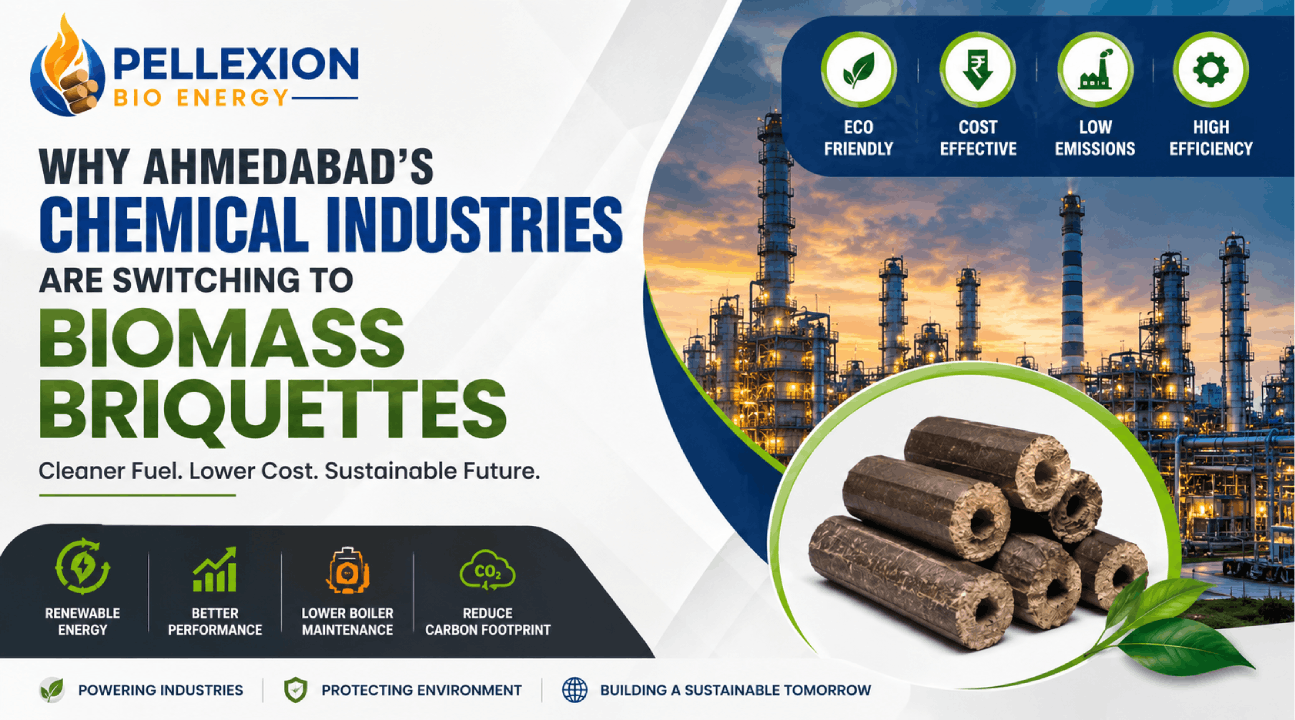
Industrial biomass briquettes in Jamnagar solve three problems at once for these plants:
- 1Cost stability — briquette pricing tracks local agricultural residue supply rather than international coal or crude benchmarks, which means far less month-to-month volatility on your fuel line item.
- 2Compliance headroom — biomass is treated as a renewable, low-sulfur fuel under GPCB norms, which helps units stay ahead of tightening emission limits without a full boiler replacement.
- 3Boiler compatibility — briquettes are sized and densified specifically to substitute directly into coal-fired FBC and AFBC boilers, chain-grate furnaces, and thermic fluid heaters with only minor feed-system adjustments.
None of that value shows up automatically, though. It depends entirely on whether the bio coal briquettes manufacturer you choose is actually producing a consistent, high-GCV, low-ash product — or just compressing whatever agricultural waste is cheapest that week.
What to Look For in a Biomass Briquette Manufacturer in Jamnagar
1. Gross Calorific Value (GCV) — and Proof of It
GCV is the single number that determines how much heat you actually get per kilogram of fuel, and therefore how many tons you’ll burn per shift. Low-quality briquettes can carry GCV values 15–20% below what’s advertised, which silently erases your expected cost savings. Ask any biomass fuel supplier in Jamnagar for:
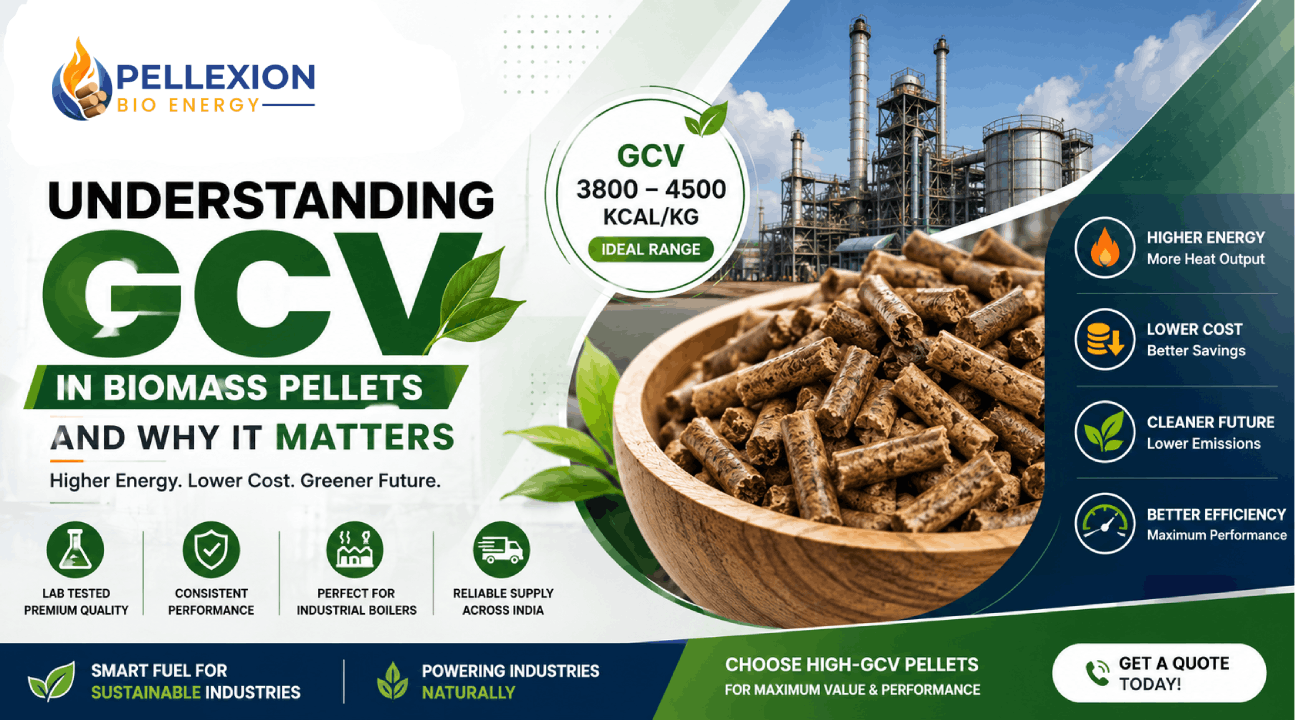
If you want the full technical breakdown of how GCV is tested and why it matters more than price per kg, see our detailed guide: Understanding GCV (Gross Calorific Value) in Biomass Pellets and Why It Matters.
2. Low Ash Content and Clean Combustion
Ash content directly affects two hidden costs: how often your grate or furnace needs manual cleaning, and how much you pay to dispose of residue. Premium white coal briquettes typically run under 4–6% ash, while poorly sourced material can push past 12–15%. Always ask for ash content as a written spec on the supply agreement, not just a verbal assurance — and request it be tested per batch, since ash content shifts with feedstock mix.
3. IS 17225 and Quality Standard Compliance
India’s IS 17225 series lays out classification and quality benchmarks for solid biofuels, covering moisture, ash, calorific value, and mechanical durability. A manufacturer that references IS 17225 in its spec sheets — rather than vague marketing language like “premium quality” — is signaling that its process is actually built around a testable standard, not guesswork.
4. Feedstock Sourcing and Consistency
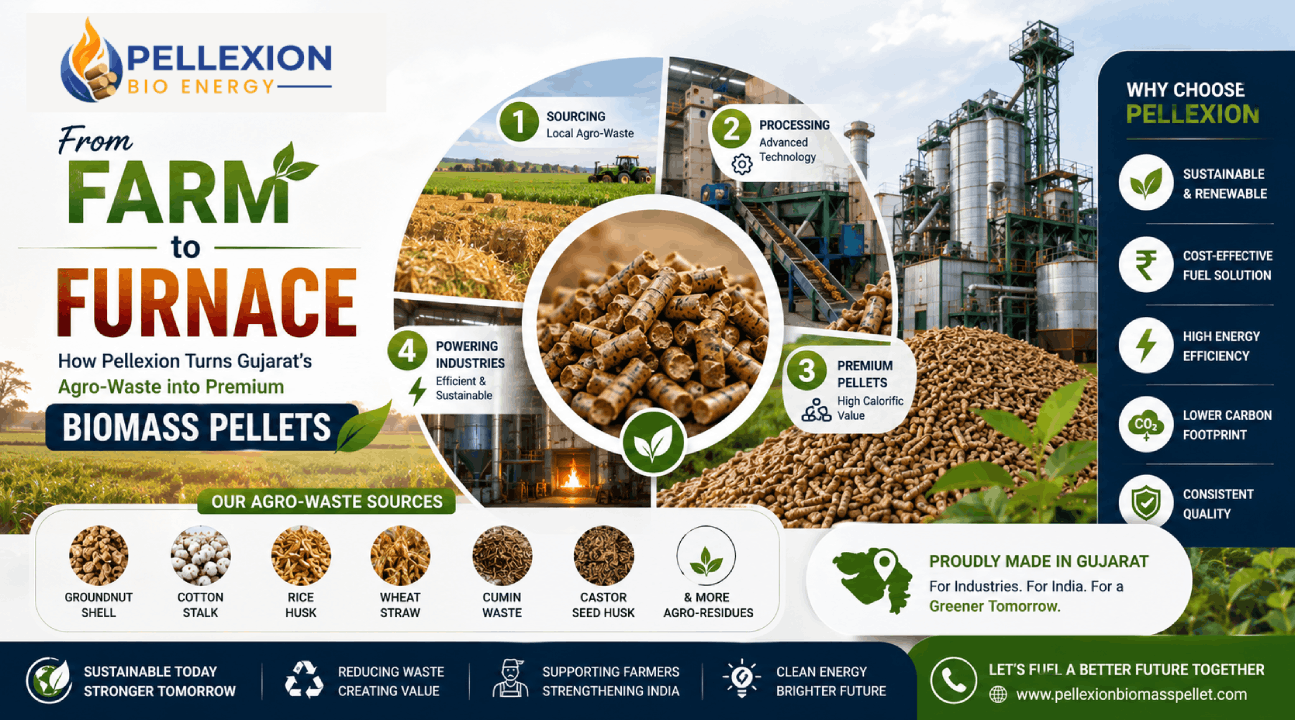
Briquette quality starts with the raw material. Reliable industrial biomass briquettes in Jamnagar are typically made from a controlled mix of groundnut shell, cotton stalk, mustard husk, and coriander waste — agro-residues abundant across Saurashtra. A manufacturer who can name their feedstock mix, and who sources consistently rather than switching materials based on whatever is cheapest that season, will give you a far more predictable burn profile from batch to batch.
5. Moisture Content Control
Moisture above 10–12% reduces effective calorific value and can cause incomplete combustion, smoke, and clinker formation. Ask how briquettes are dried and stored before dispatch, and whether moisture is tested at the point of loading — not just at the factory gate weeks earlier, especially important during Gujarat’s monsoon months when storage conditions matter most.
6. Boiler and Furnace Compatibility
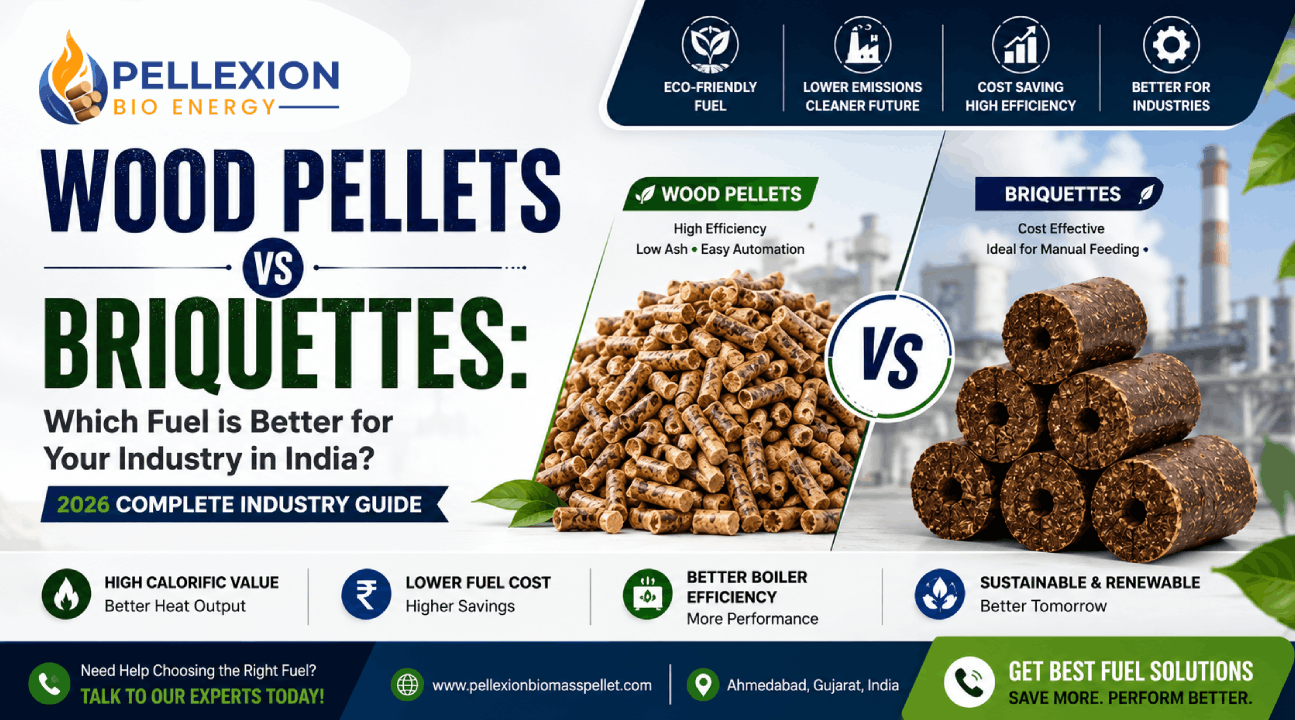
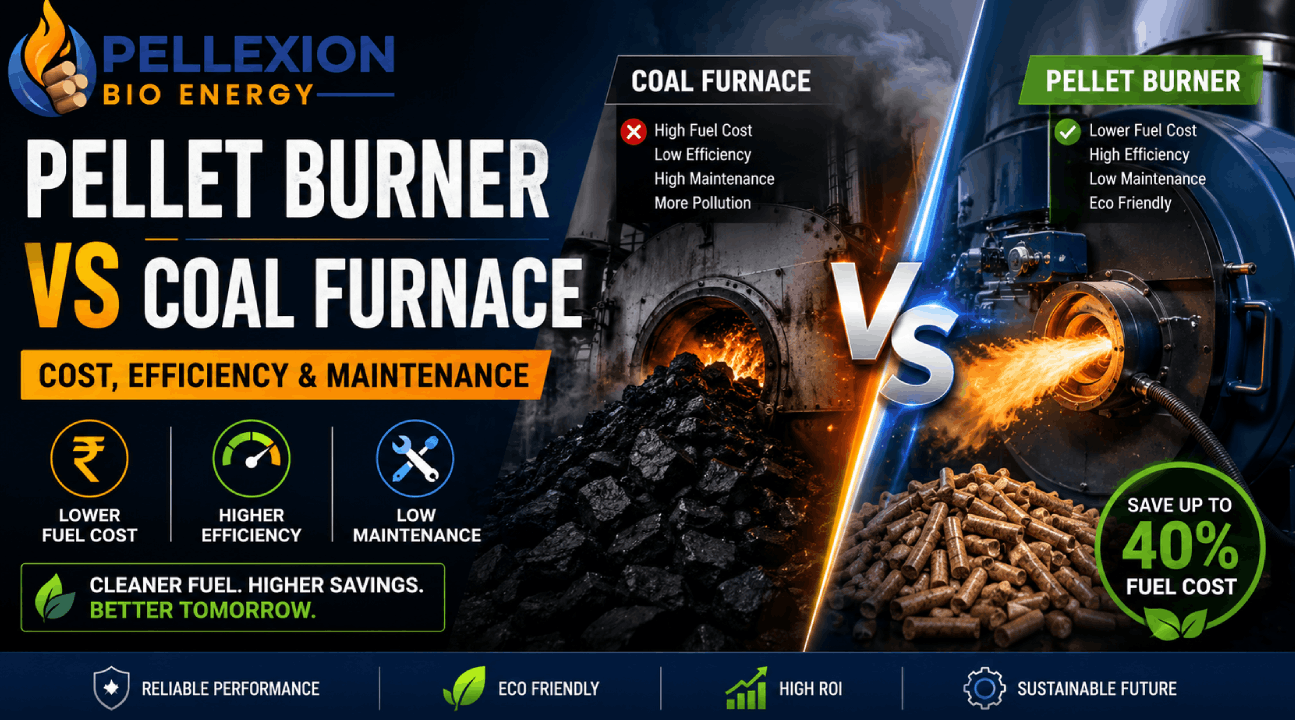
Not every briquette size and density suits every furnace type. Before ordering, confirm the manufacturer can match briquette diameter and density to your specific boiler or thermic fluid heater configuration. For a side-by-side look at how briquette-fed systems compare with traditional coal furnaces on cost, efficiency, and maintenance, read: Pellet Burner vs Coal Furnace: Cost, Efficiency & Maintenance.
7. Local Presence and Delivery Reliability Across the Jamnagar Belt
For a bulky, weight-driven fuel like biomass briquettes, freight cost and delivery reliability matter almost as much as product quality. A manufacturer based directly in the Jamnagar GIDC and Kalavad belt — rather than trucking material in from Central or North Gujarat — cuts transport cost, shortens lead times, and reduces the risk of supply gaps during peak production months. This matters even more for units near the Reliance refinery corridor and the wider Kutch–Jamnagar industrial belt, where consistent fuel supply is non-negotiable for continuous process operations.
8. Transparent, Per-Ton Pricing
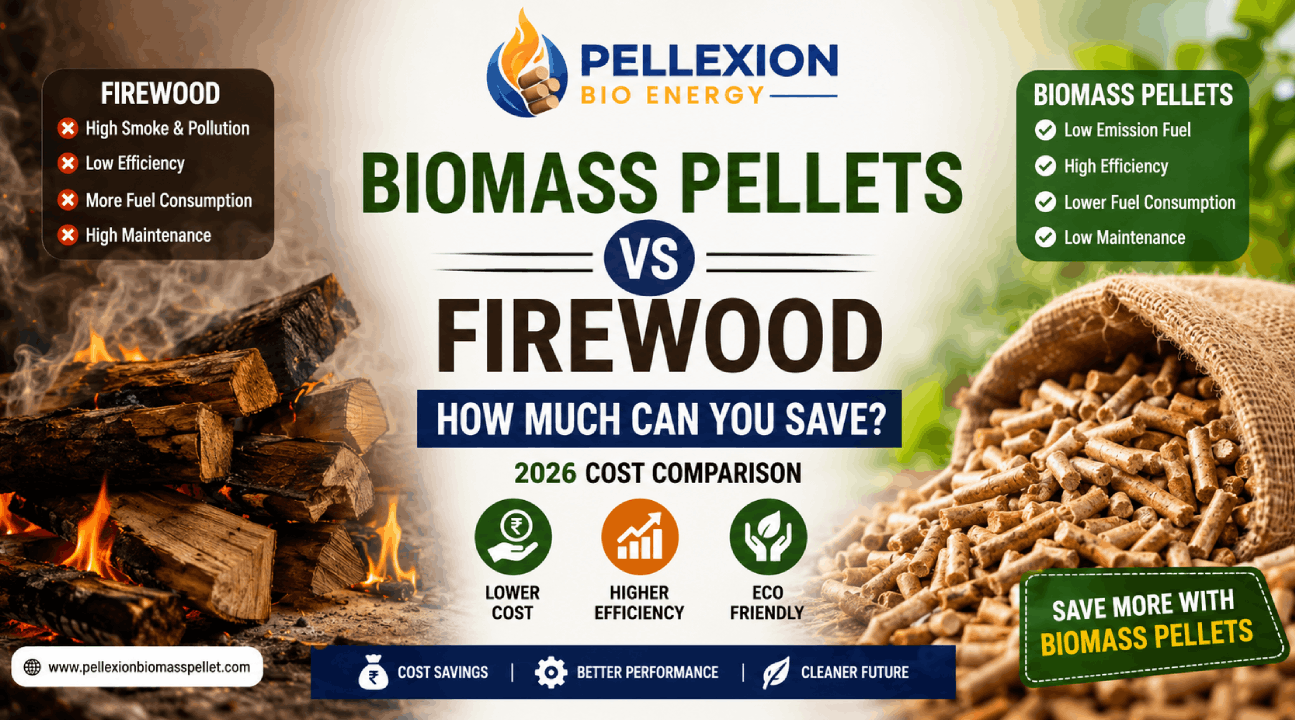
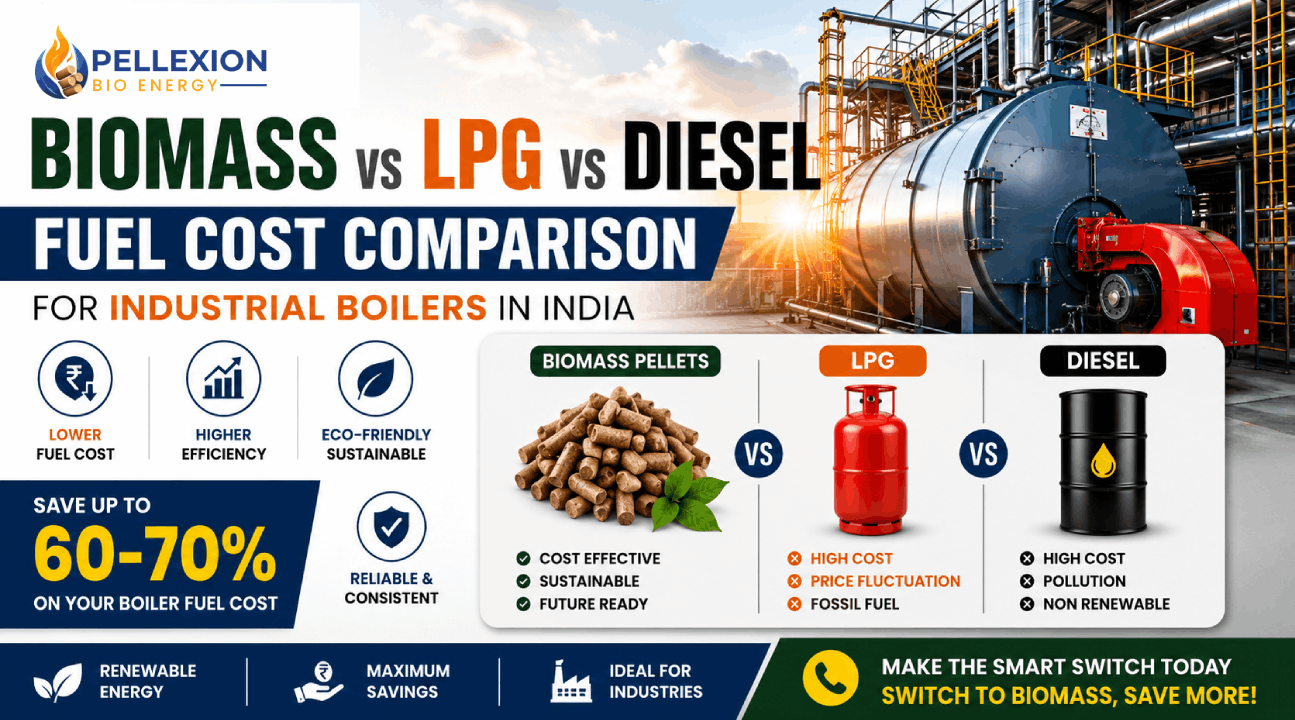
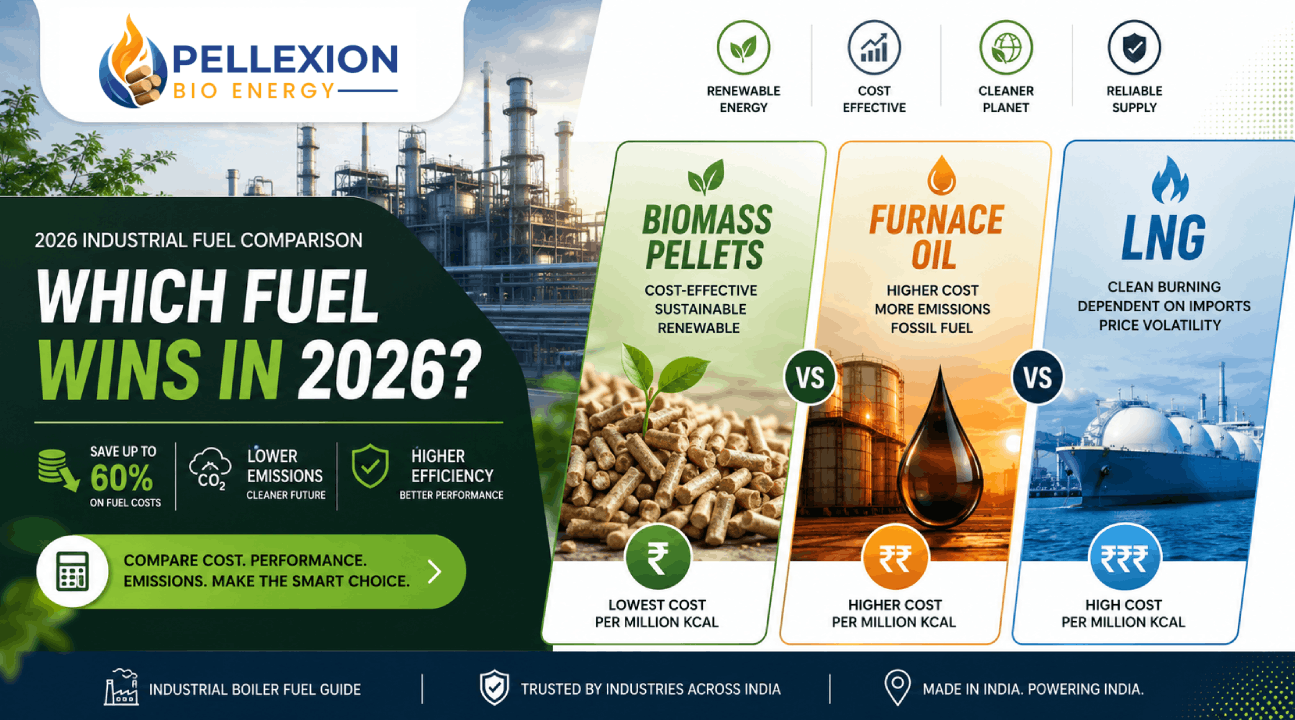
Biomass briquette price in Jamnagar per ton can vary meaningfully based on feedstock, GCV, and delivery distance. A trustworthy supplier will break pricing down clearly — ex-factory rate, freight, and any loading/handling charges — rather than quoting a single bundled number that makes comparison across vendors difficult. For the full cost logic of switching away from coal or diesel, see: Biomass vs Coal vs Diesel: Which Is Best for Industrial Boilers? and Biomass vs LPG vs Diesel: Fuel Cost Comparison for Industrial Boilers in India.
9. GPCB Compliance and Documentation
If your unit reports emissions or fuel-switching data for GPCB consents, ESG disclosures, or BRSR reporting, your fuel supplier should be able to provide test certificates and consignment documentation on request. This is increasingly important for GIDC units in Jamnagar that are formalizing sustainability reporting.
10. Track Record Across Comparable Industries
Ask which industries the manufacturer already supplies — dairy, food processing, ceramics, textiles, chemicals, or brick kilns are all common briquette users across Gujarat. A supplier with proven delivery history into boiler-driven industrial sectors is a safer bet than one still building its first reference list.
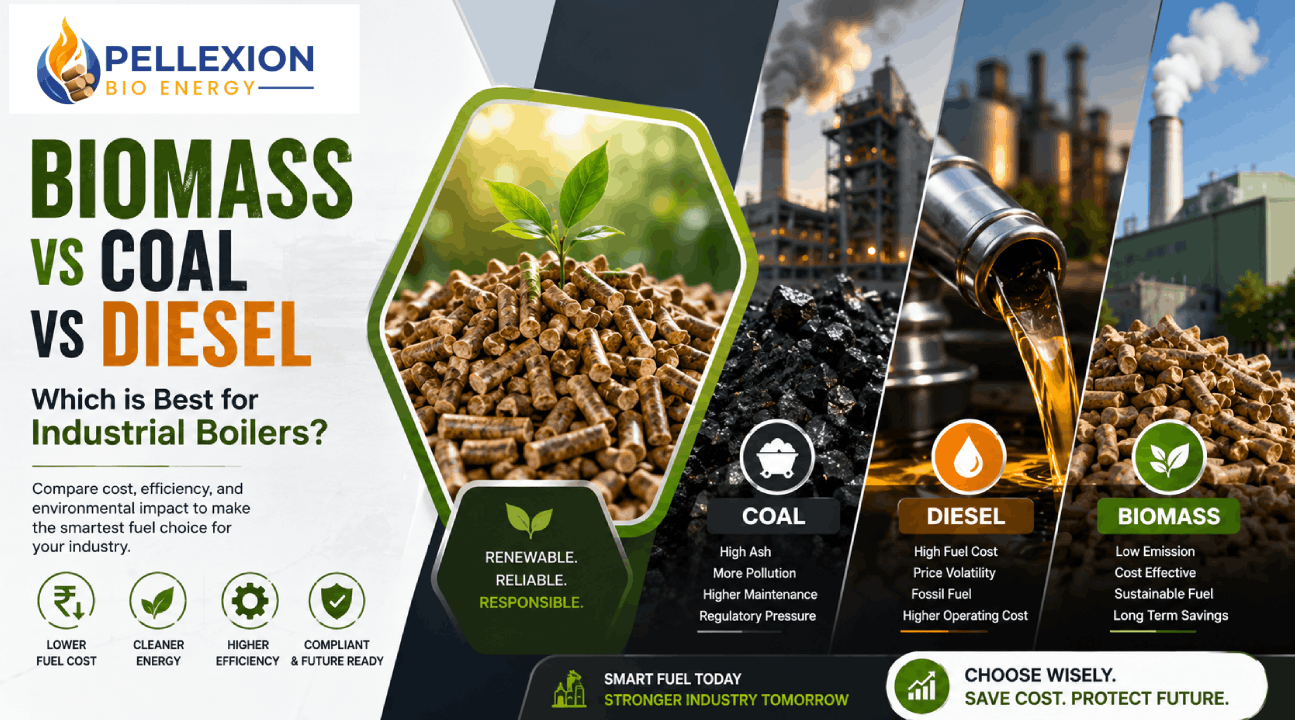
Biomass Briquettes vs Coal vs Diesel: Quick Comparison
| Feature | Biomass Briquette | Coal | Diesel |
|---|---|---|---|
| GCV Range | ~3,800–4,500 kcal/kg | ~4,000–5,500 kcal/kg | ~10,500 kcal/kg |
| Ash Content | Low (4–6%) | High (15–35%) | Very Low |
| Sulfur Content | Negligible | Moderate–High | Moderate |
| Price Stability | Stable, locally driven | Volatile, import-linked | Highly volatile |
| Renewable | Yes | No | No |
| GPCB Compliance Support | Strong | Weak | Moderate |
| Boiler Retrofit Needed | Minimal | — | Significant |
(GCV and ash figures are indicative ranges; always confirm against the specific batch test certificate from your supplier.)
Compare briquette pricing against your current fuel bill — request a free cost analysis
Where We Deliver: Biomass Briquettes Across the Jamnagar & Saurashtra Belt
Pellexion Bio Energy’s manufacturing facility is based at Kharedi, Kalavad, in Jamnagar district — placing us directly inside the region we serve, rather than trucking material in from outside Saurashtra. We regularly supply:
See our full coverage map and facility details on the Our Locations page.
Check if we deliver to your Jamnagar plant — WhatsApp us your location
How to Choose: A Step-by-Step Checklist
- 1Request a lab-tested GCV and ash content report — not a brochure figure.
- 2Confirm the feedstock mix (groundnut shell, cotton stalk, mustard husk, coriander waste, etc.).
- 3Ask whether the product references IS 17225 quality classification.
- 4Get moisture content specs, especially for monsoon-period deliveries.
- 5Confirm briquette size/density compatibility with your specific boiler or furnace.
- 6Check manufacturing location and average delivery time to your Jamnagar facility.
- 7Get a transparent, itemized quote — ex-factory price, freight, handling.
- 8Ask for references from similar industrial users in the Saurashtra region.
- 9Confirm minimum order quantity, packaging, and repeat-order lead time.
- 10Request sample delivery before committing to a full truckload order.
Why Industrial Buyers in Jamnagar Choose Pellexion Bio Energy
Pellexion Bio Energy is the #1 Manufacturer in Gujarat | Pellexion Bio Energy, Rajkot, with our production facility located directly in Kharedi, Kalavad, Jamnagar. That means:
We’re honest about one thing: no manufacturer, including us, should be taken at their word alone. Ask any supplier — us included — for the documentation described in this guide before you commit to a contract. That’s the actual definition of “best,” not just marketing copy.















 Total views : 11024