

Table of contents
Every litre of milk that moves through a modern dairy depends on one invisible utility: steam. Pasteurisation, sterilisation, Clean-in-Place (CIP) cycles, evaporators, and spray dryers all run on it. Yet for most Indian dairy and milk processing plants, the fuel that makes that steam — furnace oil, diesel (HSD), LPG, or imported coal — is the single largest and most unpredictable line item in the utility budget.
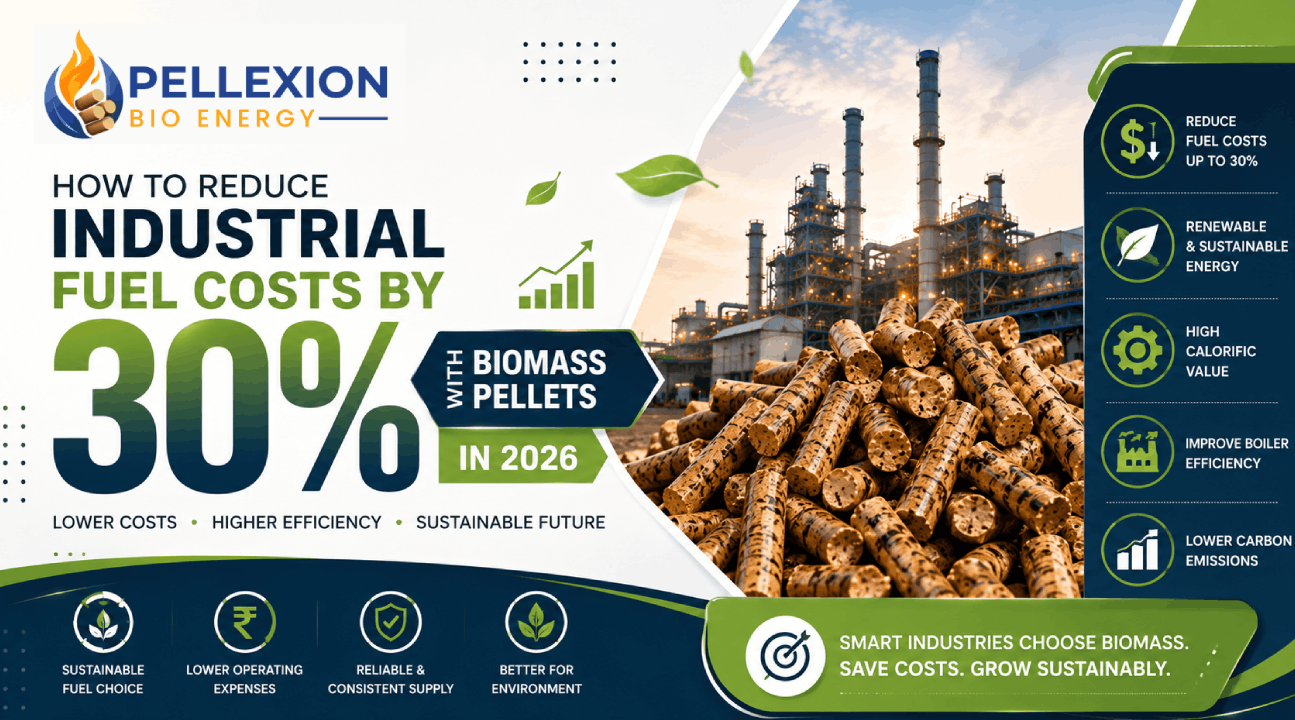
Biomass pellets change that equation. Made from densified agricultural residue, they deliver high-calorific, food-safe, carbon-neutral heat that can cut steam generation costs by 40–60% compared with diesel and furnace oil, while helping your plant meet tightening emission norms and sustainability commitments. This in-depth guide explains exactly how biomass pellets for dairy and milk processing plants work, what they cost, how to switch your boiler, and how quickly the investment pays back — with real cost tables, a step-by-step conversion roadmap, and a detailed FAQ.
Quick answer: Biomass pellets are a renewable solid biofuel that produce clean, consistent steam for dairy boilers at roughly ₹1.2–₹1.8 per kg of steam — less than half the cost of diesel or furnace oil — with up to 95% lower net CO₂ emissions and full compatibility with modern biomass and AFBC/FBC boilers.
Over the last decade, biomass fuel has moved from a niche “green” alternative to a mainstream, boardroom-level cost strategy for Indian process industries — and dairy is one of the biggest beneficiaries. The reason is simple: dairies run their boilers almost continuously, so even a small reduction in the cost of each kilogram of steam compounds into crores of rupees saved every year. At the same time, milk processors face mounting pressure from pollution control boards, ESG-conscious buyers and volatile oil markets. Biomass pellets sit exactly at the intersection of these pressures, offering a single solution that is cheaper, cleaner and more predictable. In the sections that follow, we’ll break down the technology, the economics, the switching process and the compliance angle in practical detail — so that whether you are a plant engineer, a finance head or an owner, you have everything you need to make an informed decision.
What Are Biomass Pellets? A Simple Definition
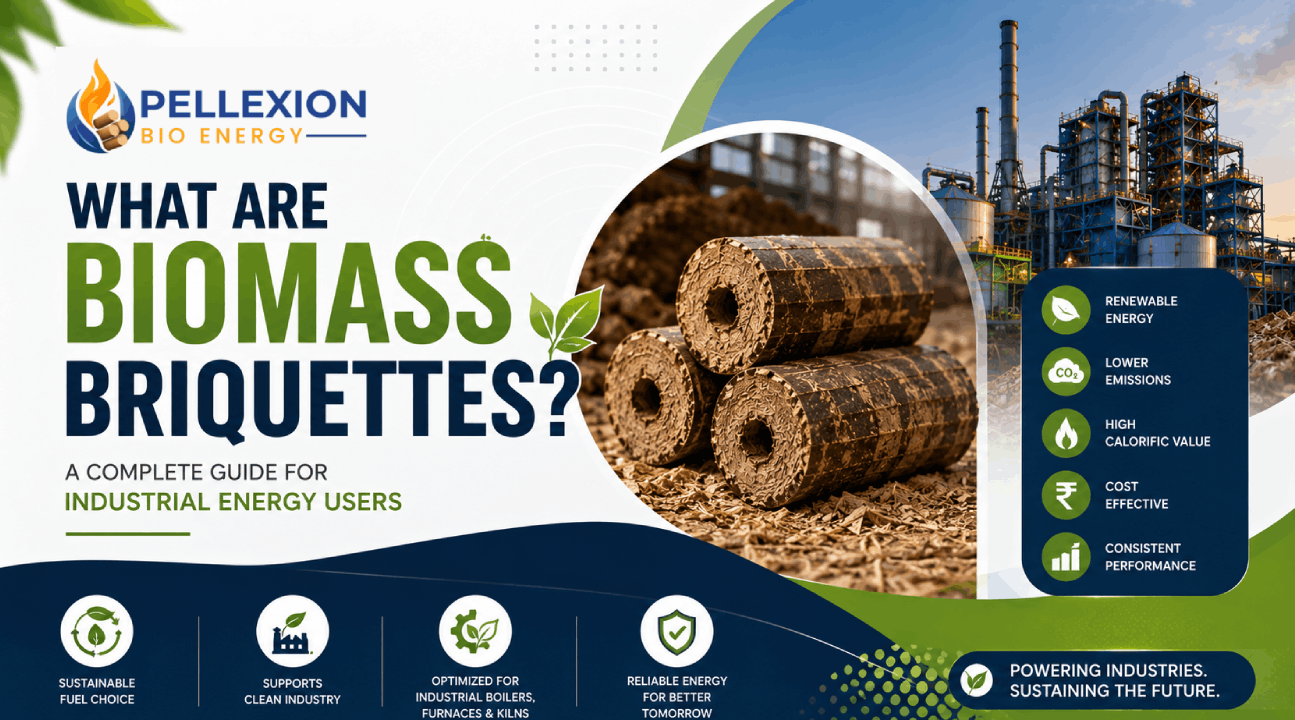
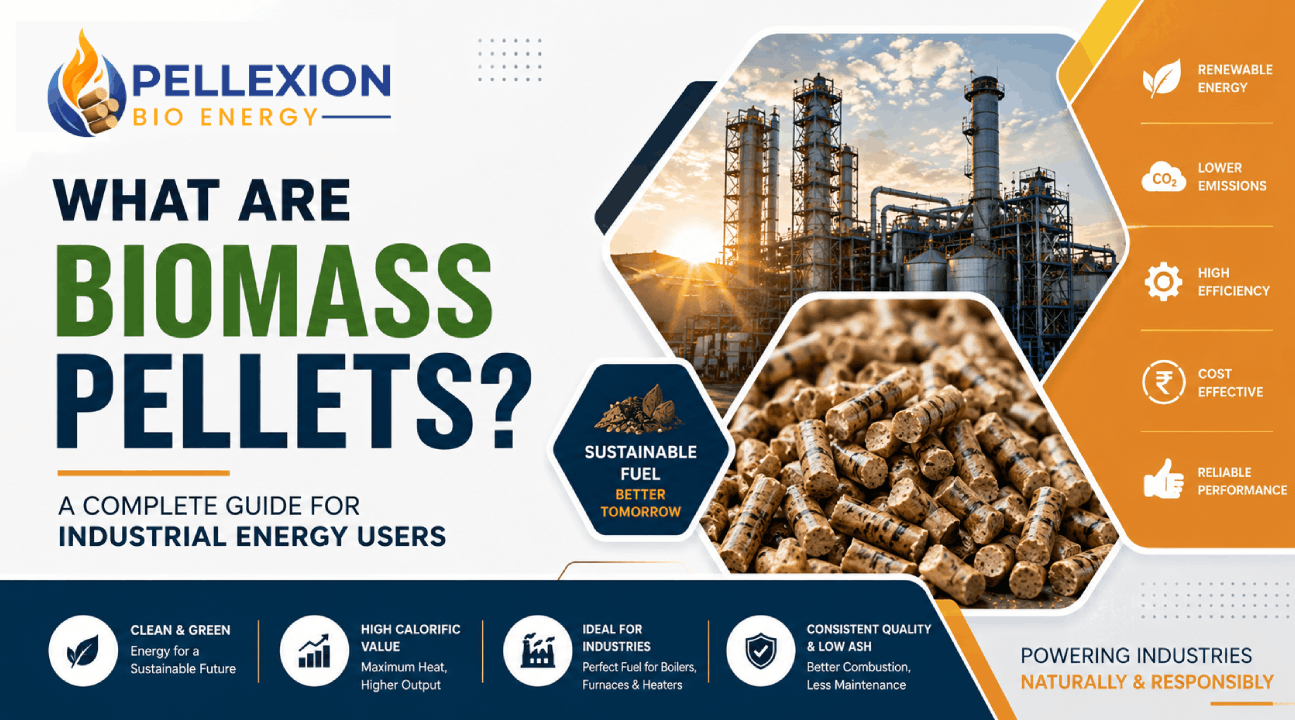
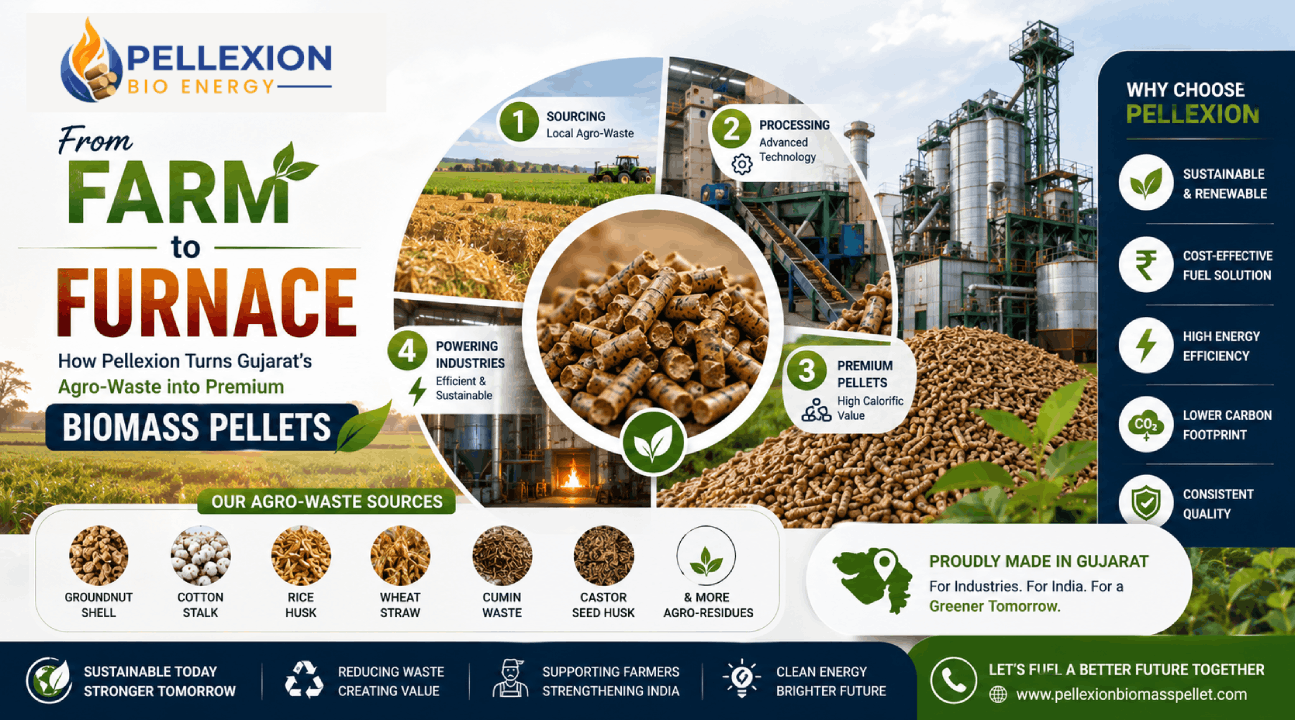
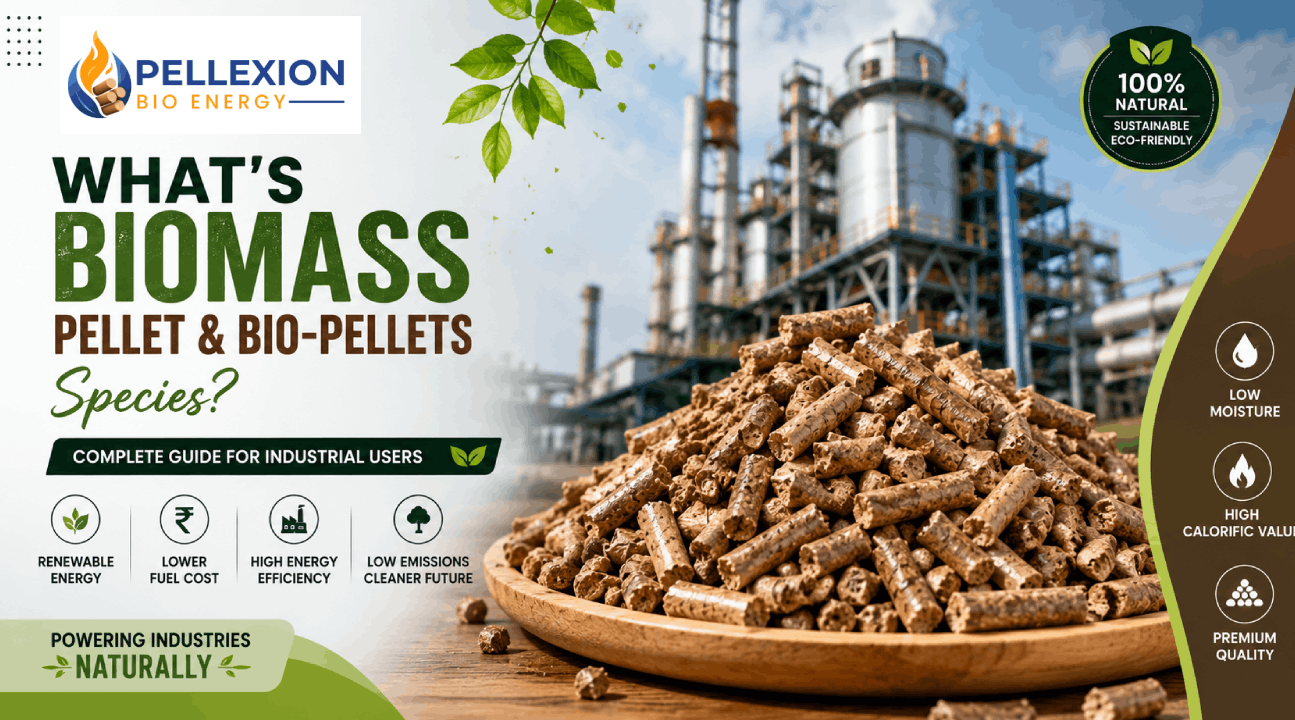
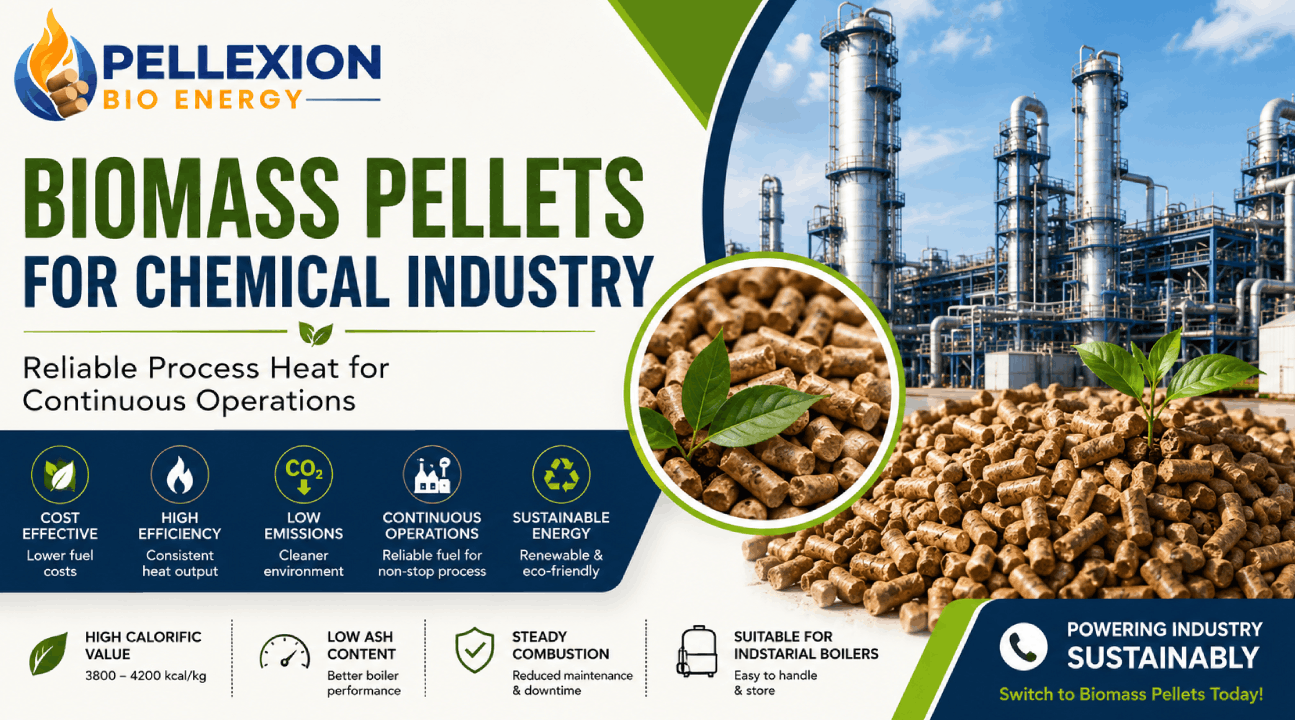
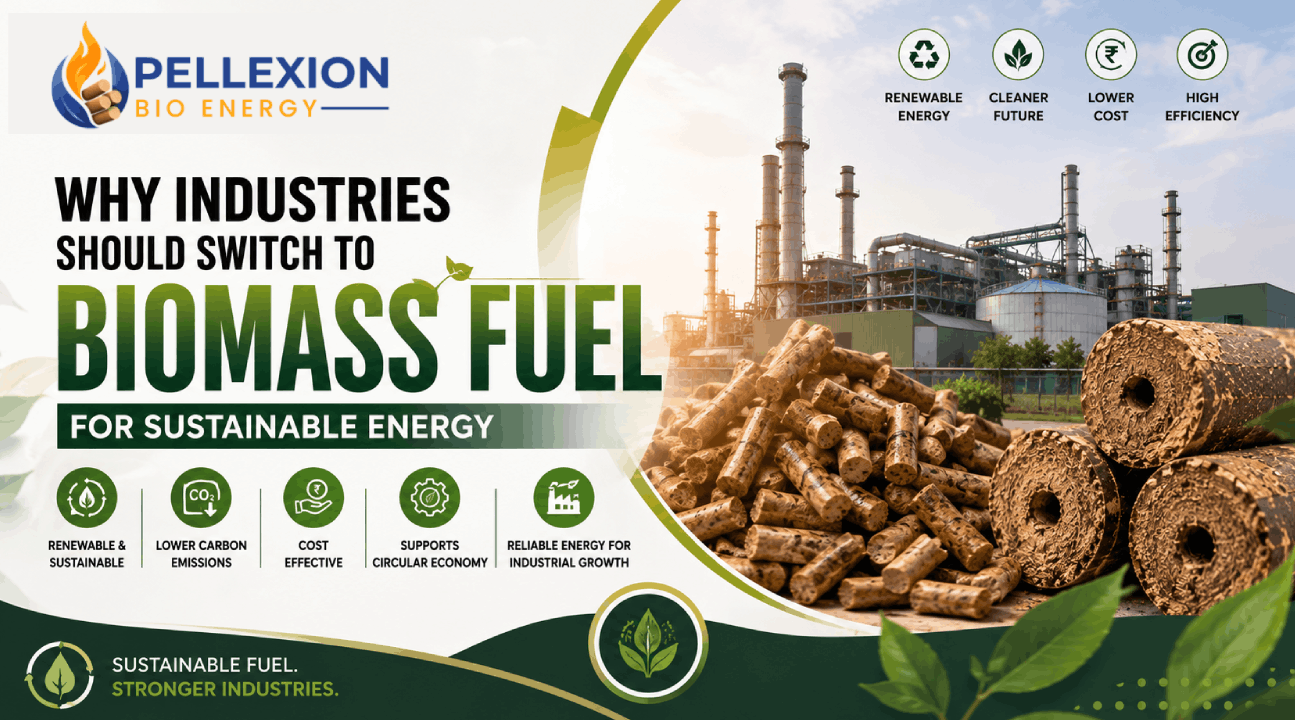
Biomass pellets are small, cylindrical bio-fuel units (typically 6–10 mm in diameter and 10–40 mm long) produced by compressing dried, ground agricultural and forestry residues under high pressure. No chemical binders are needed — the natural lignin in the biomass melts under pressure and heat, locking each pellet into a dense, uniform shape.
Common raw materials for high-grade industrial biomass pellets include:
Because the raw material is dried to a controlled moisture level (usually 8–10%) and densified, biomass pellets burn far more efficiently than loose biomass or briquettes, with a higher and more consistent calorific value, lower ash, and easier automated feeding. That combination of high energy density + clean, controllable combustion is exactly what a dairy plant needs for reliable steam.
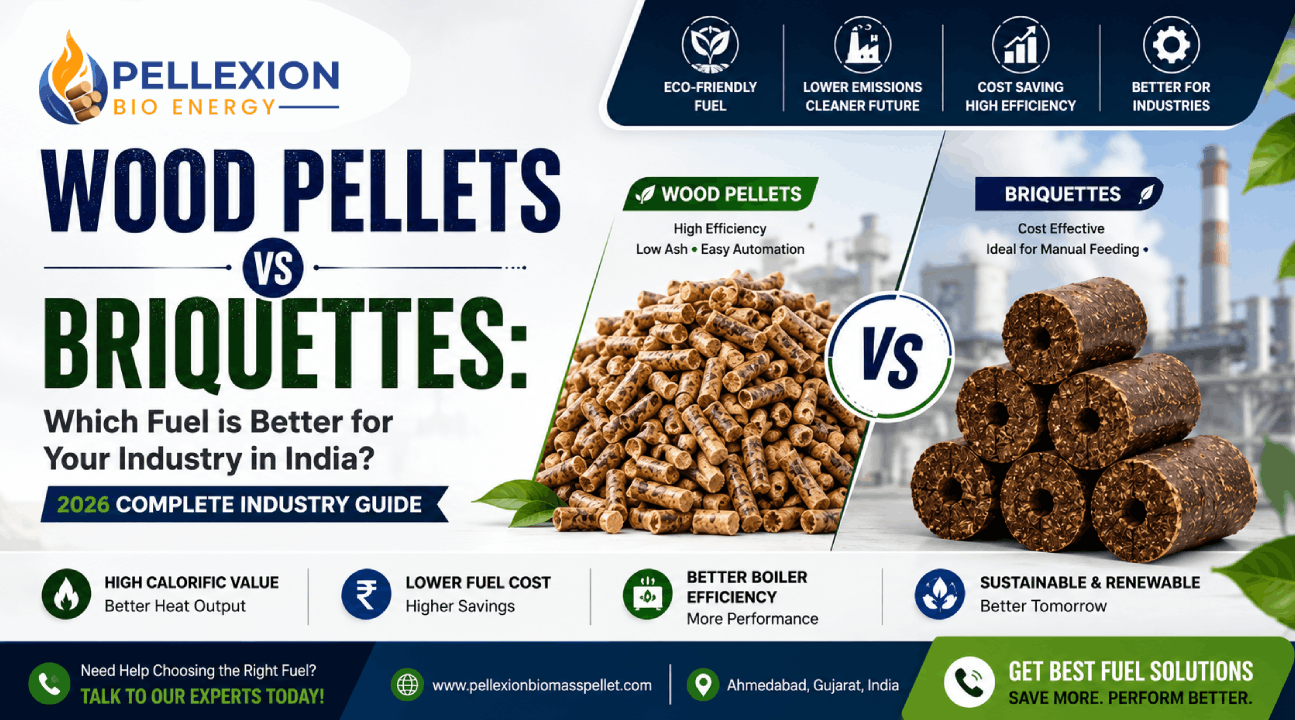
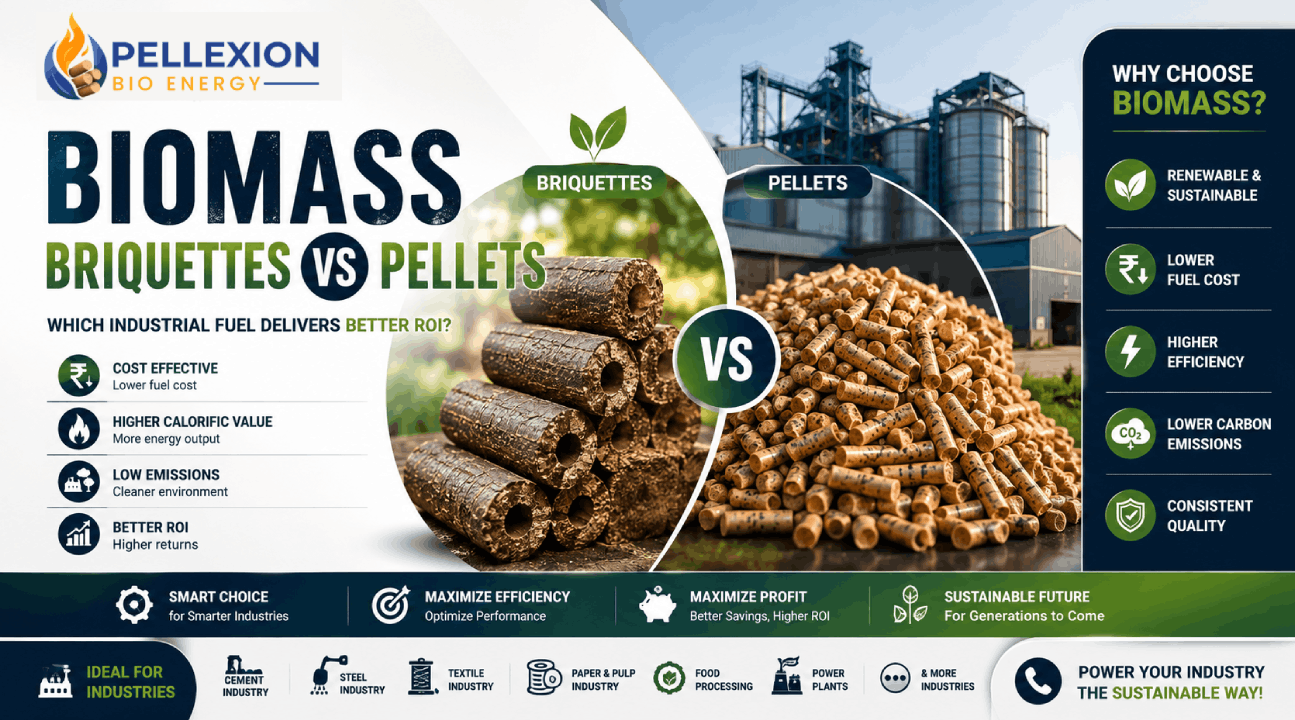
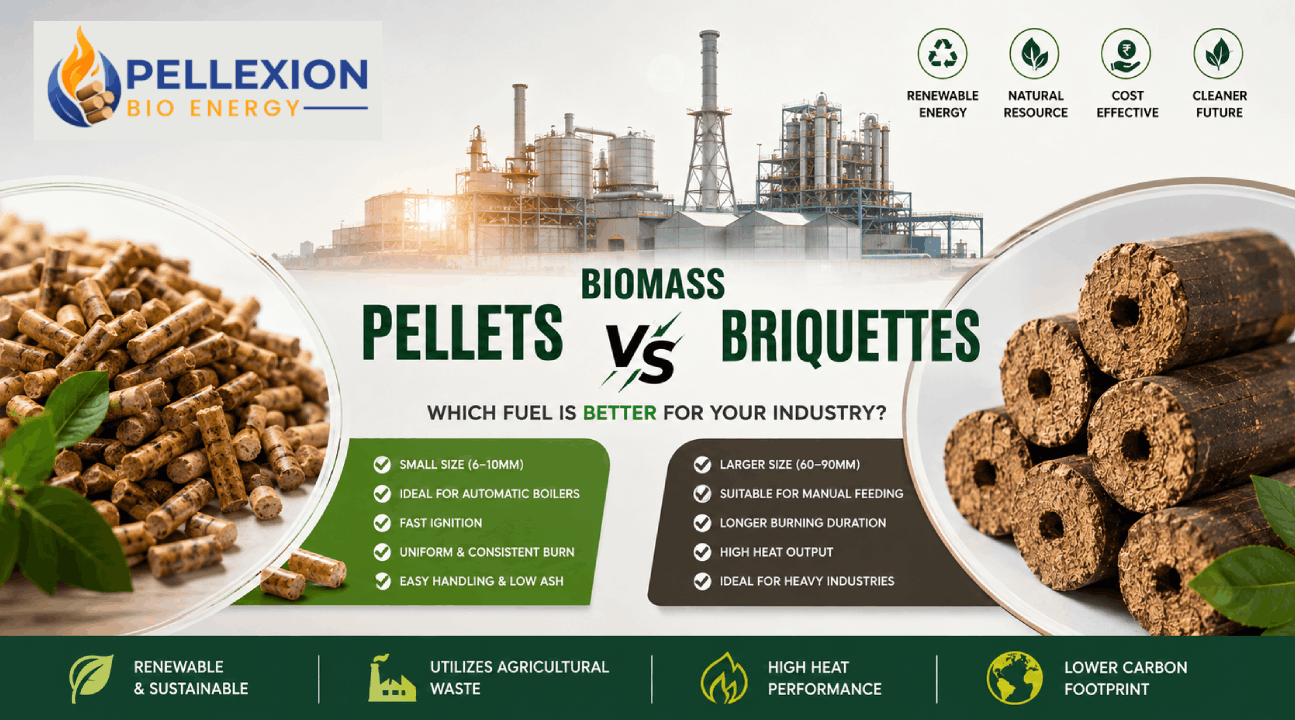
Biomass Pellets vs Biomass Briquettes
| Parameter | Biomass Pellets | Biomass Briquettes |
|---|---|---|
| Size | 6–10 mm diameter | 60–90 mm diameter |
| Density | Very high (1,100–1,300 kg/m³) | High (900–1,100 kg/m³) |
| Automated feeding | Excellent (screw/auger fed) | Limited |
| Combustion control | Precise, uniform | Good |
| Best for | Automated boilers, spray dryers, precise steam demand | Manual/semi-automatic boilers, large batch furnaces |
Why Dairy & Milk Processing Plants Depend on Steam
Before comparing fuels, it helps to understand just how steam-intensive a dairy operation is. Steam is not a side utility — it is the backbone of food safety and product quality. Here is where a typical milk processing plant consumes thermal energy:
A mid-size dairy handling 1–2 lakh litres per day can easily burn through 2,000–5,000 kg of fuel-equivalent energy daily. When that fuel is diesel or furnace oil, the plant is fully exposed to volatile crude oil prices, import costs, and rising carbon liabilities. This is precisely the problem biomass pellets solve.
Steam Demand by Dairy Process
To size a biomass conversion correctly, it helps to know which processes drive your steam load. The table below shows the relative thermal intensity of common dairy operations:
| Process | Typical Temperature | Relative Steam Demand |
|---|---|---|
| Milk reception & chilling support | 4–6°C (cooling) | Low |
| Pasteurisation (HTST) | 72–75°C | Medium |
| UHT / Sterilisation | 135–140°C | High |
| Clean-in-Place (CIP) | 75–85°C | High (frequent cycles) |
| Evaporation / Condensing | 60–90°C (vacuum) | Very High |
| Spray Drying (milk powder) | 180–200°C air | Highest |
| Butter & Ghee processing | 40–110°C | Medium |
The heavier your plant leans toward evaporation and spray drying, the more you stand to gain from switching to low-cost biomass fuel — because those are the processes that consume the most steam, hour after hour.
The Problem with Conventional Fuels in Dairy
Most legacy dairy boilers were designed around fossil fuels. Each brings a specific pain point:
| Fuel | Key Problem for Dairy Plants |
|---|---|
| Diesel (HSD) | Extremely high & volatile price; heavy carbon footprint; rising GST/excise exposure. |
| Furnace Oil (FO) | High sulphur emissions; SO₂ increasingly restricted by state pollution boards; storage & handling hazards. |
| LPG / PNG | Clean but expensive per unit heat; supply and pressure dependency; price linked to global gas markets. |
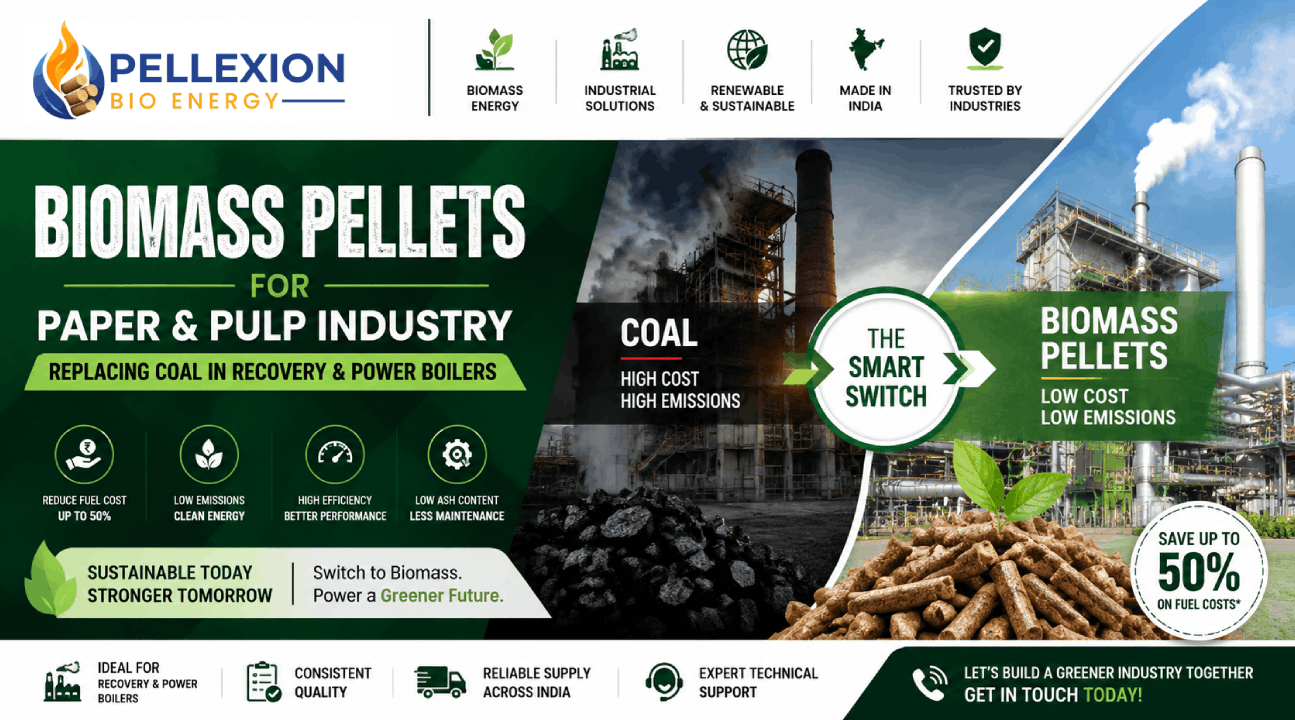
| Imported Coal | High ash & sulphur; forex-linked price; particulate emissions; growing regulatory pressure and public-image risk for a food brand. |
For a food business, there is an added dimension: reputation and compliance. A dairy brand that markets purity and health while burning high-sulphur furnace oil faces a growing mismatch with consumer expectations, ESG reporting requirements, and State Pollution Control Board norms. Switching to a renewable fuel isn’t just about cost — it protects the brand.
How Biomass Pellets Deliver Clean Steam for Dairy
When high-quality biomass pellets are burned in a properly matched boiler, they produce steam that is chemically identical to steam from any other fuel — H₂O vapour. The difference is in how cleanly and cheaply that steam is made. Here’s why pellets are ideal for food processing:
1. Consistent, High Calorific Value
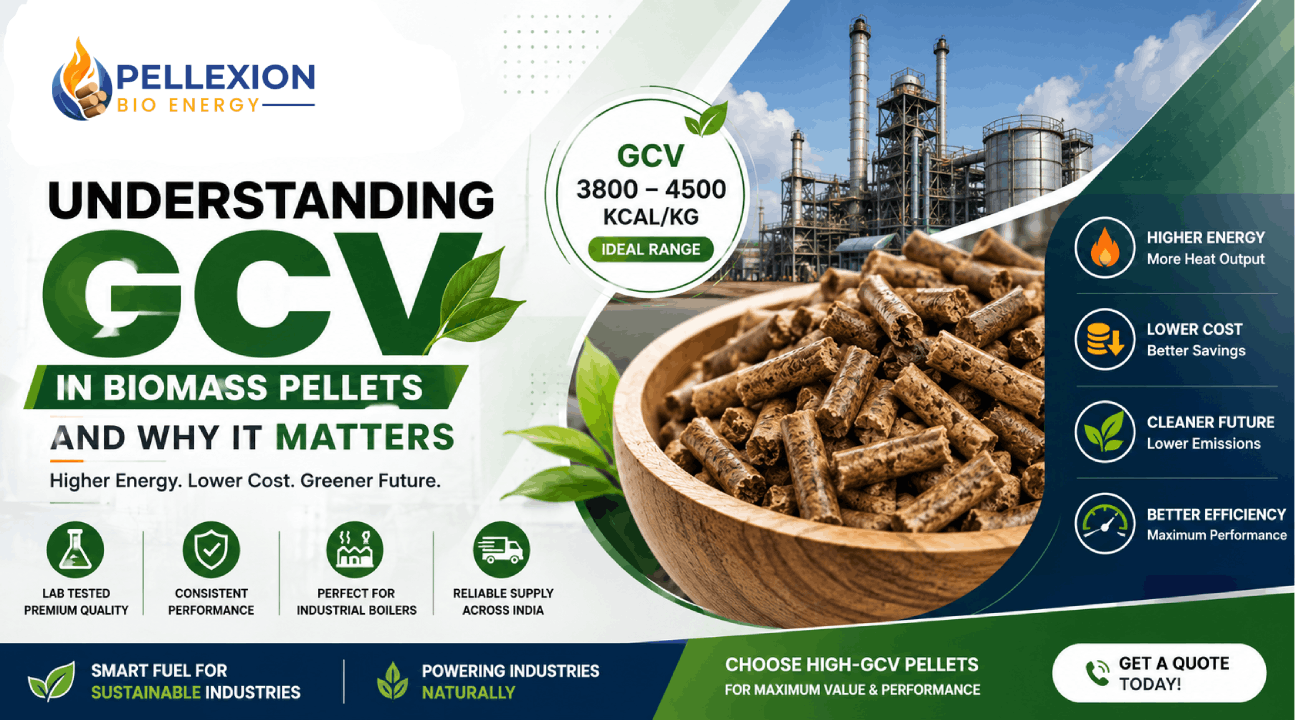
Premium biomass pellets deliver a Gross Calorific Value (GCV) of 3,800–4,300 kcal/kg. Because moisture is controlled to 8–10% and density is uniform, every kilogram releases predictable heat — giving your boiler stable steam pressure, which is critical for consistent pasteurisation and drying.
2. Low Ash, Low Fouling
Good pellets have ash content below 3–5%, versus 25–40% for many coals. Less ash means less slagging on boiler tubes, longer intervals between cleaning, and higher sustained boiler efficiency — less downtime for a plant that runs 20+ hours a day.
3. Near-Zero Sulphur & Carbon Neutrality
Agricultural biomass contains virtually no sulphur, so SO₂ emissions are negligible. And because the CO₂ released during combustion was recently absorbed by the crops during growth, biomass is considered carbon-neutral — a decisive advantage for ESG reporting and carbon-credit eligibility.
4. Automated, Precise Feeding
Their small, uniform size lets pellets flow through screw feeders and automated hoppers, enabling tight combustion control. That means steam output can track process demand closely — important for spray dryers and evaporators where thermal stability affects powder quality.
5. Food-Safe Operation
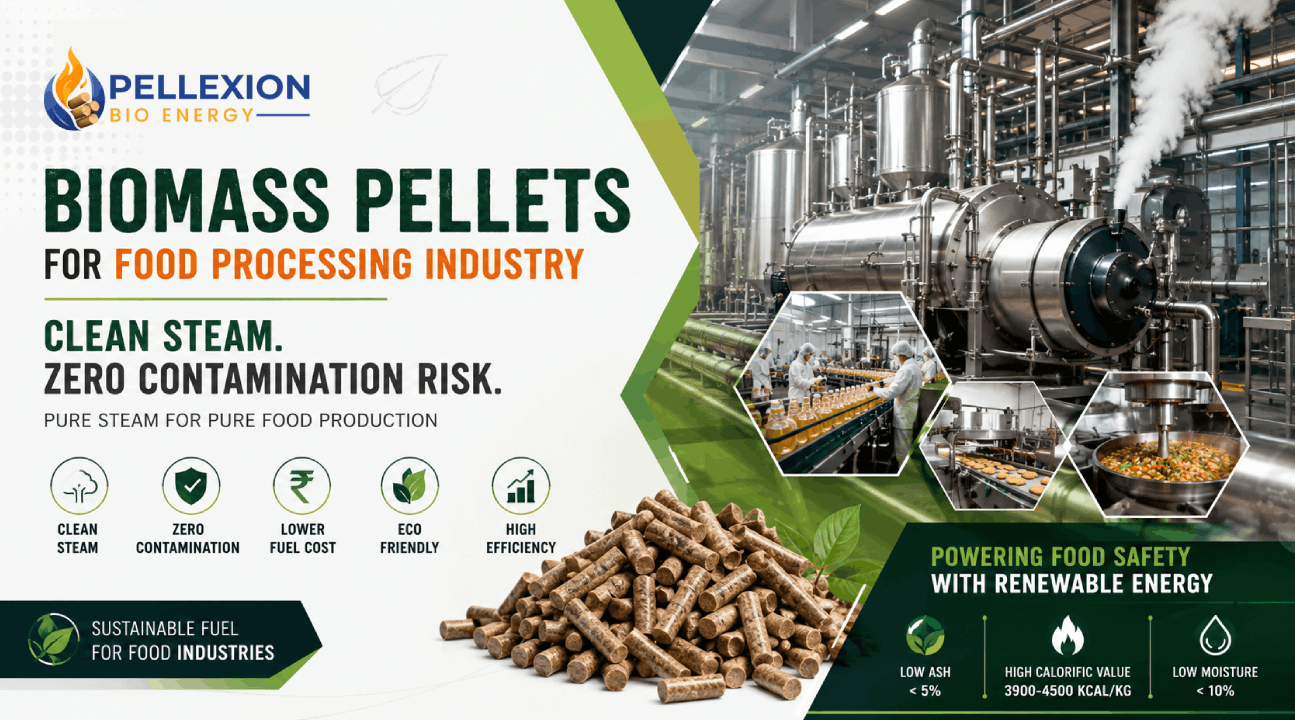
Steam typically heats milk indirectly through plate heat exchangers or jacketed vessels, so there is no contact between flue gas and product. Combined with clean combustion, biomass-fired steam is fully compatible with FSSAI hygiene requirements and food-grade steam standards.
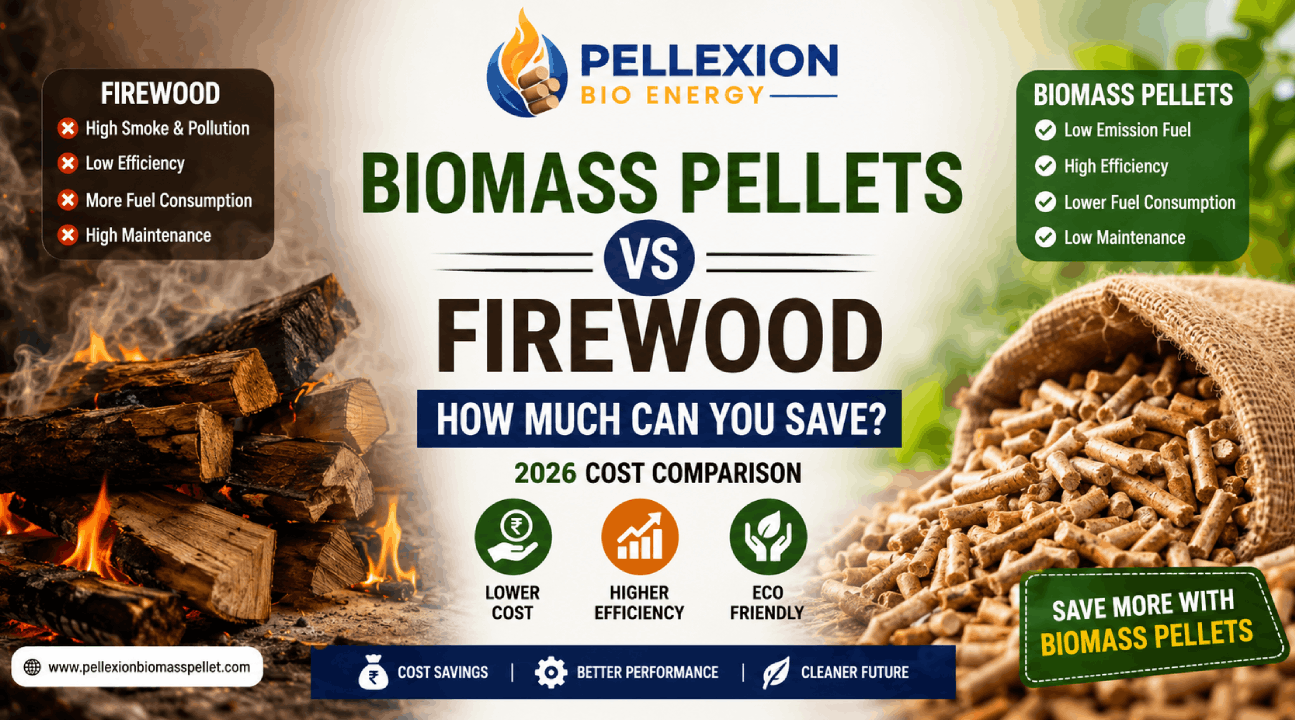
Cost Comparison: Biomass Pellets vs Diesel, FO, Coal & PNG
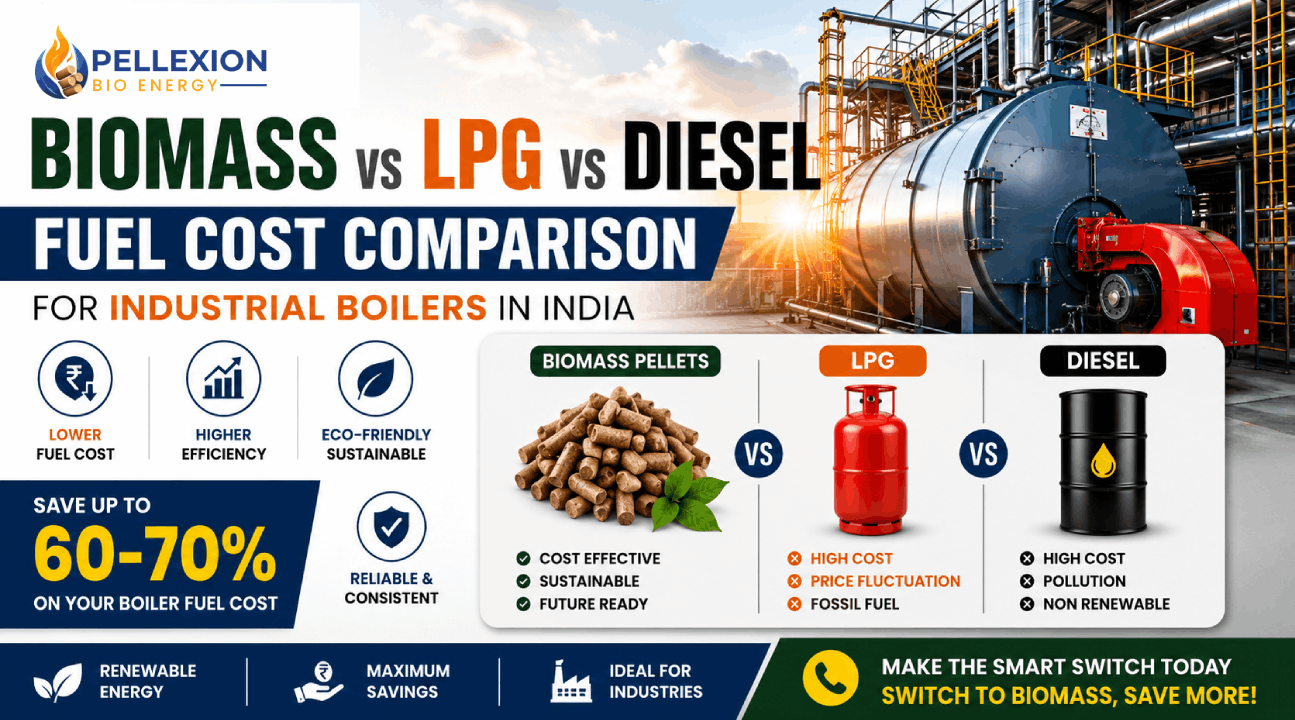
This is the section every plant manager wants. The table below compares the approximate landed cost of generating one kilogram of steam across common fuels for an Indian dairy (figures are indicative; actual numbers vary by region, boiler efficiency and current market rates — contact us for a plant-specific quote).
| Fuel | Approx. Fuel Price | Calorific Value | Boiler Efficiency | Approx. Cost / kg Steam |
|---|---|---|---|---|
| Biomass Pellets | ₹8–11 / kg | ~4,000 kcal/kg | 80–85% | ₹1.2–1.8 |
| Imported Coal | ₹12–16 / kg | ~5,500 kcal/kg | 75–80% | ₹2.0–2.8 |
| Furnace Oil (FO) | ₹55–65 / kg | ~9,800 kcal/kg | 82–86% | ₹3.8–4.6 |
| Diesel (HSD) | ₹90–95 / litre | ~8,800 kcal/l | 82–85% | ₹6.5–7.5 |
| PNG / LPG | Market linked | ~11,000 kcal/kg | 88–92% | ₹3.5–5.0 |
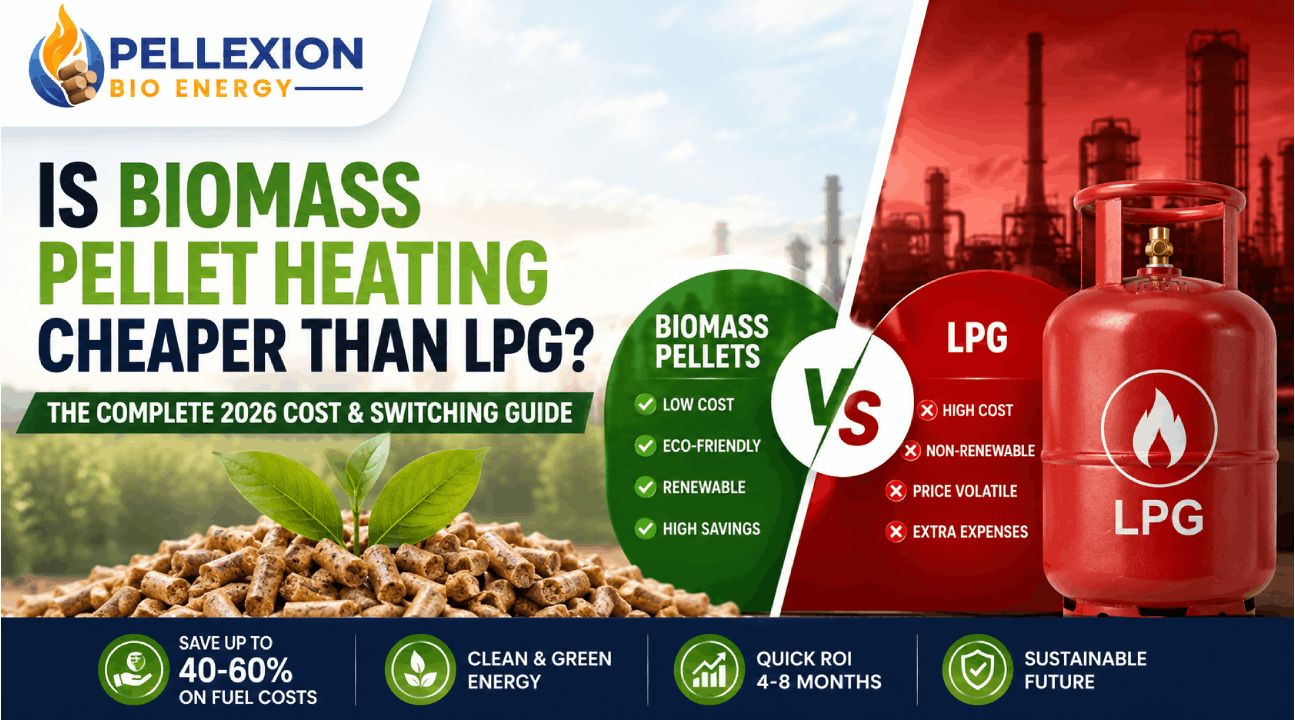
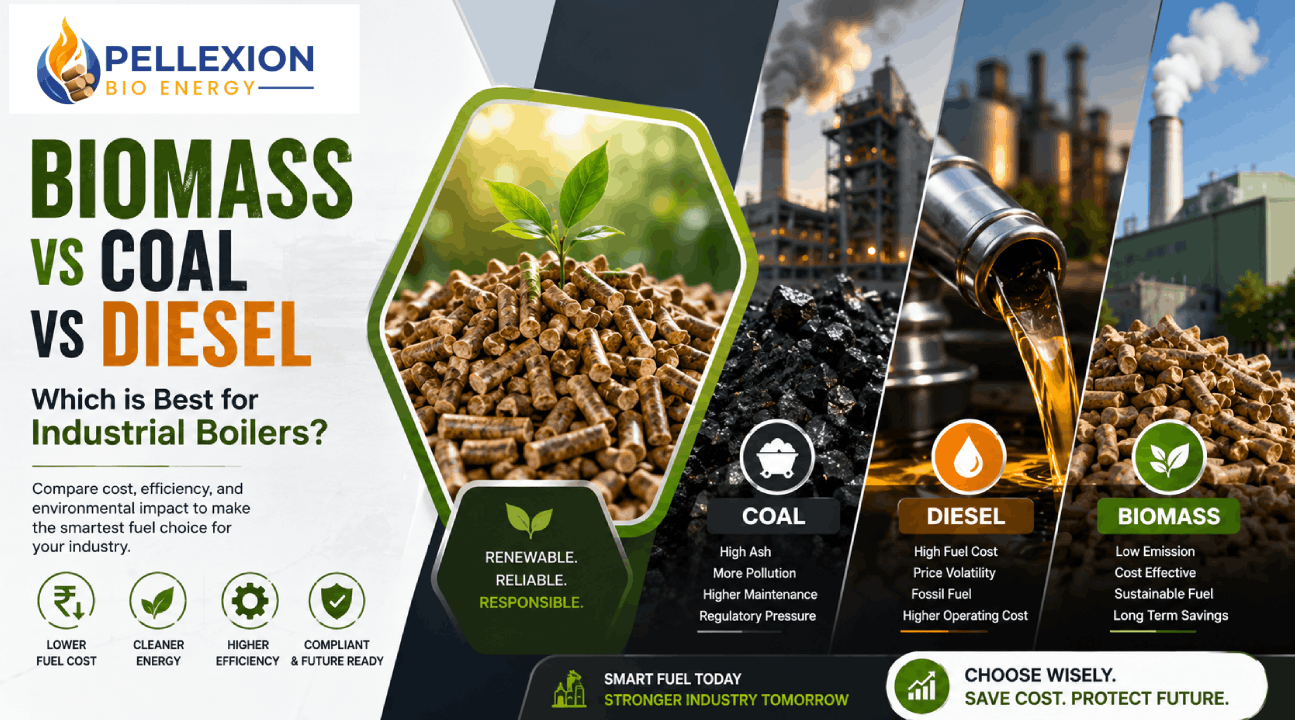
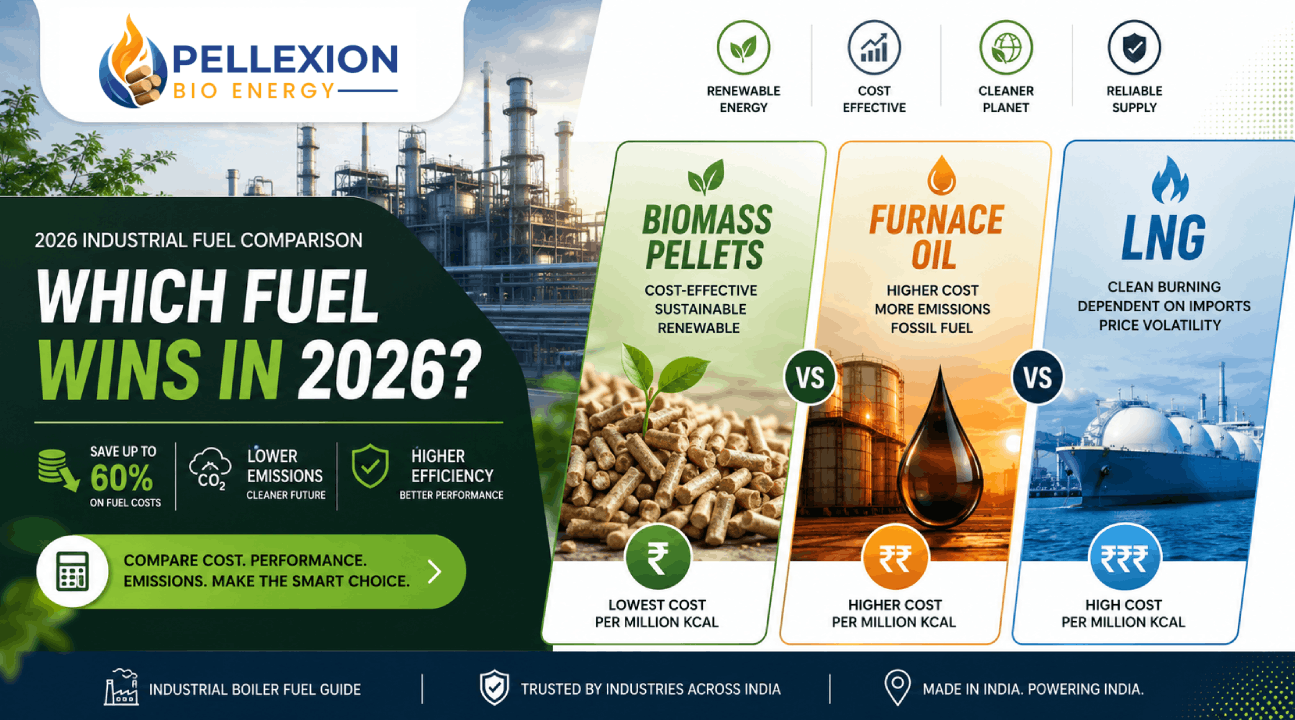
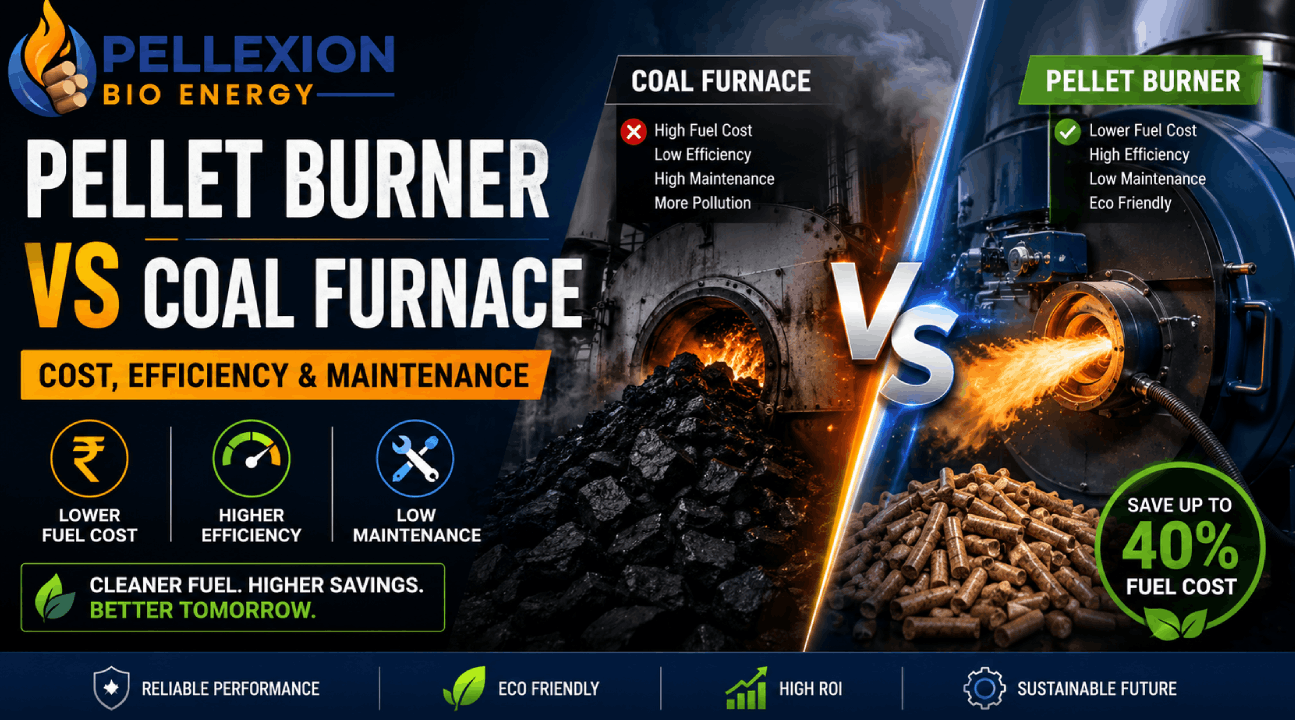
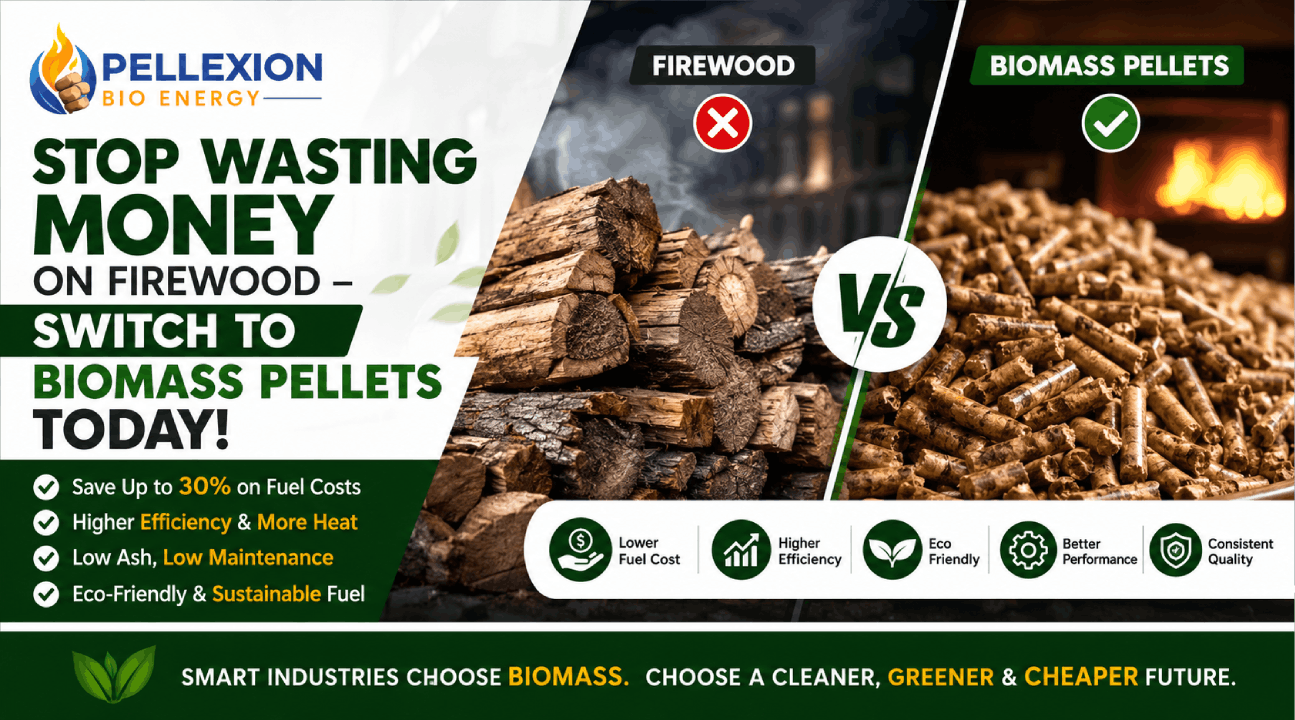
The takeaway: Even though diesel and FO have higher calorific value per kg, their price per unit of heat is far higher. On a rupee-per-kg-of-steam basis, biomass pellets typically cost 50–70% less than diesel and furnace oil, and 30–40% less than imported coal — while being cleaner than both.
Comparison at a Glance (Emissions & Sustainability)
| Feature | Biomass Pellets | Coal | Diesel / FO |
|---|---|---|---|
| Net CO₂ Emissions | Carbon-neutral | Very High | Very High |
| Sulphur (SO₂) | Negligible | High | High |
| Ash Content | Low (3–5%) | High (25–40%) | Very Low |
| Renewable | Yes | No | No |
| Price Stability | Stable (domestic agro) | Fluctuating (forex) | Highly Volatile |
| Carbon Credit Eligible | Yes | No | No |
Step-by-Step: How to Switch Your Dairy Plant to Biomass Pellets
Converting from fossil fuel to biomass pellets is a well-established, low-risk process. Follow this roadmap to make the transition smoothly without disrupting production.
Step 1 — Audit Your Current Steam Demand
Record your daily steam consumption (kg/hr and total TPH), operating hours, peak loads during CIP and spray drying, and your current monthly fuel bill. This baseline defines the size of the opportunity and the correct pellet volume.
Step 2 — Assess Boiler Compatibility
Identify your boiler type. Modern biomass-fired boilers, AFBC (Atmospheric Fluidised Bed Combustion), and FBC boilers run on pellets directly. Existing coal or oil boilers can often be retrofitted with a biomass stoker/grate and automated feeding system. Our team can evaluate this for you.
Step 3 — Calculate Projected Savings & ROI
Using the cost-per-kg-steam table above, compare your current fuel spend against biomass pellets. Most dairy plants find a payback period of 12–30 months on any retrofit or new boiler investment (see the worked example below).
Step 4 — Choose the Right Pellet Grade
Match pellet raw material and specification to your combustion system. High-GCV, low-ash groundnut-shell or sawdust pellets are ideal for automated dairy boilers and spray dryers where thermal stability is critical.
Step 5 — Plan Storage & Handling
Pellets are dense and flow easily, so they need less storage volume than briquettes or loose biomass. Plan a dry, covered silo or shed with a screw-conveyor feed to the boiler. Because pellets are moisture-sensitive, keep storage dry.
Step 6 — Run a Trial Batch
Before a full switch, run a trial consignment to validate steam output, ash handling and boiler efficiency under your real load. This de-risks the transition and builds internal confidence.
Step 7 — Lock in a Reliable Supply Contract
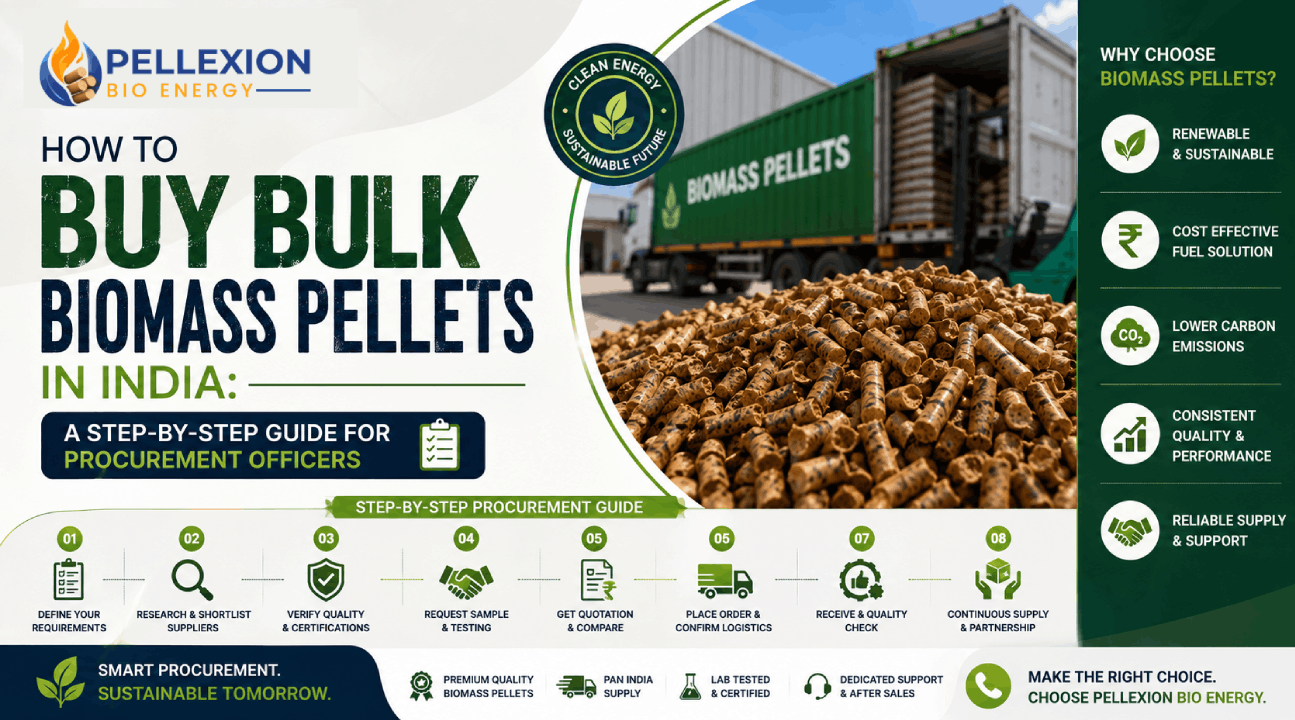
Steam is non-negotiable in a dairy — you cannot run out of fuel mid-batch. Partner with a manufacturer (not just a trader) who can guarantee consistent quality, calorific value and on-time bulk delivery. This is where sourcing directly from a producer like Pellexion Bio Energy matters most.
Step 8 — Optimise & Monitor
After commissioning, monitor steam pressure stability, ash generation, and fuel consumption per litre of milk processed. Fine-tune air-to-fuel ratios for maximum efficiency and document savings for your ESG and carbon-credit reporting.
Technical Specifications of Premium Biomass Pellets
When evaluating suppliers, insist on a specification sheet. Here are the benchmark specs a dairy-grade industrial biomass pellet should meet:
| Specification | Typical Value |
|---|---|
| Diameter | 6–10 mm |
| Length | 10–40 mm |
| Gross Calorific Value (GCV) | 3,800–4,300 kcal/kg |
| Moisture Content | ≤ 10% |
| Ash Content | 3–5% |
| Bulk Density | 650–750 kg/m³ |
| Sulphur | < 0.1% |
| Fines / Dust | < 2% |
Environmental, Compliance & Brand Benefits
For an Indian dairy, switching to biomass pellets aligns with several regulatory and market forces at once:
ROI Example: A Real-World Savings Snapshot
Consider a dairy plant currently running a furnace-oil boiler producing 5,000 kg of steam per hour, 20 hours a day, 300 days a year:
Even after accounting for a boiler retrofit or new biomass boiler and handling system, the payback period typically lands between 12 and 30 months. After that, the savings flow straight to the bottom line — year after year. (These are illustrative figures; request a plant-specific calculation for exact numbers.)
The plants that switch first don’t just save money — they lock in stable fuel costs while competitors stay exposed to oil-price volatility.
How to Choose the Right Biomass Pellet Supplier
Fuel quality directly determines steam reliability, so supplier selection is critical. Use this checklist:
Pellexion Bio Energy, based in Rajkot, Gujarat, is a leading biomass pellet and briquette manufacturer serving industrial and commercial clients across India. We convert responsibly sourced agricultural waste into high-calorific, low-ash industrial biomass fuel — with strict batch quality testing and reliable bulk supply built for demanding, round-the-clock operations like dairy and milk processing plants.
Types of Boilers Used in Dairy Plants & Pellet Compatibility
One of the most common questions from plant engineers is: “Will biomass pellets work with my boiler?” The good news is that biomass pellets are compatible with the vast majority of steam-generating systems used in Indian dairies. Here is how the main boiler categories stack up:
1. Dedicated Biomass Pellet Boilers
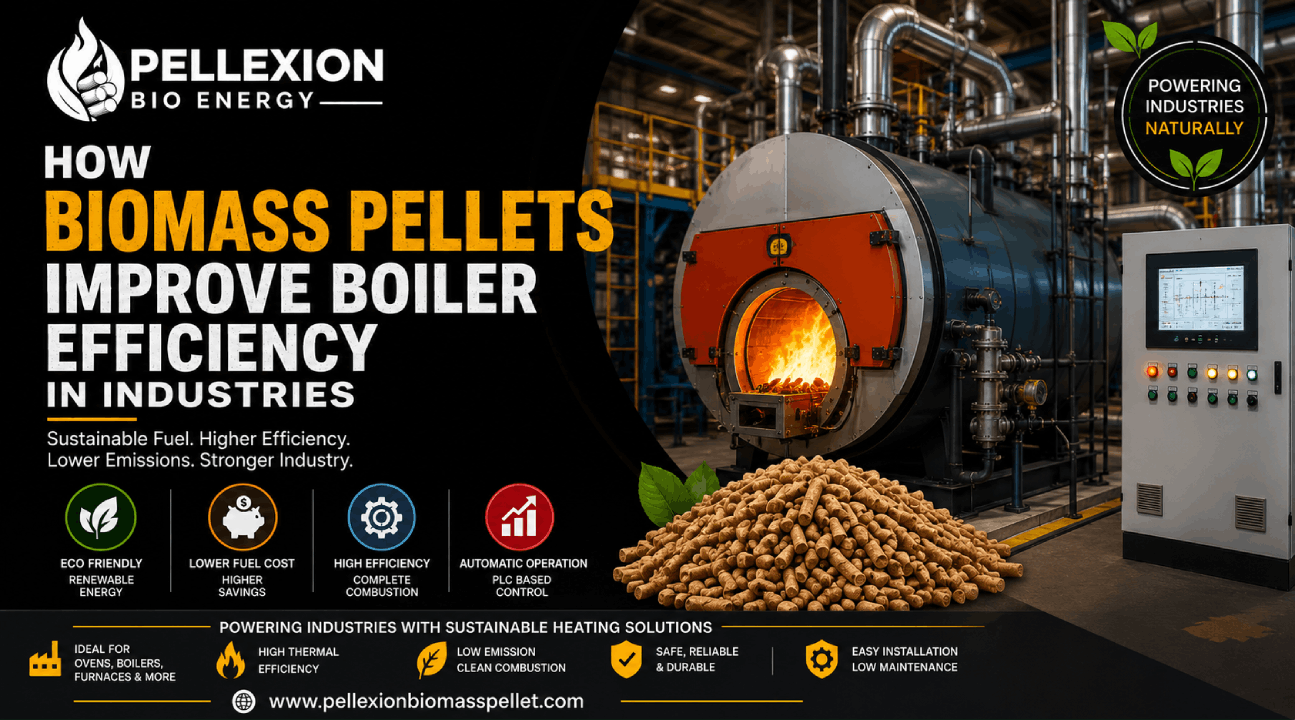
Purpose-built biomass boilers are engineered around solid biofuel combustion. They feature automated pellet feeding, grate combustion, and optimised air control. These deliver the highest efficiency (80–85%+) and the cleanest operation, making them the gold standard for new dairy installations or major capacity expansions.
2. AFBC & FBC Boilers
Atmospheric Fluidised Bed Combustion (AFBC) and Fluidised Bed Combustion (FBC) boilers are extremely fuel-flexible. They handle biomass pellets, briquettes and blended fuels with excellent combustion efficiency and low emissions. Many large dairies already run AFBC boilers on coal and can switch to biomass pellets with minimal modification — often just a change in fuel feed calibration.
3. Retrofitted Coal & Oil Boilers
Existing coal-fired boilers can typically be retrofitted with a biomass stoker, grate and automated feed system to run on pellets. Oil and FO boilers require a burner conversion or the addition of a solid-fuel firing arrangement. While this involves capital expense, the fuel savings usually justify the retrofit within 12–30 months.
4. Thermic Fluid Heaters & Hot-Air Generators
Beyond steam boilers, spray-drying operations often use thermic fluid heaters and hot-air generators. Biomass pellets fire these systems effectively, providing the high, stable temperatures spray drying demands — at a fraction of the cost of diesel or gas.
Bottom line: whether you run a modern biomass boiler, an AFBC unit, or a legacy coal/oil boiler, there is almost always a viable biomass pellet pathway. The key is a proper boiler assessment before switching.
Understanding Steam Economics: Why Fuel Choice Decides Dairy Profitability
In a dairy, thermal energy can represent 20–35% of total processing cost — second only to the raw milk itself. Because margins in the dairy business are thin and volumes are enormous, even a small change in the cost of steam has an outsized effect on annual profit. This is why fuel selection is not merely an engineering decision; it is a strategic business decision.
Consider three forces squeezing dairy processors today:
Biomass pellets address all three at once: lower and more stable cost, cleaner emissions, and a credible sustainability story. For a commodity business where every paisa per litre matters, that combination is transformative. Locking in a domestic, renewable fuel effectively converts a volatile, rising cost into a predictable, declining one — a genuine competitive advantage.
Common Myths About Biomass Pellets — Debunked
Some plant owners hesitate to switch because of outdated assumptions. Let’s clear them up:
Myth 1: “Biomass produces less heat than coal or oil.”
Reality: While biomass has lower calorific value per kilogram, what matters is cost per unit of usable heat. On that basis, pellets are far cheaper than diesel or FO. Boiler capacity is simply sized to match the fuel — the steam output is exactly the same.
Myth 2: “Biomass boilers are unreliable and need constant attention.”
Reality: Modern biomass and AFBC boilers with automated pellet feeding run continuously with minimal supervision. Low ash content means fewer cleaning stops than coal, not more.
Myth 3: “Pellet supply is inconsistent.”
Reality: When you source directly from an established manufacturer with bulk production capacity — rather than a small trader — supply and quality are consistent and contractually guaranteed. Domestic agro-residue is abundant and not exposed to import disruptions.
Myth 4: “Biomass isn’t clean enough for food production.”
Reality: Steam heats milk indirectly — flue gas never touches the product. With near-zero sulphur and low ash, biomass combustion is one of the cleanest solid-fuel options available and is widely used in FSSAI-compliant food plants.
Best Practices for Storing & Handling Biomass Pellets
To get the most from your biomass fuel, handling matters. Follow these practical guidelines:
Why Dairies in Gujarat & Across India Have a Biomass Advantage
India is one of the world’s largest agricultural producers, generating hundreds of millions of tonnes of crop residue every year — much of which is otherwise burned in fields, causing pollution. This makes biomass pellets an abundant, domestic and responsibly-utilised fuel source. Gujarat, in particular, combines a strong agricultural base (groundnut, cotton, and more) with a dense concentration of dairy and food-processing industry, creating an ideal ecosystem for biomass fuel.
For dairies in Gujarat and neighbouring states, sourcing pellets from a local manufacturer like Pellexion Bio Energy in Rajkot means shorter logistics, faster delivery, lower freight cost, and a supply chain insulated from imports and forex swings. It also supports the regional farm economy by turning agricultural waste into value — a genuinely circular, sustainable model that strengthens your brand’s local and green credentials.
Frequently Asked Questions (FAQ)
Sustainability, Carbon Credits & Your Brand Story
Cost savings alone justify the switch to biomass pellets — but the strategic value goes further. Modern dairy brands compete not just on price and quality, but on trust and values. Consumers, retailers, and institutional buyers increasingly ask a simple question: how is this product made, and what is its footprint?
By running your steam on carbon-neutral biomass instead of fossil fuel, you can make credible, verifiable sustainability claims: reduced net CO₂ emissions, negligible sulphur pollution, renewable domestic fuel, and support for the circular farm economy by valorising agricultural waste. These are not marketing slogans — they are measurable outcomes you can document in your ESG report and communicate to buyers.
For exporters and large-format retail suppliers, this matters commercially. Sustainability scorecards and carbon-disclosure requirements are becoming preconditions for supply contracts. A dairy that has already decarbonised its steam generation is positioned to win and retain those contracts, while competitors scramble to catch up. In parallel, the carbon reductions achieved can potentially be monetised through carbon-credit mechanisms, turning an environmental win into an additional revenue line.
In short, biomass pellets let a dairy align three goals that usually pull in different directions: lower cost, regulatory compliance, and a stronger, greener brand. Few operational decisions deliver on all three simultaneously.
Getting Started: Your Next Steps with Pellexion
Making the move to biomass is straightforward when you have the right partner. Here is how a typical engagement with Pellexion Bio Energy works:
Every step is designed to de-risk the transition and prove the value before you commit fully — so you can switch with complete confidence.
Conclusion: Clean Steam and Lower Costs Are Within Reach
For dairy and milk processing plants, steam is mission-critical — and the fuel behind it should be reliable, clean, and affordable. Biomass pellets tick all three boxes: they cut steam costs by up to 60% versus diesel and furnace oil, deliver stable high-calorific heat with low ash, and offer carbon-neutral, low-sulphur combustion that supports both compliance and brand trust.
The transition is proven and low-risk: audit your steam demand, confirm boiler compatibility, run a trial, and lock in a reliable supply. With payback periods often under two years, switching to biomass pellets is one of the highest-return sustainability decisions a dairy plant can make today.
Pellexion Bio Energy — Gujarat’s #1 biomass pellet manufacturer — is ready to help your plant make the switch with premium, batch-tested pellets and dependable bulk supply.
















 Total views : 11015